Almsgiving, Prayer, and Fasting in Secret
Matt 6:1–18 · Early ministry in Galilee
Scripture
Matthew 6:1–18
ake heed that ye do not your alms before men, to be seen of them: otherwise ye have no reward of your Father which is in heaven. 2Therefore when thou doest thine alms, do not sound a trumpet before thee, as the hypocrites do in the synagogues and in the streets, that they may have glory of men. Verily I say unto you, They have their reward. 3But when thou doest alms, let not thy left hand know what thy right hand doeth: 4That thine alms may be in secret: and thy Father which seeth in secret himself shall reward thee openly. 5And when thou prayest, thou shalt not be as the hypocrites are: for they love to pray standing in the synagogues and in the corners of the streets, that they may be seen of men. Verily I say unto you, They have their reward. 6But thou, when thou prayest, enter into thy closet, and when thou hast shut thy door, pray to thy Father which is in secret; and thy Father which seeth in secret shall reward thee openly. 7But when ye pray, use not vain repetitions, as the heathen do: for they think that they shall be heard for their much speaking. 8Be not ye therefore like unto them: for your Father knoweth what things ye have need of, before ye ask him. 9After this manner therefore pray ye: Our Father which art in heaven, Hallowed be thy name. 10Thy kingdom come. Thy will be done in earth, as it is in heaven. 11Give us this day our daily bread. 12And forgive us our debts, as we forgive our debtors. 13And lead us not into temptation, but deliver us from evil: For thine is the kingdom, and the power, and the glory, for ever. Amen. 14For if ye forgive men their trespasses, your heavenly Father will also forgive you: 15But if ye forgive not men their trespasses, neither will your Father forgive your trespasses. 16Moreover when ye fast, be not, as the hypocrites, of a sad countenance: for they disfigure their faces, that they may appear unto men to fast. Verily I say unto you, They have their reward. 17But thou, when thou fastest, anoint thine head, and wash thy face; 18That thou appear not unto men to fast, but unto thy Father which is in secret: and thy Father, which seeth in secret, shall reward thee openly.
King James Version · public domain
Mateu 6:1–18
hikoni mos bëni eleimosinënë t’uaj përpara njerëzet, që të shiheni nga ata; ndë mos, nukë keni pagë përanë Atit t’uaj që është ndë qiejt. 2Kur të bënjç pra eleimosinënë, mos vër-shëlënjç përpara teje, sikundrë bëjnë ipokritëritë ndëpër sinagogjit e ndëpër udhët, që të lavduronenë nga njerëzitë; me të vërtetë po u them juve, se ata e kanë marrë pagën’ e tyre. 3Po ti kur të bënjç eleimosinënë, letë mos e marrë vesh e-mëngjëra jote se ç’bën e-djathta jote; 4Që të jetë eleimosina jote fshehurazi; edhe yt’ Atë që sheh fshehurazi, ay dotë t’a çpaguanjë tyj faqeza. 5Edhe kur të falesh, mos ij posi ipokritëritë; sepse ata duanë të falenë dyke ndënjurë ndëpër sinagogjit e ndëpër çipet të rrugëvet, që t’u dukenë njerëzet; me të-vërtetë po u them juve se ata e kanë marrë pagën e tyre. 6Po ti, kur të falesh, hyrë ndë dhomët t’ënde, edhe mbyll derënë t’ënde, e i ufal t’yt Et që është ndë të-fshehëtë; edhe yt Atë që sheh fshehurazi, dotë t’a paguanjë tyj faqeza. 7Edhe kur të faleni, mos thoni fjalë të-tepëra, posi gjindarëtë; sepse pandehnjënë, se me fjalët’ e-shuma të tyre dotë dëgjonenë. 8Mos u gjani pra atyre; sepse Ati juaj e di për ç’gjë kini nevojë, para se të lypni juve prej ati. 9Po ju faluni kështu: Ati ynë që je ndë qiejt, ushënjtëroftë emëri yt; 10Arthtë mbretëria jote; ubëftë dashurimi yt, si ndë qiell, edhe mbë dhet; 11Bukënë t’ënë të-përditëshmen’ ep-na neve sot; 12Edhe fal-na fajetë t’anë, sindëkur edhe neve u’a falimë fajtorëvet t’anë; 13Edhe mos na shtjerë ndë ngasje, po shpëto-na nga i-ligu; sepse jotja është mbretëria e fuqia e lavdia ndë jetët të jetëvet; Amin. 14Sepse ndë u’a falçi njerëzvet fajet’ e atyre, dot’u’a falnjë edhe juve Ati juaj qiellori. 15Po ndë mos u’a falçi njerëzvet fajet’ e atyre, as Ati juaj nukë dotë falnjë fajetë t’uaj. 16Edhe kur të agjëroni, mos bëhi të-vrërëtë posi ipokritëritë; sepse ata prishnjënë fytyrat’ e tyre, që të dukenë ndër njerëzit se agjëronjënë. Me të-vërtetë po u them juve, se ata e kanë marrë pagën’ e tyre. 17Po ti kur të agjëronjç, lyej kryetë t’at, edhe laj fytyrënë t’ënde; 18Që të mos dukesh ndë njerëzit se agjëron, po tek yt Atë, që është ndë të-fshehëtë; edhe yt Atë që sheh fshehurazi, dotë t’a ç’paguanjë tyj faqeza.
Kristoforidhi, Dhiata e Re Toskërisht 1879 · zotërim publik
In their own words
If then we seek the fame of giving, we make even our public deeds to be hidden in His sight; for if herein we seek our own glory, then they are already cast out of His sight, even though there be many by whom they are yet unknown.
St. Gregory the Great, Morals on the Book of Job (Catena Aurea on Matthew 6:1)
Patristic sources
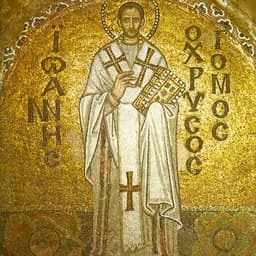
- St. John Chrysostom
- Homilies on the Gospel of Matthew, Hom. 19
- Homilies on the Gospel of Matthew, Hom. 20
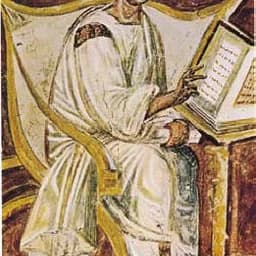
- Blessed Augustine of Hippo
- Our Lord's Sermon on the Mount, Book II
Venerated in the East as Blessed; his exposition of the Sermon on the Mount governs the Latin reading of this passage.
- St. Jerome
- Commentary on Matthew
His Gospel exegesis survives in public-domain English only through the Catena Aurea.
- St. Gregory the Great
- Morals on the Book of Job
- Forty Gospel Homilies, Hom. 16
The Gospel homily is public-domain English only through the Catena Aurea.
- St. Cyprian of Carthage
- Treatise on the Lord's Prayer
Quoted on the manner of secret prayer, not the petitions of the Our Father.
- St. Leo the Great
- Sermons
His festal and Lenten sermons on fasting survive here through the Catena Aurea.
Read the sources: Chrysostom, Homilies on Matthew 19 (CCEL) · Chrysostom, Homilies on Matthew 20 (CCEL) · Augustine, Our Lord's Sermon on the Mount, Book II (CCEL) · Catena Aurea on Matthew 6 (CCEL)
Almsgiving, Prayer, and Fasting in Secret (Matthew 6:1–18)
The texts below are quoted verbatim from public-domain English translations; nothing is paraphrased.
St. John Chrysostom (c. 347–407)
Homilies on the Gospel of Matthew, Homilies 19–20 (on Matthew 6:1–18); trans. in the Nicene and Post-Nicene Fathers, First Series, Vol. 10. Public domain. Full text: https://www.ccel.org/ccel/schaff/npnf110.iii.XIX.html
On the warning that opens the chapter, that the desire of display steals in upon the giver unseen:
On "let not thy left hand know what thy right hand doeth":
On why the Lord forbade doing alms "to be seen of them" yet set no such qualification on prayer and fasting (Homily 20):
Blessed Augustine of Hippo (354–430)
Our Lord's Sermon on the Mount, Book II (on Matthew 6:2–18); trans. in the Nicene and Post-Nicene Fathers, First Series, Vol. 6. Public domain. Full text: https://www.ccel.org/ccel/schaff/npnf106.v.iii.html
On the name "hypocrite" and its origin in the players of the theatre:
On "let not thy left hand know what thy right hand doeth":
On the precept of fasting and the one purification of heart it shares with alms and prayer:
St. Jerome (c. 347–420)
Commentary on Matthew (on Matthew 6:1–4 and 6:16–18). As preserved in the Catena Aurea on Matthew, trans. J. H. Newman, 1841. Public domain. Full text: https://www.ccel.org/ccel/aquinas/catena1.ii.vi.html
On the reward the hypocrites receive for their alms:
On "anoint thine head, and wash thy face":
St. Gregory the Great (c. 540–604)
Morals on the Book of Job and Forty Gospel Homilies (on Matthew 6:1 and 6:16–18). As preserved in the Catena Aurea on Matthew. Public domain. Full text: https://www.ccel.org/ccel/aquinas/catena1.ii.vi.html
On seeking the fame of giving:
On the fasting that God approves:
St. Cyprian of Carthage (c. 200–258)
Treatise on the Lord's Prayer (on Matthew 6:5–6). As preserved in the Catena Aurea on Matthew. Public domain. Full text: https://www.ccel.org/ccel/aquinas/catena1.ii.vi.html
On "enter into thy closet, and when thou hast shut thy door, pray to thy Father which is in secret":
St. Leo the Great (c. 400–461)
Sermons (on Matthew 6:16–18). As preserved in the Catena Aurea on Matthew. Public domain. Full text: https://www.ccel.org/ccel/aquinas/catena1.ii.vi.html
On the fasting that is not pure:
On fasting fulfilled in the cutting off of vices: