Before Abraham Was, I AM
John 8:48–59 · Journey to Jerusalem
Scripture
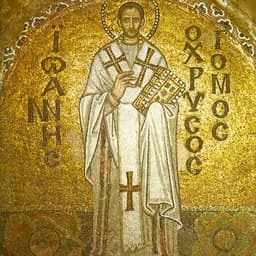
John 8:48–59
hen answered the Jews, and said unto him, Say we not well that thou art a Samaritan, and hast a devil? 49Jesus answered, I have not a devil; but I honour my Father, and ye do dishonour me. 50And I seek not mine own glory: there is one that seeketh and judgeth. 51Verily, verily, I say unto you, If a man keep my saying, he shall never see death. 52Then said the Jews unto him, Now we know that thou hast a devil. Abraham is dead, and the prophets; and thou sayest, If a man keep my saying, he shall never taste of death. 53Art thou greater than our father Abraham, which is dead? and the prophets are dead: whom makest thou thyself? 54Jesus answered, If I honour myself, my honour is nothing: it is my Father that honoureth me; of whom ye say, that he is your God: 55Yet ye have not known him; but I know him: and if I should say, I know him not, I shall be a liar like unto you: but I know him, and keep his saying. 56Your father Abraham rejoiced to see my day: and he saw it, and was glad. 57Then said the Jews unto him, Thou art not yet fifty years old, and hast thou seen Abraham? 58Jesus said unto them, Verily, verily, I say unto you, Before Abraham was, I am. 59Then took they up stones to cast at him: but Jesus hid himself, and went out of the temple, going through the midst of them, and so passed by.
King James Version · public domain
Joani 8:48–59
udhenjtë pra upërgjeqnë e i thanë, Nukë themi mirë ne, se ti je Samarit, edhe djall ke? 49Jisuj upërgjeq, Unë djall s’kam, po nderonj t’im Atë, edhe ju më çnderoni. 50Edhe unë s’kërkonj lavdinë t’ime; është ay që kërkon e që gjykon. 51Me të-vërtetë, me të-vërtetë po u them juve, Ndë ruajtë ndonjë fjalënë t’ime, nukë dotë shohë vdekje për gjithë jetënë. 52Judhenjtë pra i thanë, Ndashti e muarmë vesh, se ke djall. Avraami vdiq edhe profitëritë, edhe ti thua, Ndë ruajtë ndonjë fjalënë t’ime, nukë dotë ngjëronetë vdekje për gjithë jetënë. 53Mos je ti më i-math se ati ynë Avraam, i-cili vdiq? edhe profitëritë vdiqnë; ti cilinë e bën vetëhenë t’ënde? 54Jisuj upërgjeq, Unë ndë lavduronj vetëhenë t’ime, lavdia ime s’ësht’ asgjë; im Atë ësht’ ay që më lavduron, për të-cilinë ju thoni se është Perëndia juaj; 55Edhe s’e keni njohurë, po un’ e njoh; edhe ndë thënça se nuk’ e njoh, dotë jem posi ju, gënjeshtar; po e njoh, edhe ruanj fjalën’ e ati. 56Avraami ati juaj gëzonej të shohë ditënë t’ime; edhe e pa, e ugëzua. 57Judhenjtë pra i thanë, Pesë-dhjetë vjet edhe s’i ke, edhe Avraaminë e ke parë? 58Jisuj u tha atyre, Me të-vërtetë, me të-vërtetë, po u them juve, Para se të lintnjë Avraami, unë jam. 59Ngritnë pra gurë që t’i hithninë kundr’ ati; po Jisuj ufsheh, edhe dolli nga hieroreja, edhe shkoj ndëpër mest t’atyreve; edhe kështu iku.
Kristoforidhi, Dhiata e Re Toskërisht 1879 · zotërim publik
In their own words
As the Father useth this expression, "I Am," so also doth Christ; for it signifieth continuous Being, irrespective of all time.
St. John Chrysostom, Homilies on the Gospel of John, Homily 55 (on John 8:58)
Patristic sources
- St. John Chrysostom
- Homilies on the Gospel of John, Hom. 55
- St. Cyril of Alexandria
- Commentary on the Gospel of John, Book VI
- Theophylact of Ohrid
- Explanation of the Gospel of John (Catena Aurea)
- Origen of Alexandria
- Commentary on the Gospel of John (Catena Aurea)
Some of his speculations were condemned in 553; the passage quoted here is a plain exegetical remark preserved in the Catena.
- Blessed Augustine of Hippo
- Tractates on the Gospel of John, Tractate 43
Venerated in the East as Blessed; his Johannine tractates are cited in later Byzantine catenae.
- St. Gregory the Great
- Gospel commentary preserved in the Catena Aurea on John
Read the sources: Chrysostom, Homilies on John, Homily 55 (CCEL) · Cyril of Alexandria on John, Book VI (tertullian.org) · Augustine, Tractate 43 on John (CCEL) · Catena Aurea on John (isidore.co)
Before Abraham Was, I AM (John 8:48–59)
The texts below are quoted verbatim from public-domain English translations; nothing is paraphrased.
St. John Chrysostom (c. 347–407)
Homilies on the Gospel of John, Homily 55 (on John 8:48–59) Source: trans. G. T. Stupart, Nicene and Post-Nicene Fathers, First Series, Vol. 14. Public domain. Full text: https://www.ccel.org/ccel/schaff/npnf114.iv.lvii.html
On why He denies the charge yet answers so gently, "I honor My Father":
On "Your father Abraham rejoiced to see My day":
On why He said "I Am" and not "I was":
St. Cyril of Alexandria (c. 376–444)
Commentary on the Gospel of John, Book VI (on John 8:58) Source: trans. P. E. Pusey, Library of Fathers, 1874. Public domain. Full text: https://www.tertullian.org/fathers/cyril_on_john_06_book6.htm
On the gentle but pointed answer, "I have not a devil":
On the "was" of Abraham set against the "I am" of the Word:
Theophylact of Ohrid (c. 1055–1107)
As preserved in the Catena Aurea on John. Public domain. Full text: https://isidore.co/aquinas/english/CAJohn.htm
On how He honoured the Father by defending Him:
On "Abraham rejoiced to see My day":
Origen of Alexandria (c. 185–254)
As preserved in the Catena Aurea on John. Public domain. Full text: https://isidore.co/aquinas/english/CAJohn.htm
On the words that Jesus alone could truthfully speak:
Blessed Augustine of Hippo (354–430)
Tractates on the Gospel of John, Tractate 43 (on John 8:48–59) Source: trans. John Gibb and James Innes, Nicene and Post-Nicene Fathers, First Series, Vol. 7. Public domain. Full text: https://www.ccel.org/ccel/schaff/npnf107.iii.xliv.html
On "But I honor my Father, and ye dishonor me":
On the difference between "was made" and "am":
St. Gregory the Great (c. 540–604)
As preserved in the Catena Aurea on John. Public domain. Full text: https://isidore.co/aquinas/english/CAJohn.htm
On His patience under reproach, a lesson to us:
On the timeless present of the divine "I am":