Behold the Man (Ecce Homo)
John 19:4–16 · Passion week in Jerusalem
Scripture
John 19:4–16
ilate therefore went forth again, and saith unto them, Behold, I bring him forth to you, that ye may know that I find no fault in him. 5Then came Jesus forth, wearing the crown of thorns, and the purple robe. And Pilate saith unto them, Behold the man! 6When the chief priests therefore and officers saw him, they cried out, saying, Crucify him, crucify him. Pilate saith unto them, Take ye him, and crucify him: for I find no fault in him. 7The Jews answered him, We have a law, and by our law he ought to die, because he made himself the Son of God. 8When Pilate therefore heard that saying, he was the more afraid; 9And went again into the judgment hall, and saith unto Jesus, Whence art thou? But Jesus gave him no answer. 10Then saith Pilate unto him, Speakest thou not unto me? knowest thou not that I have power to crucify thee, and have power to release thee? 11Jesus answered, Thou couldest have no power at all against me, except it were given thee from above: therefore he that delivered me unto thee hath the greater sin. 12And from thenceforth Pilate sought to release him: but the Jews cried out, saying, If thou let this man go, thou art not Caesar’s friend: whosoever maketh himself a king speaketh against Caesar. 13When Pilate therefore heard that saying, he brought Jesus forth, and sat down in the judgment seat in a place that is called the Pavement, but in the Hebrew, Gabbatha. 14And it was the preparation of the passover, and about the sixth hour: and he saith unto the Jews, Behold your King! 15But they cried out, Away with him, away with him, crucify him. Pilate saith unto them, Shall I crucify your King? The chief priests answered, We have no king but Caesar. 16Then delivered he him therefore unto them to be crucified. And they took Jesus, and led him away.
King James Version · public domain
Joani 19:4–16
illati pra dolli përsëri jashtë, edhe u thot’ atyre, Na tek po u’a bie jashtë, që t’a dini, se asndonjë faj nukë gjenj tek ay. 5Jisuj pra dolli jashtë veshurë kurorënë prej ferrash edhe rrobën’ e-kuqe. Edhe Pillati u thot’ atyre, Na njeriu! 6Kur e pan’ atë kryepriftërit’ edhe shërbëtorëtë, bërtitnë, dyke thënë, Kryqëzo-e, kryqëzo-e. Pillati u thot’ atyre, Merr-e-ni ju atë, edhe kryqëzo-e-ni; sepse unë nukë gjenj faj tek ay. 7Judhenjtë i upërgjeqnë, Neve kemi nom, edhe pas nomit t’ënë ky duhetë të vdesë, sepse bëri vetëhen’ e ti Bir të Perëndisë. 8Pillati pra kur dëgjoj këtë fjalë, më tepërë ufrikësua, 9Edhe përsëri hyri ndë vëntt të gjyqit, edhe i thotë Jisujt, Nga je ti? Po Jisuj nuk’ i dha të-përgjegjurë. 10Pillati pra i thotë, Mua nukë më flet? nuk’ e di ti se unë kam pushtet të të kryqë-zonj, edhe kam pushtet të të lëshonj? 11Jisuj upërgjeq, Nukë dotë kishnje asndonjë pushtet kundrë meje, po të mos të qe dhënë prej së-larti; përandaj ay që më ep ndër duart të tua ka më të-math faj. 12Që atëhere Pillati kërkonte t’a lëshonte, po Judhenjtë thërrisninë dyke thënë, Ndë lëshofsh këtë, nukë je miku i Qesarit; gjithëkush që bën vetëhen’ e ti mbret, flet kundrë Qesarit. 13Pillati pra kur dëgjoj këtë fjalë, solli jashtë Jisunë, edhe ndënji mbi front të gjyqit, që thuhetë Gur-shtruarë, edhe Evraisht Gavvatha. 14Edhe ishte kanon’ i pashkësë, edhe ora sindonja gjashtë; edhe u thot’ Judhenjvet, Na mbreti juaj. 15Po ata bërtitnë, Ngri-e, ngri-e, kryqëzo-e. Pillati u thot’ atyre, Mbretnë t’uaj të kryqëzonj? Kryepriftërit’ upërgjeqnë, S’kemi tjatërë mbret veç Qesarinë. 16Atëhere u’a dha atyre ndër duar, që të kryqëzonetë.
Kristoforidhi, Dhiata e Re Toskërisht 1879 · zotërim publik
In their own words
And when He says, that power was given to Pilate from above, He does not mean that God the Father inflicted crucifixion upon His own Son, against His Will; but that the Only-begotten Himself gave Himself to suffer for us, and that the Father suffered the fulfilment of the mystery in Him.
St. Cyril of Alexandria, Commentary on the Gospel of St. John, Book XII (on John 19:11)
Patristic sources
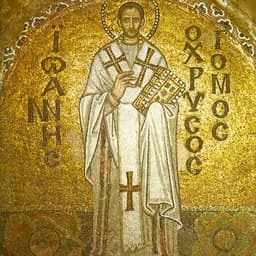
- St. John Chrysostom
- Homilies on the Gospel of St. John, Hom. 84
The Greek spine of the passage; his homily runs continuously from John 18:37 through the delivery to be crucified.
- St. Cyril of Alexandria
- Commentary on the Gospel of St. John, Book 12
- Theophylact of Ohrid
- Explanation of the Gospel of St. John (Catena Aurea)
His Gospel exegesis survives in public-domain English only through the Catena Aurea.
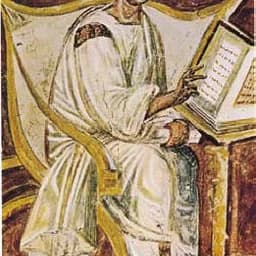
- Blessed Augustine of Hippo
- Tractates on the Gospel of St. John, Tractate 116
Venerated in the East as Blessed; his Johannine tractates are cited in later Byzantine catenae.
- St. Bede the Venerable
- Commentary on the Gospels (Catena Aurea)
A later Western witness; his Gospel material survives in public-domain English only through the Catena Aurea.
Read the sources: Chrysostom on John, Homily 84 (CCEL) · Cyril of Alexandria on John, Book 12 (tertullian.org) · Augustine, Tractates on John, Tractate 116 (CCEL) · Catena Aurea on John (isidore.co)
Behold the Man (Ecce Homo) (John 19:4–16)
The texts below are quoted verbatim from public-domain English translations; nothing is paraphrased.
St. John Chrysostom (c. 347–407)
Homilies on the Gospel of St. John, Homily 84 (on John 19:4–16) Source: trans. G. T. Stupart, in the Nicene and Post-Nicene Fathers, First Series, Vol. 14. Public domain. Full text: https://www.ccel.org/ccel/schaff/npnf114.iv.lxxxvi.html
On why Pilate scourged Him and led Him forth crowned, hoping to soften the fury of the Jews:
On the inconsistency of the Jews, who now fly to their law:
On Pilate's fear, and the question "Whence art thou?":
On "Thou wouldst have no power except it were given thee," and him that delivered Him:
On their cry "We have no king but Caesar":
St. Cyril of Alexandria (c. 376–444)
Commentary on the Gospel of St. John, Book XII (on John 19:11–15) Source: trans. T. Randell, Library of Fathers, 1885. Public domain. Full text: https://www.tertullian.org/fathers/cyril_on_john_12_book12.htm
On Pilate parading his authority, met by "Except it were given thee from above":
On the sense in which power was given to Pilate from above:
On him that delivered Him, who bears the greater sin:
On Israel's renunciation of his true King, "We have no king but Caesar":
Theophylact of Ohrid (c. 1055–1107)
Explanation of the Gospel of St. John (on John 19:11–15) As preserved in the Catena Aurea on John. Public domain. Full text: https://isidore.co/aquinas/english/CAJohn.htm
On who it was that delivered Him up:
On Pilate's word "Behold your King":
Blessed Augustine of Hippo (354–430)
Tractates on the Gospel of St. John, Tractate 116 (on John 19:1–16) Source: trans. John Gibb, in the Nicene and Post-Nicene Fathers, First Series, Vol. 7. Public domain. Full text: https://www.ccel.org/ccel/schaff/npnf107.iii.cxvii.html
On the word "Behold the man!":
On the kingdom not of this world, which overcame by patient suffering:
On "there is no power but of God," and the greater sin of him that delivered Him:
On the words "hath the greater sin":
St. Bede the Venerable (c. 673–735)
Commentary on the Gospels (on John 19:2–9) As preserved in the Catena Aurea on John. Public domain. Full text: https://isidore.co/aquinas/english/CAJohn.htm
On the crown of thorns and the purple robe, and their hidden meaning:
On why Pilate was the more afraid: