Christ Opens Their Minds to the Scriptures
Luke 24:44–49 · Post-Resurrection
Scripture
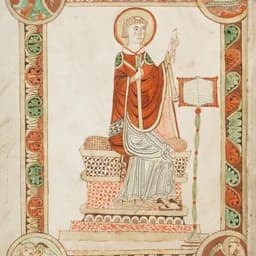
Luke 24:44–49
nd he said unto them, These are the words which I spake unto you, while I was yet with you, that all things must be fulfilled, which were written in the law of Moses, and in the prophets, and in the psalms, concerning me. 45Then opened he their understanding, that they might understand the scriptures, 46And said unto them, Thus it is written, and thus it behoved Christ to suffer, and to rise from the dead the third day: 47And that repentance and remission of sins should be preached in his name among all nations, beginning at Jerusalem. 48And ye are witnesses of these things. 49And, behold, I send the promise of my Father upon you: but tarry ye in the city of Jerusalem, until ye be endued with power from on high.
King James Version · public domain
Lluka 24:44–49
astaj u tha atyre, Këto jan’ ato fjalë, që u fola juve, kur ishnjam bashkë me ju, se duhetë të mbushenë gjith’ato që janë shkruarë ndë nomt të Moisiut edhe ndë profitërit edhe ndë Psallmet për mua. 45Atëhere u hapi mëndjen’ atyre, që të merrninë vesh shkronjatë. 46Edhe u tha atyre, Se kështu është shkruarë, edhe kështu duhej të hiqte Krishti, edhe të ngjallej prej së-vdekurish të-tretënë ditë, 47Edhe të lëçitej mb’emërit t’ati pendim edhe ndjesë fajesh mbë gjithë kombet, dyke zënë nga Jerusalimi. 48Edhe ju jeni dëshmimtarë për këto. 49Edhe na unë tek po dërgonj të-zotuarat’ e t’im Et mbi ju; edhe ju rrini ndë qytett Jerusalim, gjersa të vishi me fuqi prej së-larti.
Kristoforidhi, Dhiata e Re Toskërisht 1879 · zotërim publik
In their own words
When He had quieted their reasonings by what He said, by the touch of their hands, and by partaking of food, He then opened their mind to understand, that "so it was necessary for Him to suffer," even upon the wood of the cross.
St. Cyril of Alexandria, Commentary on Luke, Sermon 156 (on Luke 24:45)
Patristic sources
- St. Cyril of Alexandria
- Commentary on Luke, Sermon 156
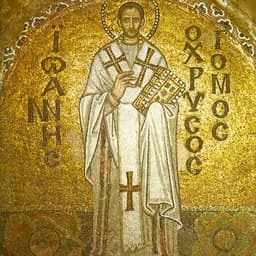
- St. John Chrysostom
- Homilies, as preserved in the Catena Aurea on Luke
- Theophylact of Ohrid
- Explanation of Luke (Catena Aurea)
- Blessed Augustine of Hippo
- The Harmony of the Gospels (Catena Aurea)
Venerated in the East as Blessed; his exegesis is preserved here through the Catena Aurea on Luke.
- St. Bede the Venerable
- Commentary on Luke (Catena Aurea)
Read the sources: Cyril of Alexandria, Commentary on Luke (tertullian.org) · Catena Aurea on Luke (isidore.co)
Christ Opens Their Minds to the Scriptures (Luke 24:44–49)
The texts below are quoted verbatim from public-domain English translations; nothing is paraphrased.
St. Cyril of Alexandria (c. 376–444)
Commentary on the Gospel of Luke, Sermon 156 (on Luke 24:45) Source: trans. R. Payne Smith, Library of Fathers, 1859. Public domain. Full text: https://www.tertullian.org/fathers/cyril_on_luke_14_sermons_146_156.htm
On "Then opened He their understanding, that they might understand the scriptures":
On the promise of the Father and the power from on high:
St. John Chrysostom (c. 347–407)
As preserved in the Catena Aurea on Luke. Public domain. Full text: https://isidore.co/aquinas/english/CALuke.htm
On why the sign of the resurrection is first displayed in Jerusalem, among the very men who crucified Him:
On why the Spirit was not given at once, but awaited:
Theophylact of Ohrid (c. 1055–1107)
Explanation of the Gospel of Luke (on Luke 24:45–49) As preserved in the Catena Aurea on Luke. Public domain. Full text: https://isidore.co/aquinas/english/CALuke.htm
On the perplexed minds that could not otherwise have grasped the mystery:
On the "repentance and remission of sins" that makes mention of baptism:
On "until ye be endued with power from on high":
Blessed Augustine of Hippo (354–430)
The Harmony of the Gospels (on Luke 24:44) As preserved in the Catena Aurea on Luke. Public domain. Full text: https://isidore.co/aquinas/english/CALuke.htm
On the Prophets filled with the Divine Spirit long before Christ was born, against those who call Him a magician:
St. Bede the Venerable (c. 673–735)
Commentary on the Gospel of Luke (on Luke 24:44–47) As preserved in the Catena Aurea on Luke. Public domain. Full text: https://isidore.co/aquinas/english/CALuke.htm
On His recourse to the Scriptures, that He might not seem to have mocked the human senses:
On the understanding opened to what was read:
On the truth of the body and the unity of the Church: