Consider the Lilies
Matt 6:25–34; Luke 12:22–31 · Early ministry in Galilee
Scripture
Matthew 6:25–34
herefore I say unto you, Take no thought for your life, what ye shall eat, or what ye shall drink; nor yet for your body, what ye shall put on. Is not the life more than meat, and the body than raiment? 26Behold the fowls of the air: for they sow not, neither do they reap, nor gather into barns; yet your heavenly Father feedeth them. Are ye not much better than they? 27Which of you by taking thought can add one cubit unto his stature? 28And why take ye thought for raiment? Consider the lilies of the field, how they grow; they toil not, neither do they spin: 29And yet I say unto you, That even Solomon in all his glory was not arrayed like one of these. 30Wherefore, if God so clothe the grass of the field, which to day is, and to morrow is cast into the oven, shall he not much more clothe you, O ye of little faith? 31Therefore take no thought, saying, What shall we eat? or, What shall we drink? or, Wherewithal shall we be clothed? 32(For after all these things do the Gentiles seek:) for your heavenly Father knoweth that ye have need of all these things. 33But seek ye first the kingdom of God, and his righteousness; and all these things shall be added unto you. 34Take therefore no thought for the morrow: for the morrow shall take thought for the things of itself. Sufficient unto the day is the evil thereof.
King James Version · public domain
Mateu 6:25–34
ërandaj po u them juve, Mos mendohi për jetënë t’uaj, ç’të hani a ç’të pini; as për trupinë t’uaj ç’të vishni; a nuk’ është jeta më e-nderçime se ushqimi, edhe trupi se të-veshuritë? 26Vështroni shpest’ e qiellit, se nukë mbledhënë ndë grunarë, edhe Ati juaj qiellori i ushqen; a nukë ndani ju më tepërë se ata? 27Po cili nga ju dyke pasurë kujdes munt të shtonjë një kut ndë shtatt të ti? 28Edhe ç’men-doni për të-veshuritë? Vështroni lulet’ e arësë, si rritenë; as mundonenë, as dredhënë. 29Po u them juve, se as Sollomoni me gjithë lavdin’ e ti nukë qe veshurë posi një nga këto. 30Po ndë qoftë se barin’ e arësë, që sot është, e nesërë hidhetë ndë furrë, Perëndia e vesh kështu, nukë dot’u veshnjë juve shumë më tepërë, o besë-pakë? 31Mos mentohi pra dyke thënë, ç’të hamë a ç’të pimë a ç’të veshimë? 32Sepse gjithë këto i kërkojnë kombetë; sepse Ati juaj qiellori e di, se keni nevojë për gjithë këto. 33Po kërkoni më përpara mbretërin’ e Perëndisë, edhe drejtërin’ e ati; edhe këto të-gjitha dot’u shtonenë juve. 34Mos mendohi pra për të-nesërmenë; sepse e-nesërmja dotë ketë mendim për punët’ e saja; mjaft është mbë çdo ditë e-keqeja e saj.
Kristoforidhi, Dhiata e Re Toskërisht 1879 · zotërim publik
In their own words
Hereby He teaches us not only to take no thought, but not even to be dazzled at the costliness of men's apparel.
St. John Chrysostom, Homilies on the Gospel of Matthew, Homily 22 (on Matthew 6:28–30)
Patristic sources
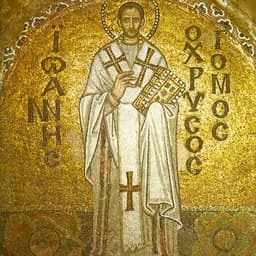
- St. John Chrysostom
- Homilies on Matthew, Hom. 21
- Homilies on Matthew, Hom. 22
- St. Cyril of Alexandria
- Commentary on Luke, Sermon 90
The chief Greek witness for the Luke 12:22–31 parallel; his Luke commentary survives in R. Payne Smith's 1859 translation.
- Blessed Augustine of Hippo
- Our Lord's Sermon on the Mount, Book II
Venerated in the East as Blessed; his Sermon on the Mount treats the whole of Matthew 6.
- St. Jerome
- Commentary on Matthew
Catena-only in public-domain English; quoted from the Catena Aurea on Matthew.
- St. Hilary of Poitiers
- Commentary on Matthew
Catena-only in public-domain English; supplies the mystical reading of the lilies.
Read the sources: Chrysostom, Homilies on Matthew (CCEL, NPNF1-10) · Cyril of Alexandria on Luke, Sermon 90 (tertullian.org) · Augustine, Our Lord's Sermon on the Mount, Book II (CCEL, NPNF1-6) · Catena Aurea on Matthew 6 (CCEL)
Consider the Lilies (Matthew 6:25–34; Luke 12:22–31)
The texts below are quoted verbatim from public-domain English translations; nothing is paraphrased.
St. John Chrysostom (c. 347–407)
Homilies on the Gospel of Matthew, Homilies 21 and 22 (on Matthew 6:24–34), trans. in the Nicene and Post-Nicene Fathers, First Series, Vol. 10. Public domain. Full text: https://www.ccel.org/ccel/schaff/npnf110/npnf110.iii.XXI.html
On "they sow not, neither do they reap" — that anxious care is forbidden, not honest labour:
On "Consider the lilies of the field":
St. Cyril of Alexandria (c. 376–444)
Commentary on the Gospel of Luke, Sermon 90 (on Luke 12:22–31), trans. R. Payne Smith, Library of Fathers, 1859. Public domain. Full text: https://www.tertullian.org/fathers/cyril_on_luke_09_sermons_89_98.htm
On turning away from worldly anxiety to what pleases God:
On the lilies outshining Solomon, and the vanity of anxious care for apparel:
On "seek His kingdom":
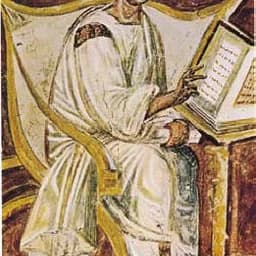
Blessed Augustine of Hippo (354–430)
Our Lord's Sermon on the Mount, Book II (on Matthew 6:25–34), trans. in the Nicene and Post-Nicene Fathers, First Series, Vol. 6. Public domain. Full text: https://www.ccel.org/ccel/schaff/npnf106/npnf106.v.iii.xv.html
On why the birds and the lilies are examples, not allegories to be decoded:
On "seek ye first the kingdom of God, and his righteousness":
St. Jerome (c. 347–420)
Commentary on Matthew (on Matthew 6:28–34). As preserved in the Catena Aurea on Matthew. Public domain. Full text: https://www.ccel.org/ccel/aquinas/catena1.ii.vi.html
On the flowers that no human art can rival:
On "Take therefore no thought for the morrow":
St. Hilary of Poitiers (c. 310–367)
Commentary on Matthew (on Matthew 6:28–30). As preserved in the Catena Aurea on Matthew. Public domain. Full text: https://www.ccel.org/ccel/aquinas/catena1.ii.vi.html
On the lilies read as a figure of the angels' glory: