The Crowds Amazed at His Authority
Matt 7:28–29 · Early ministry in Galilee
Scripture
Matthew 7:28–29
nd it came to pass, when Jesus had ended these sayings, the people were astonished at his doctrine: 29For he taught them as one having authority, and not as the scribes.
King James Version · public domain
Mateu 7:28–29
dhe Jisuj kur mbaroj këto fjalë, gjindja tmeroneshinë për mësimn’ e ati. 29Sepse i mësonte ata si një që ka pushtet e jo si shkronjësitë.
Kristoforidhi, Dhiata e Re Toskërisht 1879 · zotërim publik
In their own words
But they were astonished most of all at His authority. For not with reference to another, like the prophet and Moses, did He say what He said; but everywhere indicating Himself to be the person that had the power of deciding. For so, when setting forth His laws, He still kept adding, "But I say unto you."
St. John Chrysostom, Homilies on Matthew, Homily 25 (on Matthew 7:28–29)
Patristic sources
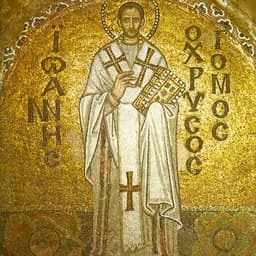
- St. John Chrysostom
- Homilies on Matthew, Hom. 25
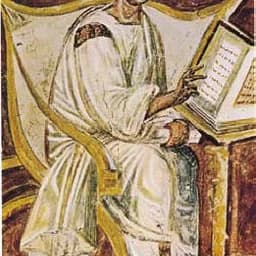
- Blessed Augustine of Hippo
- Our Lord's Sermon on the Mount, Book II, Ch. 25
Venerated in the East as Blessed; here he reads the close of the Sermon as summoning the hearer back to the seven Beatitudes.
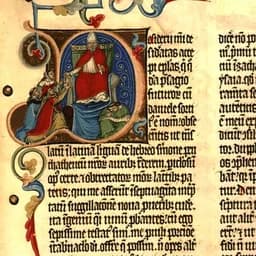
- St. Jerome
- Commentary on Matthew
Catena-only in public-domain English.
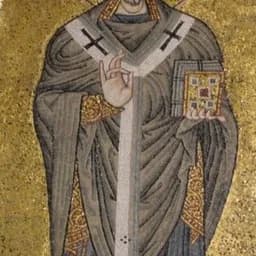
- St. Hilary of Poitiers
- Commentary on Matthew
Catena-only in public-domain English.
- St. Gregory the Great
- Moralia in Job, Book 23
Preserved here through the Catena Aurea on Matthew.
Read the sources: Chrysostom on Matthew, Homily 25 (CCEL) · Augustine, Our Lord's Sermon on the Mount, Book II (CCEL) · Catena Aurea on Matthew, ch. 7 (CCEL)
The Crowds Amazed at His Authority (Matthew 7:28–29)
The texts below are quoted verbatim from public-domain English translations; nothing is paraphrased.
St. John Chrysostom (c. 347–407)
Homilies on the Gospel of Matthew, Homily 25 (on Matthew 7:28–29) Source: trans. in the Nicene and Post-Nicene Fathers, First Series, Vol. 10. Public domain. Full text: https://www.ccel.org/ccel/schaff/npnf110/npnf110.iii.XXV.html
On what most astonished the multitude — that He spoke in His own person, not with reference to Moses and the prophets:
On why the candid-hearted were persuaded by His words where others were offended by His works:
On His teaching "as one having authority" being confirmed by His works:
Blessed Augustine of Hippo (354–430)
Our Lord's Sermon on the Mount, Book II, Chapter 25 (on Matthew 7:28–29) Source: trans. in the Nicene and Post-Nicene Fathers, First Series, Vol. 6. Public domain. Full text: https://www.ccel.org/ccel/schaff/npnf106/npnf106.v.iii.xxv.html
On tracing the Lord's precepts back to the seven sentences of the Beatitudes with which the Sermon began:
St. Jerome (c. 347–420)
Commentary on Matthew (on Matthew 7:28–29) As preserved in the Catena Aurea on Matthew. Public domain. Full text: https://www.ccel.org/ccel/aquinas/catena1.ii.vii.html
On the authority by which, as the Lord of Moses, He added to and changed the Law, where the scribes only taught what was written:
St. Hilary of Poitiers (c. 310–367)
Commentary on Matthew (on Matthew 7:28–29) As preserved in the Catena Aurea on Matthew. Public domain. Full text: https://www.ccel.org/ccel/aquinas/catena1.ii.vii.html
On the crowds measuring the power of Christ by the might of His words:
St. Gregory the Great (c. 540–604)
Moralia in Job, Book 23 (on Matthew 7:28–29) As preserved in the Catena Aurea on Matthew. Public domain. Full text: https://www.ccel.org/ccel/aquinas/catena1.ii.vii.html
On the especial power with which Christ spoke: