False Prophets and Their Fruits
Matt 7:15–20; Luke 6:43–45 · Early ministry in Galilee
Scripture
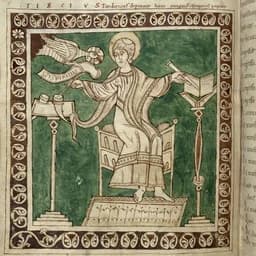
Matthew 7:15–20
eware of false prophets, which come to you in sheep’s clothing, but inwardly they are ravening wolves. 16Ye shall know them by their fruits. Do men gather grapes of thorns, or figs of thistles? 17Even so every good tree bringeth forth good fruit; but a corrupt tree bringeth forth evil fruit. 18A good tree cannot bring forth evil fruit, neither can a corrupt tree bring forth good fruit. 19Every tree that bringeth not forth good fruit is hewn down, and cast into the fire. 20Wherefore by their fruits ye shall know them.
King James Version · public domain
Mateu 7:15–20
dhe ruhi nga profitërit’ e-rrem, të-cilëtë vijnë te ju me të-veshura dhensh, po përbrënda janë ujq që rrëmbenjënë. 16Nga pemët’ e tyre dot’i njihni ata; mos mbledhënë rrush nga drizatë, a fiq nga murrizatë? 17Kështu çdo dru i-mirë bën pemë të-mira; po drur’ i-dobëtë bën pemë të-liga. 18Drur’ i-mirë s’munt të bënjë pemë të-liga, as drur’ i dobëtë të bënjë pemë të-mira. 19Çdo dru që s’bën pemë të-mirë pritetë e hidhetë ndë zjarr. 20Përandaj nga pemët’ e atyre dot’i njihni ata.
Kristoforidhi, Dhiata e Re Toskërisht 1879 · zotërim publik
In their own words
For the tree is certainly the soul itself, i.e. the man himself, but the fruits are the works of the man; an evil man, therefore, cannot perform good works, nor a good man evil works. If an evil man, therefore, wishes to perform good works, let him first become good.
Blessed Augustine of Hippo, Our Lord's Sermon on the Mount, Book II (on Matthew 7:15–20)
Patristic sources
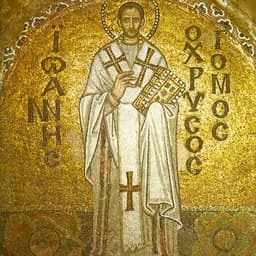
- St. John Chrysostom
- Homilies on Matthew, Hom. 23
- St. Cyril of Alexandria
- Commentary on Luke, Sermon 33
The Luke 6:43–45 parallel; his Commentary on Luke survives largely through the Syriac and the catenae.
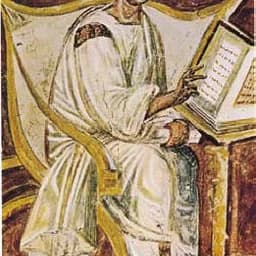
- Blessed Augustine of Hippo
- Our Lord's Sermon on the Mount, Book II
Venerated in the East as Blessed; his exposition of the Sermon on the Mount is the fullest patristic treatment of this pericope.
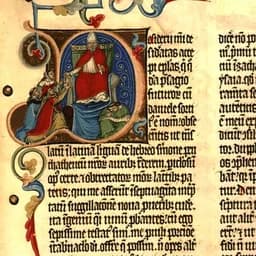
- St. Jerome
- Commentary on Matthew
Catena-only in public-domain English; the Newman Catena Aurea is the sole PD text of his Gospel exegesis.
- St. Gregory the Great
- Moralia in Job, Book XXXI
Preserved here through the Catena Aurea; the Hurst translation of his homilies is under copyright.
Read the sources: Chrysostom on Matthew, Homily 23 (CCEL) · Cyril on Luke, Sermon 33 (tertullian.org) · Augustine, Sermon on the Mount, Book II (CCEL) · Catena Aurea on Matthew 7 (CCEL)
False Prophets and Their Fruits (Matthew 7:15–20; Luke 6:43–45)
The texts below are quoted verbatim from public-domain English translations; nothing is paraphrased.
St. John Chrysostom (c. 347–407)
Source: trans. in the Nicene and Post-Nicene Fathers, First Series, Vol. 10. Public domain. Homilies on the Gospel of Matthew, Homily 23 (on Matthew 7:15–20) Full text: https://www.ccel.org/ccel/schaff/npnf110/npnf110.iii.XXIII.html
On what manner of men the "false prophets" are:
That the hypocrite is easily convicted, because he will not take pains:
On the tree that cannot bear good fruit while it continues evil:
St. Cyril of Alexandria (c. 376–444)
Source: trans. R. Payne Smith, Library of Fathers, 1859. Public domain. Commentary on the Gospel of Luke, Sermon 33 (on Luke 6:43–45) Full text: https://www.tertullian.org/fathers/cyril_on_luke_03_sermons_26_38.htm
On the deeds of a man's life as the test of what he is:
On the good treasure of the heart, which the speech pours forth:
Blessed Augustine of Hippo (354–430)
Source: trans. in the Nicene and Post-Nicene Fathers, First Series, Vol. 6. Public domain. Our Lord's Sermon on the Mount, Book II (on Matthew 7:15–20) Full text: https://www.ccel.org/ccel/schaff/npnf106/npnf106.v.iii.xxiv.html
On the good deeds that are the sheep's own clothing, which hypocrites counterfeit:
On the tree as the soul itself and the fruit as its works:
On the evil man who cannot do good while he remains evil, as snow cannot be warm:
St. Jerome (c. 347–420)
As preserved in the Catena Aurea on Matthew. Public domain. Commentary on Matthew (on Matthew 7:15–20) Full text: https://www.ccel.org/ccel/aquinas/catena1.ii.vii.html
On applying the false prophets to all whose speech and deeds disagree, and specially to heretics:
St. Gregory the Great (c. 540–604)
As preserved in the Catena Aurea on Matthew. Public domain. Moralia in Job, Book XXXI (on Matthew 7:15–20) Full text: https://www.ccel.org/ccel/aquinas/catena1.ii.vii.html
On the hypocrite whom persecution unmasks: