Gabriel Announces the Birth of John the Baptist
Luke 1:5–25 · Infancy and childhood
Scripture
Luke 1:5–25
here was in the days of Herod, the king of Judaea, a certain priest named Zacharias, of the course of Abia: and his wife was of the daughters of Aaron, and her name was Elisabeth. 6And they were both righteous before God, walking in all the commandments and ordinances of the Lord blameless. 7And they had no child, because that Elisabeth was barren, and they both were now well stricken in years. 8And it came to pass, that while he executed the priest’s office before God in the order of his course, 9According to the custom of the priest’s office, his lot was to burn incense when he went into the temple of the Lord. 10And the whole multitude of the people were praying without at the time of incense. 11And there appeared unto him an angel of the Lord standing on the right side of the altar of incense. 12And when Zacharias saw him, he was troubled, and fear fell upon him. 13But the angel said unto him, Fear not, Zacharias: for thy prayer is heard; and thy wife Elisabeth shall bear thee a son, and thou shalt call his name John. 14And thou shalt have joy and gladness; and many shall rejoice at his birth. 15For he shall be great in the sight of the Lord, and shall drink neither wine nor strong drink; and he shall be filled with the Holy Ghost, even from his mother’s womb. 16And many of the children of Israel shall he turn to the Lord their God. 17And he shall go before him in the spirit and power of Elias, to turn the hearts of the fathers to the children, and the disobedient to the wisdom of the just; to make ready a people prepared for the Lord. 18And Zacharias said unto the angel, Whereby shall I know this? for I am an old man, and my wife well stricken in years. 19And the angel answering said unto him, I am Gabriel, that stand in the presence of God; and am sent to speak unto thee, and to shew thee these glad tidings. 20And, behold, thou shalt be dumb, and not able to speak, until the day that these things shall be performed, because thou believest not my words, which shall be fulfilled in their season. 21And the people waited for Zacharias, and marvelled that he tarried so long in the temple. 22And when he came out, he could not speak unto them: and they perceived that he had seen a vision in the temple: for he beckoned unto them, and remained speechless. 23And it came to pass, that, as soon as the days of his ministration were accomplished, he departed to his own house. 24And after those days his wife Elisabeth conceived, and hid herself five months, saying, 25Thus hath the Lord dealt with me in the days wherein he looked on me, to take away my reproach among men.
King James Version · public domain
Lluka 1:5–25
dë ditt të Irodhit, mbretit të Judhesë, ishte një prift, që j’a thoshin’ emërinë Zahari, prej fëmijës’ s’Aviajt; edhe gruaja e ati ishte prej të bijavet t’Aaronit, edhe emërinë j’a quanin’ Elisavetë. 6Edhe që të dy ishinë të-drejtë përpara Perëndisë, dyke ecurë pa të-metë ndër gjithë porosit, e drejtërimet të Zotit. 7Edhe ata s’kishinë djalë, sepse Elisaveta ishte beronjë, edhe të dy ishinë të-shkuarë ndë ditt të tyre. 8Edhe ay tek ishte dyke bërë punët’ e priftërisë përpara Perëndisë ndë radhët të fëmijës’ së ti, 9Pas zakonit të punës’ së priftërisë, i ra shorta të hynjë ndë tempullt të Zotit e të djegë thimjamë. 10Edhe gjithë shumica ishte dyke falurë përjashta ndë kohët të të-djegurit të thimjamësë. 11Edhe i uduk ati një ëngjëll i Zotit dyke ndënjurë mb’anët të-djathtë të therores’ së thimjamësë; 12Edhe Zaharia kur pa, udroth, edhe frikë ra mbi atë. 13Po ëngjëlli i tha, Mos ufrikëso, Zahari, sepse lutja jote udëgjua, edhe gruaja jote Elisavetë dotë të pjellë djalë, edhe dot’j’a quanjç emërinë Joan. 14Edhe dotë jetë mbë ty gëzim e gas; edhe shumë veta dotë gëzonenë për lindjen’ e ati. 15Sepse dotë jet’ i-math përpara Zotit, edhe ver’ e të-pira të-forta nukë dotë pijë, edhe me frymë të-Shënjtëruarë dotë mbushetë që nga barku i s’ëmës’ së ti. 16Edhe shumë nga të bijt’ e Israilit i ka për të kthyerë mbë Zonë Perëndin’ e tyre. 17Edhe ay dotë vinjë përpara ati me frymë e me fuqi të Iliut, për të kthyerë zëmërat’ e atërvet mbë bijt, edhe të-pabinduritë ndë urtësit të të-drejtëvet, për të bërë gati Zotit një llaus të-ndrequrë. 18Edhe Zaharia i tha ëngjëllit; Si dot’ e marr vesh këtë punë; sepse unë jam plak, edhe gruaja ime e-lashtë ndë ditt të saj. 19Edhe ëngjëlli u-përgjeq e i tha, Unë jam Gavriili që rri përpara Perëndisë; edhe udërguashë që të të flas tyj, edhe të t’ap zërin’ e-mirë për këto punë. 20Edhe na tek dotë jesh pa gojë e dotë mos munç të flaç gjer mb’atë ditë që dotë bënenë këto; sepse nuk’ u zure besë fjalëvet të mia, të-cilatë dotë mbushenë ndë kohët të tyre. 21Edhe llauzi po priste Zaharinë, edhe çuditeshinë për të-mënuarit’ e ati ndë tempullt. 22Edhe kur dolli, nukë muntte t’u fliste atyre; edhe e kupëtuanë, se kishte parë të-faniturë ndë tempullt; edhe ay u bënte me shënja, edhe mbeti i-shurdhërë. 23Edhe si umbushnë ditt’ e shërbesës’ s’ati, shkoj ndë shtëpit të ti. 24Edhe pas këtyre ditve Elisaveta, gruaj’ e ati, umbars; edhe e fshihte vetëhenë pesë muaj, 25dyke thënë, Se kështu bëri Zoti mbë mua ndër këto dit që hodhi syt’ e ti mbi mua, që të heqnjë të-përqeshuritë t’im ndër mest të njerësvet.
Kristoforidhi, Dhiata e Re Toskërisht 1879 · zotërim publik
In their own words
There is one spirit of this life, another of grace. The former has its beginning at birth, its end at death; the latter is not tied down to times and seasons, is not quenched by death, is not shut out of the womb.
St. Ambrose of Milan, Exposition of the Gospel of Luke (Catena Aurea)
Patristic sources
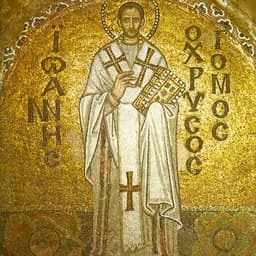
- St. John Chrysostom
- Homiletic material on Luke, as preserved in the Catena Aurea on Luke
- Theophylact of Ohrid
- Explanation of the Gospel of Luke (Catena Aurea)
- Origen of Alexandria
- Homilies on Luke (Catena Aurea)
Some of his speculations were condemned in 553; the passages quoted here are unaffected.
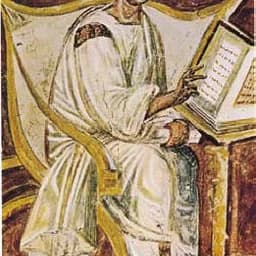
- Blessed Augustine of Hippo
- Exposition on Luke, as preserved in the Catena Aurea on Luke
Venerated in the East as Blessed.
- St. Ambrose of Milan
- Exposition of the Gospel of Luke (Catena Aurea)
- St. Bede the Venerable
- Commentary on Luke (Catena Aurea)
Read the sources: Catena Aurea on Luke (Isidore)
Gabriel Announces the Birth of John the Baptist (Luke 1:5–25)
The texts below are quoted verbatim from public-domain English translations; nothing is paraphrased.
St. John Chrysostom (c. 347–407)
As preserved in the Catena Aurea on Luke (on Luke 1:5–25), trans. J. H. Newman, 1841. Public domain. Full text: https://isidore.co/aquinas/english/CALuke.htm
On why St. Luke begins his Gospel with Zacharias and the birth of John:
On the barrenness of Elisabeth and of the wives of the Patriarchs:
On the silence laid upon Zacharias for his unbelief:
Theophylact of Ohrid (c. 1055–1107)
Explanation of the Gospel of Luke, as preserved in the Catena Aurea on Luke (on Luke 1:5–25), trans. J. H. Newman, 1841. Public domain. Full text: https://isidore.co/aquinas/english/CALuke.htm
On the name of Elisabeth and the priestly descent of John:
On why the sign was both deafness and dumbness:
Origen of Alexandria (c. 185–254)
As preserved in the Catena Aurea on Luke (on Luke 1:11–17), trans. J. H. Newman, 1841. Public domain. Full text: https://isidore.co/aquinas/english/CALuke.htm
On the angel that appears only to the clean of heart:
On the preparation the forerunner still works in the soul:
Blessed Augustine of Hippo (354–430)
As preserved in the Catena Aurea on Luke (on Luke 1:13), trans. J. H. Newman, 1841. Public domain. Full text: https://isidore.co/aquinas/english/CALuke.htm
On whose prayer it was that the angel declared heard:
St. Ambrose of Milan (c. 339–397)
Exposition of the Gospel of Luke, as preserved in the Catena Aurea on Luke (on Luke 1:5–15), trans. J. H. Newman, 1841. Public domain. Full text: https://isidore.co/aquinas/english/CALuke.htm
On the praise due to John's righteous parents and ancestry:
On the Holy Spirit poured out on John while yet in the womb:
On the spirit of this life and the spirit of grace:
St. Bede the Venerable (c. 673–735)
Commentary on Luke, as preserved in the Catena Aurea on Luke (on Luke 1:13–25), trans. J. H. Newman, 1841. Public domain. Full text: https://isidore.co/aquinas/english/CALuke.htm
On the meaning of the name John:
On the mystical reading of Zacharias and Elisabeth as the Priesthood and the Law: