Healing in the Capernaum synagogue
Mark 1:21–28; Luke 4:31–37 · Early ministry in Galilee
Scripture
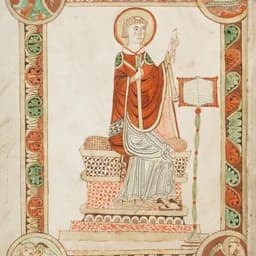
Mark 1:21–28
nd they went into Capernaum; and straightway on the sabbath day he entered into the synagogue, and taught. 22And they were astonished at his doctrine: for he taught them as one that had authority, and not as the scribes. 23And there was in their synagogue a man with an unclean spirit; and he cried out, 24Saying, Let us alone; what have we to do with thee, thou Jesus of Nazareth? art thou come to destroy us? I know thee who thou art, the Holy One of God. 25And Jesus rebuked him, saying, Hold thy peace, and come out of him. 26And when the unclean spirit had torn him, and cried with a loud voice, he came out of him. 27And they were all amazed, insomuch that they questioned among themselves, saying, What thing is this? what new doctrine is this? for with authority commandeth he even the unclean spirits, and they do obey him. 28And immediately his fame spread abroad throughout all the region round about Galilee.
King James Version · public domain
Marku 1:21–28
dhe hyjnë ndë Kapernaum; edhe Jisuj për-një-here ditën’ e-shëtunë hyri ndë sinagogjit’ e mësonte. 22Edhe çuditeshinë për mësimn’ e ati; sepse ishte dyke mësuar’ ata si ndonjë që ka pushtet, edhe jo si shkronjësitë. 23Edhe ishte ndë sinagogjit’ t’atyre një njeri që kish frymë të-ndyrë, edhe bërtiti dyke thënë, 24Mjerë! ç’ke ti me ne, Jisu Nazarinas? erdhe të na humbaç? të di cili je, Shenjti i Perëndisë. 25Po Jisuj e qërtoj, dyke thënë, Mbyll gojënë, edhe dil nga ay. 26Edhe frym’ e-ndyrë, si e shkleu, edhe bërtiti me zë të-math, dolli nga ay. 27Edhe të-gjithë uhabitnë kaqë sa pyesninë njëri tjatrinë, dyke thënë, Ç’është këjo? ç’është ky mësim i-ri? sepse me pushtet urdhëron edhe frymat’ e-ndyra, edhe i bindenë. 28Edhe për-një-here i dolli zëri ndëpër gjithë vëndinë rreth Galilesë.
Kristoforidhi, Dhiata e Re Toskërisht 1879 · zotërim publik
In their own words
For it is not by incantations that Christians seem to prevail (over evil spirits), but by the name of Jesus, accompanied by the announcement of the narratives which relate to Him; for the repetition of these has frequently been the means of driving demons out of men, especially when those who repeated them did so in a sound and genuinely believing spirit.
Origen of Alexandria, Against Celsus, Book I, Chapter VI (ANF Vol. 4)
Patristic sources
- St. Cyril of Alexandria
- Commentary on the Gospel of Luke, Sermon XII (on Luke 4:31–41)
Quoted from his own continuous Commentary on Luke (Payne Smith, 1859); the quotes are exact substrings of the tertullian.org page (sermons 12–25). PD.
- St. Athanasius the Great
- Letter to the Bishops of Egypt (Ad Episcopos Aegypti et Libyae), Ch. I
On the silencing of this very demon as the rule that truth is not to be received from an unclean mouth. NPNF, Second Series, Vol. 4 (1892). PD.
- Theophylact of Ohrid
- Explanation of the Gospel of Mark (as preserved in the Catena Aurea on Mark)
Standalone English of his Mark commentary is copyright-locked; quoted as preserved in the Catena Aurea on Mark. PD.
- Blessed Augustine of Hippo
- The City of God, Book XXI (as preserved in the Catena Aurea on Mark)
On the devils' knowledge of Christ without charity; quoted as preserved in the Catena Aurea on Mark. PD.
- St. Bede the Venerable
- Commentary on the Gospel of Mark (as preserved in the Catena Aurea on Mark)
No public-domain English of his Mark commentary; quoted as preserved in the Catena Aurea on Mark. PD.
Read the sources: Cyril on Luke, Sermons 12–25 (Tertullian.org) · Athanasius, Letter to the Bishops of Egypt (CCEL) · Catena Aurea on Mark (CCEL)
The Healing in the Capernaum Synagogue (Mark 1:21–28; Luke 4:31–37)
The texts below are quoted verbatim from public-domain English translations; nothing is paraphrased.
St. Cyril of Alexandria (c. 376–444)
Commentary on the Gospel of Luke, Sermon XIV (on Luke 4:31–41) Source: trans. R. Payne Smith, Library of Fathers, 1859. Public domain. Full text: https://www.tertullian.org/fathers/cyril_on_luke_02_sermons_12_25.htm
On the authority of His teaching in the synagogue (Luke 4:31–32):
On the rebuke of the unclean spirit, and its crafty confession (Luke 4:35):
On why He silenced the demons (Luke 4:41):
St. Athanasius the Great (c. 296–373)
Letter to the Bishops of Egypt (Ad Episcopos Aegypti et Libyae), Chapter I Source: Nicene and Post-Nicene Fathers, Second Series, Vol. 4, ed. Schaff and Wace, 1892. Public domain. Full text: https://www.ccel.org/ccel/schaff/npnf204.xvii.ii.i.html
Athanasius takes the silencing of this very demon (he quotes its words, "the Holy One of God," from Mark 1:24) as the rule that truth is not to be received from an unclean mouth.
The same letter, a little earlier, sets the exorcism within Christ's larger victory over the devil through His assumed humanity:
Theophylact of Ohrid (c. 1050–after 1107)
From his Explanation of the Gospel of Mark, as preserved in the Catena Aurea on Mark. Public domain.
On Christ teaching in the synagogue with power (Mark 1:21–22):
On why the demon dreads to come out of the man (Mark 1:24):
On the purpose of the miracle (Mark 1:26):
Blessed Augustine of Hippo (354–430)
From his City of God, Book XXI, as preserved in the Catena Aurea on Mark. Public domain.
On the devils' knowledge without charity (Mark 1:24):
On the measure in which Christ was known to the devils:
St. Bede the Venerable (c. 672–735)
From his Commentary on Mark, as preserved in the Catena Aurea on Mark. Public domain.
On the authority of Christ's teaching, surpassing the Scribes (Mark 1:22):
On why the healing first strikes the author of death (Mark 1:23):
On the devils' fear of judgment (Mark 1:24):
On the purpose of the miracles (Mark 1:27):