The healing of the blind and mute demoniac
Matt 12:22–23; Luke 11:14 · Later ministry in Galilee
Scripture
Matthew 12:22–23
hen was brought unto him one possessed with a devil, blind, and dumb: and he healed him, insomuch that the blind and dumb both spake and saw. 23And all the people were amazed, and said, Is not this the son of David?
King James Version · public domain
Mateu 12:22–23
tëhere i prunë ati një të-djallosurë, të-verbër’ e të-shurdhërë; edhe e shëroj atë, kaqë sa i-verbëri edhe i-shurdhëri fliste edhe shihte. 23Edhe gjithë gjindja habiteshin’ e thoshinë, Mos është ky i bir’ i Dhavidhit?
Kristoforidhi, Dhiata e Re Toskërisht 1879 · zotërim publik
In their own words
O wickedness of the evil spirit! he had barred up both entrances, whereby that person should have believed, as well sight as hearing; nevertheless, both did Christ open.
St. John Chrysostom, Homilies on Matthew, Homily 40 (on Matthew 12:22)
Patristic sources
- St. John Chrysostom
- Homilies on Matthew, Hom. 40
- St. Cyril of Alexandria
- Commentary on Luke, Sermon 80
- Theophylact of Ohrid
- Explanation of the Gospel of Luke
No standalone PD English; quoted as preserved in the Catena Aurea on Luke. The full Explanation survives in English only in the copyrighted Stade translation.
- Titus of Bostra
- Commentary on Luke
Catena-only, Luke volume; quoted as preserved in the Catena Aurea on Luke.
- Blessed Augustine of Hippo
- The Harmony of the Gospels, Book II.37
Venerated in the East as Blessed; harmonizes the Matthew and Luke accounts as one and the same man.
- St. Jerome
- Commentary on Matthew
No standalone PD English; quoted as preserved in the Catena Aurea on Matthew.
- St. Hilary of Poitiers
- Commentary on Matthew
No standalone PD English; quoted as preserved in the Catena Aurea on Matthew.
Read the sources: Chrysostom, Homilies on Matthew, Homily 40 (CCEL) · Cyril of Alexandria, Commentary on Luke, Sermon 80 (tertullian.org) · Augustine, Harmony of the Gospels, Book II.37 (CCEL) · Catena Aurea on Matthew, ch. 12 (CCEL)
The healing of the blind and mute demoniac (Matt 12:22–23; Luke 11:14)
The texts below are quoted verbatim from public-domain English translations; nothing is paraphrased.
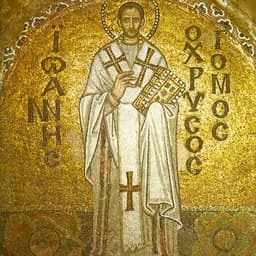
St. John Chrysostom (c. 347–407)
Homilies on the Gospel of Matthew, Homily 40 (on Matthew 12:22–23) Source: trans. in the Nicene and Post-Nicene Fathers, First Series, Vol. 10. Public domain. Full text: https://www.ccel.org/ccel/schaff/npnf110.iii.XL.html
On the demon that had shut up both the eyes and the ears by which the man might have come to believe:
On the Pharisees, whom the miracle only stung to envy, while the demon itself yielded in silence:
St. Cyril of Alexandria (c. 376–444)
Commentary on the Gospel of Luke, Sermon 80 (on Luke 11:14) Source: trans. R. Payne Smith, 1859. Public domain. Full text: https://www.tertullian.org/fathers/cyril_on_luke_07_sermons_66_80.htm
On the peculiar stubbornness of a dumb spirit, and the ease with which Christ casts it out:
On the crowd’s praise and the Pharisees’ contrary response:
Theophylact of Ohrid (c. 1055–1107)
Explanation of the Gospel of Luke (on Luke 11:14) As preserved in the Catena Aurea on Luke. Public domain.
On what it means that the spirit was “dumb” — the man shut off from speech because he was first shut off from hearing:
Titus of Bostra (d. c. 378)
Commentary on Luke (on Luke 11:14) As preserved in the Catena Aurea on Luke. Public domain.
On the demon that stops the soul’s hearing of God’s word, and the Christ who comes that we might hear it:
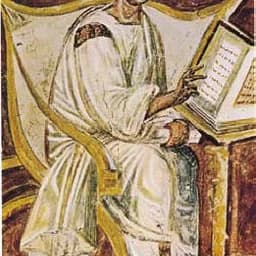
Blessed Augustine of Hippo (354–430)
The Harmony of the Gospels, Book II.37 (on Matthew 12:22–23; Luke 11:14) Source: trans. S. D. F. Salmond, Nicene and Post-Nicene Fathers, First Series, Vol. 6. Public domain. Full text: https://www.ccel.org/ccel/schaff/npnf106.vi.v.xxxviii.html
On why Luke, who calls the man only dumb, and Matthew, who calls him blind and dumb, speak of one and the same person:
St. Jerome (c. 347–420)
Commentary on Matthew (on Matthew 12:22–23) As preserved in the Catena Aurea on Matthew. Public domain. Full text: https://www.ccel.org/ccel/aquinas/catena1.ii.xii.html
On the three cures wrought at once, and how they are renewed daily in those who come to faith:
St. Hilary of Poitiers (c. 310–367)
Commentary on Matthew (on Matthew 12:22–23) As preserved in the Catena Aurea on Matthew. Public domain. Full text: https://www.ccel.org/ccel/aquinas/catena1.ii.xii.html
On this single afflicted man as a figure of the Gentiles, made fit to receive God: