The healing of the man born blind
John 9:1–41 · Journey to Jerusalem
Scripture
John 9:1–41
nd as Jesus passed by, he saw a man which was blind from his birth. 2And his disciples asked him, saying, Master, who did sin, this man, or his parents, that he was born blind? 3Jesus answered, Neither hath this man sinned, nor his parents: but that the works of God should be made manifest in him. 4I must work the works of him that sent me, while it is day: the night cometh, when no man can work. 5As long as I am in the world, I am the light of the world. 6When he had thus spoken, he spat on the ground, and made clay of the spittle, and he anointed the eyes of the blind man with the clay, 7And said unto him, Go, wash in the pool of Siloam, (which is by interpretation, Sent.) He went his way therefore, and washed, and came seeing. 8The neighbours therefore, and they which before had seen him that he was blind, said, Is not this he that sat and begged? 9Some said, This is he: others said, He is like him: but he said, I am he. 10Therefore said they unto him, How were thine eyes opened? 11He answered and said, A man that is called Jesus made clay, and anointed mine eyes, and said unto me, Go to the pool of Siloam, and wash: and I went and washed, and I received sight. 12Then said they unto him, Where is he? He said, I know not. 13They brought to the Pharisees him that aforetime was blind. 14And it was the sabbath day when Jesus made the clay, and opened his eyes. 15Then again the Pharisees also asked him how he had received his sight. He said unto them, He put clay upon mine eyes, and I washed, and do see. 16Therefore said some of the Pharisees, This man is not of God, because he keepeth not the sabbath day. Others said, How can a man that is a sinner do such miracles? And there was a division among them. 17They say unto the blind man again, What sayest thou of him, that he hath opened thine eyes? He said, He is a prophet. 18But the Jews did not believe concerning him, that he had been blind, and received his sight, until they called the parents of him that had received his sight. 19And they asked them, saying, Is this your son, who ye say was born blind? how then doth he now see? 20His parents answered them and said, We know that this is our son, and that he was born blind: 21But by what means he now seeth, we know not; or who hath opened his eyes, we know not: he is of age; ask him: he shall speak for himself. 22These words spake his parents, because they feared the Jews: for the Jews had agreed already, that if any man did confess that he was Christ, he should be put out of the synagogue. 23Therefore said his parents, He is of age; ask him. 24Then again called they the man that was blind, and said unto him, Give God the praise: we know that this man is a sinner. 25He answered and said, Whether he be a sinner or no, I know not: one thing I know, that, whereas I was blind, now I see. 26Then said they to him again, What did he to thee? how opened he thine eyes? 27He answered them, I have told you already, and ye did not hear: wherefore would ye hear it again? will ye also be his disciples? 28Then they reviled him, and said, Thou art his disciple; but we are Moses’ disciples. 29We know that God spake unto Moses: as for this fellow, we know not from whence he is. 30The man answered and said unto them, Why herein is a marvellous thing, that ye know not from whence he is, and yet he hath opened mine eyes. 31Now we know that God heareth not sinners: but if any man be a worshipper of God, and doeth his will, him he heareth. 32Since the world began was it not heard that any man opened the eyes of one that was born blind. 33If this man were not of God, he could do nothing. 34They answered and said unto him, Thou wast altogether born in sins, and dost thou teach us? And they cast him out. 35Jesus heard that they had cast him out; and when he had found him, he said unto him, Dost thou believe on the Son of God? 36He answered and said, Who is he, Lord, that I might believe on him? 37And Jesus said unto him, Thou hast both seen him, and it is he that talketh with thee. 38And he said, Lord, I believe. And he worshipped him. 39And Jesus said, For judgment I am come into this world, that they which see not might see; and that they which see might be made blind. 40And some of the Pharisees which were with him heard these words, and said unto him, Are we blind also? 41Jesus said unto them, If ye were blind, ye should have no sin: but now ye say, We see; therefore your sin remaineth.
King James Version · public domain
Joani 9:1–41
dhe dyke shkuarë, pa një njeri të-verbërë që prej të-lindurit. 2Edhe nxënësit’ e ati e pyetnë, dyke thënë, Ravvi, cili fëjeu, ky apo prindërit’ e ati, që të lintnjë i-verbërë? 3Jisuj upërgjeq, As ky fëjeu, as prindërit’ e ati; po që të dëftenenë punërat’ e Perëndisë tek ay. 4Unë duhetë të punonj punërat’ e ati që më dërgoj, gjersa është ditë; vjen natë, kur asdonjë s’munt të punonjë. 5Sa të jem ndë botët, jam drit’ e botësë. 6Pasi tha këto, pshtyti përdhe, edhe bëri baltë prej pështymësë, edhe leu syt’ e të-verbërit me baltënë; 7Edhe ay i tha ati, Shko e lahu ndë pellkt të Silloamit, (që e-kthyerë do me thënë i-Dërguarë). Vate pra e ula, edhe erdhi dyke parë. 8Fëqinjtë pra, edhe ata që e shihninë më përpara se ishte i-verbërë, thoshinë, Nuk’ është ky ay që rrinte e lypënte? 9Të-tjerë thoshinë, Se ky është; edhe të-tjerë, Se i shëmbëllen; po ay u thoshte, Se unë jam. 10I thoshinë pra, Qysh t’uhapnë sytë? 11Ay upërgjeq e tha, Një njeri që thuhetë Jisu bëri baltë, edhe më leu sytë, edhe më tha, Shko ndë pellkt të Silloamit, edhe lahu. Edhe si vajta e ulava, hapa sytë. 12I thanë pra, Ku ësht’ ay? Thotë, Nukë di. 13E bjenë te Farisenjtë atë që ishte njëherë i-verbërë. 14Edhe ishte e-shëtunë, kur bëri baltënë Jisuj, edhe i hapi ati sytë. 15Përsëri pra e pyetnin’ edhe Farisenjtë, Qysh hapi sytë? Edhe ay u tha atyre, Vuri baltë mbi syt të mi, edhe ulava, edhe shoh. 16Ca pra prej Farisenjet thoshinë, Ky njeri nuk’ është nga Perëndia, sepse nukë ruan të-shëtunënë. Të-tjerë thoshinë, Qysh munt të bënjë të-tilla çudira një njeri fajtuar? Edhe ishte një çarje ndër mest t’atyreve. 17I thonë përsëri të-verbërit, Ti ç’thua për atë, sepse të hapi sytë? Edhe ay tha, Se është profit. 18Judhenjtë pra nukë besuanë për atë, se ishte i-verbërë, edhe hapi sytë, gjersa thërritnë prindërit’ e ati që i uhapnë sytë; 19Edhe i pyetnë dyke thënë, Ky është biri juaj, për të-cilinë ju thoni se ka lindurë i-verbërë? qysh sheh pra ndashti? 20Prindërit’ e ati u upërgjeqnë atyre, e thanë, E dimë se ky është biri ynë, edhe se ka lindurë i-verbërë; 21Po qysh sheh ndashti nukë dimë; a cili i hapi sytë, neve nukë dimë; ay moshë ka, pyet-e-ni; ay dotë flasë për vetëhen’ e ti. 22Këto thanë prindërit’ e ati, sepse kishinë frikë nga Judhenjtë; sepse Judhenjtë ndashti kishinë lidhurë fjalë, që ay që t’a rrëfenjë për Krisht të bënetë jashtë sinagogjisë. 23Përandaj prindërit’ e ati thanë, Se moshë ka, pyet-e-ni. 24Thirrnë pra për-së-dyti njerinë, që kishte qënë i-verbërë, edhe i thanë, Ep-i lavdi Perëndisë; neve e dimë se ky njeri është fajtuar. 25Ay pra upërgjeq e tha, Nd’është fajtuar, nuk’ e di; një di, se qeshë i-verbërë, edhe ndashti shoh. 26Edhe i thanë përsëri, Ç’të bëri? qysh t’i api sytë? 27U upërgjeq atyre, Ndashti u thashë juve, edhe nukë dëgjuatë; ç’doni përsëri të dëgjoni? mos edhe juve doni të bëhi nxënës t’ati? 28E shanë pra, edhe thanë, Ti je nxënës i ati; po neve jemi nxënës të Moisiut. 29Neve dimë se Perëndia i foli Moisiut; po këtë nuk’ e dimë nga është. 30Njeriu upërgjeq e u tha atyre, Ndë këtë me të-vërtetë është çudia, se ju s’e dini nga është, edhe mua më hapi sytë. 31Edhe e dimë, se Perëndia nukë dëgjon fajtorë; po ndë pastë ndonjë frikë Perëndie, edhe të bënjë dashurimn’ e ati, këtë e dëgjon. 32Që prej kryes’ së jetësë nuk’ është dëgjuarë, se hapi njeri syt’ e njëj që ka lindur’ i-verbërë. 33Ndë mos ishte ky nga Perëndia, nukë dotë muntte të bënte asgjë. 34Upërgjeqnë e i thanë, Ti ke lindur’ i-tërë ndë faje, edhe ti na mëson? edhe e nxuarnë jashtë. 35Jisuj dëgjoj, se e nxuarnë jashtë; edhe si e gjeti, i tha, I beson të Birit të Perëndisë? 36Ay upërgjeq e tha, Cili ësht’ ay, Zot, që t’i besonj? 37Edhe Jisuj i tha, Edhe e ke parë, edhe ay është që flet bashkë me ty. 38Edhe ay tha, besonj, o Zot, edhe i ufal. 39Pastaj Jisuj tha, Unë për gjyq kam ardhurë ndë këtë botë, që të shohën’ ata që nukë shohënë, edhe të bënenë të-verbërë ata që shohënë. 40Edhe prej Farisenjet sa ishinë bashkë me atë i dëgjuanë këto, edhe i thanë, Mos jemi edhe neve të-verbërë? 41Jisuj u tha atyre, Po të ishitë të-verbërë, nukë dotë kishitë faj; po tashti thoni, Se shohëmë; faji juaj pra mbetetë.
Kristoforidhi, Dhiata e Re Toskërisht 1879 · zotërim publik
In their own words
As then the evils of the present life are not evils, so neither are the good things good; sin alone is an evil, but blindness is not an evil.
St. John Chrysostom, Homilies on the Gospel of St. John, Homily 56 (on John 9:1–7)
Patristic sources
- St. John Chrysostom
- Homilies on the Gospel of St. John, Hom. 56–57
Standalone NPNF text (Stupart, NPNF1-14, 1889). Quotes 1–2 are in Homily 56, quote 3 in Homily 57; the block header spans both.
- St. Cyril of Alexandria
- Commentary on the Gospel of John, Book VI
John 9 falls in the vol. 2 (Randell, LFC 48, 1885) portion of Book VI, which straddles the Pusey/Randell volume break.
- Theophylact of Ohrid
- Explanation of the Gospel of John
Catena-only in PD English (tagged 'Theophyl.' in the Oxford 1845 Catena on John); the modern Stade translation (Chrysostom Press) is under copyright.
- Blessed Augustine of Hippo
- Tractates on the Gospel of John, Tractate 44
Venerated in the East as Blessed; his Johannine tractates are cited in later Byzantine catenae.
- St. Gregory the Great
- Morals on the Book of Job (Moralia in Job), Preface
The John 9 excerpt is drawn by the catenist from the Moralia Preface (Catena margin cite 'in Praef. Moral. c. 5'); his Gospel homilies are Catena-only in PD English (Hurst's Forty Gospel Homilies are locked).
- St. Bede the Venerable
- Catena Aurea on John (chapter 9)
Catena-only in PD English for the Gospels; both quotes are tagged 'Bede.' in the Oxford 1845 Catena on John.
Read the sources: Chrysostom, Homilies on John — Homily 56 (CCEL, NPNF1-14) · Cyril of Alexandria, Commentary on John, Book VI (tertullian.org, LFC) · Augustine, Tractates on John — Tractate 44 (CCEL, NPNF1-7) · Catena Aurea on John — Oxford 1845 scan (archive.org)
The healing of the man born blind (John 9:1–41)
The texts below are quoted verbatim from public-domain English translations; nothing is paraphrased.
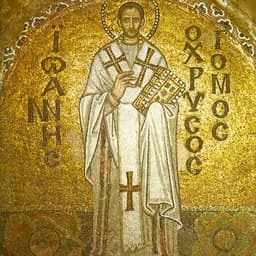
St. John Chrysostom (c. 347–407)
Homilies on the Gospel of St. John, Homilies 56–57 (on John 9:1–7) Source: trans. G. T. Stupart, Nicene and Post-Nicene Fathers, First Series, Vol. 14, ed. Philip Schaff, 1889. Public domain. Full text: https://www.ccel.org/ccel/schaff/npnf114.iv.lviii.html
On why the man was born blind, and how his very blindness became a benefit to him:
On the steadfast obedience of the blind man, who did not reason but simply obeyed:
On why He used spittle and clay rather than water, and sent the man to Siloam:
St. Cyril of Alexandria (c. 376–444)
Commentary on the Gospel of John, Book VI (on John 9:1–7) Source: trans. for the Library of Fathers (P. E. Pusey / T. Randell), LFC 43, 48, 1874/1885. Public domain. Full text: https://www.tertullian.org/fathers/cyril_on_john_06_book6.htm
On the Lord's answer as a refutation of two errors at once — that a man's sufferings punish his parents' sins, and that souls sinned before their bodies existed:
On "that the works of God should be made manifest in him," and the Physician made known by the cure:
Theophylact of Ohrid (c. 1055–1107)
Explanation of the Gospel of John (on John 9:18–34) From his Explanation of the Gospel of John, as compiled in the Catena Aurea on John. Public domain.
On the parents, faint-hearted before the Jews, unlike their fearless son:
On the blind man's argument that God does not enable sinners to work miracles:
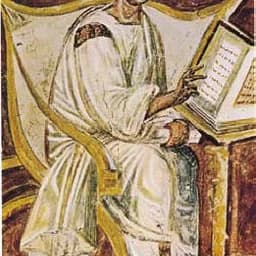
Blessed Augustine of Hippo (354–430)
Tractates on the Gospel of John, Tractate 44 (on John 9:1–41) Source: trans. John Gibb, Nicene and Post-Nicene Fathers, First Series, Vol. 7, ed. Philip Schaff, 1888. Public domain. Full text: https://www.ccel.org/ccel/schaff/npnf107.iii.xlv.html
On the blind man as a figure of the whole human race, blind from its birth in the first man:
On the clay as the Word made flesh, and on Siloam, "Sent," as the washing of baptism:
St. Gregory the Great (c. 540–604)
Morals on the Book of Job (Moralia in Job), Preface (on John 9:3) As preserved in the Catena Aurea on John. Public domain.
On the several purposes for which affliction falls, so that suffering is not always the punishment of sin:
St. Bede the Venerable (c. 673–735)
As preserved in the Catena Aurea on John. Public domain.
On the mystical meaning of Jesus passing by after leaving the temple — His descent to have compassion on the Gentiles:
On the healed man falling down to worship, an example of how to pray: