All entriesmiracle

Healing of two blind men

Matt 9:27–31 · Later ministry in Galilee

Matthew 9:27–31

nd when Jesus departed thence, two blind men followed him, crying, and saying, Thou son of David, have mercy on us. 28And when he was come into the house, the blind men came to him: and Jesus saith unto them, Believe ye that I am able to do this? They said unto him, Yea, Lord. 29Then touched he their eyes, saying, According to your faith be it unto you. 30And their eyes were opened; and Jesus straitly charged them, saying, See that no man know it. 31But they, when they were departed, spread abroad his fame in all that country.

King James Version · public domain

Mateu 9:27–31

dhe Jisuj dyke ikur’ andej, i vanë prapa dy të-verbërë, dyke klithur’ e dyke thënë, Përdëlle-na, o bir’ i Dhavidhit. 28Edhe ay kur erdhi ndë shtëpit, erthnë përanë ati të-verbëritë, edhe Jisuj u thot’ atyre, Besoni se munt t’a bënj këtë unë? Ata i thon’ ati, Po, Zot. 29Atëhere preku syt’ e atyreve, dyke thënë, Pas besësë s’uaj ubëftë mbë ju. 30Edhe uhapnë syt’ e atyreve. Edhe Jisuj i porositi ata shtrënguarshim, dyke thënë, Shikoni mos marrë vesh njeri këtë. 31Po ata posa duallnë dhanë zë për atë ndëpër gjith’atë dhe.

Kristoforidhi, Dhiata e Re Toskërisht 1879 · zotërim publik

Summary

The two blind men follow Christ and cry out before they are healed, and the tradition notes that this following in darkness is already an act of faith: they walk toward one they cannot see. Their cry, "Son of David, have mercy on us," is itself a confession, for in naming Him Son of David they acknowledge His descent and the promise made to David's house, owning Him as the awaited King even while they lack sight. The Fathers observe that Christ does not heal at once but waits until they have come into the house, drawing their persistence out into the open.

Chrysostom and Theophylact take the healing as measured to the men's faith, which the Lord first elicits with His question, "Do you believe that I am able to do this?" He asks not because He is ignorant but so that the men may confess with their own mouths and so that their faith may be displayed for others. The touch of His hand upon their eyes joins His humanity to the cure, and the word "According to your faith be it seed to you" sets the pattern the tradition loves: grace is given freely, yet it meets and answers the measure a person brings.

On the moral level the Fathers read the two as figures of every soul blind in sin, which receives light only when it follows Christ, cries for mercy, and confesses Him. The charge to tell no one guards against a premature and merely political acclaim of the Messiah before His Passion has revealed what kind of King He is. That the healed men nonetheless spread the report everywhere the tradition reads gently: not as rebellion but as the gratitude of those who cannot keep silent about so great a gift.

The Healing of Two Blind Men (Matthew 9:27–31)

Public-Domain Patristic Commentary

As Christ leaves the ruler's house, two blind men follow Him, crying, "Thou Son of David, have mercy on us." He does not heal them at once in the road, but lets them follow Him into the house, where He asks, "Believe ye that I am able to do this?" They answer, "Yea, Lord." Then He touches their eyes, saying, "According to your faith be it unto you," and their eyes are opened. He strictly charges them to tell no one, yet they go out and spread His fame through all that country. This miracle is recorded only by Matthew, the third in a sequence (after the raising of Jairus's daughter and the healing of the woman) in which death, disease, and now blindness each bear witness to Christ. The texts below are quoted verbatim from public-domain translations. Chrysostom's commentary is primary; Jerome, Hilary, and Gregory the Great are given as preserved in the Catena Aurea on Matthew (St. Thomas Aquinas, trans. J. H. Newman, 1841). Nothing is paraphrased.


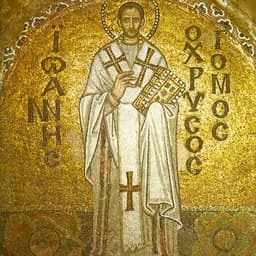
St. John Chrysostom (c. 347–407)

Homilies on the Gospel of Matthew, Homily 32 (on Matthew 9:27–30) Source: trans. in the Nicene and Post-Nicene Fathers, First Series, Vol. 10. Public domain. Full text: https://www.newadvent.org/fathers/200132.htm

On why He asked "Believe ye that I am able," to lead them higher than the title they used:

But not for these causes only does He require faith of them, but forasmuch as they called Him "Son of David," He to lead them up to what is higher, and to teach them to entertain the imaginations they ought of Himself, says, "Believe ye that I am able to do this?" He did not say, "Believe ye that I am able to entreat my Father, that I am able to pray" but, "that I am able to do this?"

On their answer, and on His healing them according to their faith, proclaiming the faith in their soul before healing the body:

What then is their word? "Yea, Lord." They call Him no more Son of David, but soar higher, and acknowledge His dominion. And then at last He for His part lays His hand upon them, saying, "According to your faith be it unto you." And this He does to confirm their faith, and to show that they are participators in the good work, and to witness that their words were not words of flattery. For neither did He say, "Let your eyes be opened," but, "According to your faith be it unto you;" which He says to many of them that came unto Him; before the healing of their bodies, hastening to proclaim the faith in their soul; so as both to make them more approved, and to render others more serious.

On the charge this miracle lays against the unbelieving, who saw and would not believe:

But this is no light charge against the Jews; when these men, though their eyes were struck out, receive the faith by hearing alone, but they beholding the miracles, and having their sight to witness what was happening, do all just contrary. And see their earnestness also, both by their cry, and by their prayer itself. For they did not merely approach Him, but with loud cries, and alleging nought else but "mercy."

On His charging them to tell no one, and how this agrees with bidding others proclaim God's glory:

They however did not endure this, but became preachers, and evangelists; and when bidden to hide what had been done, they endured it not. And if in another place we find Him saying, "Go your way, and declare the glory of God," that is not contrary to this, but even highly in agreement herewith. For He instructs us to say nothing ourselves, concerning ourselves, but even to forbid them that would eulogise us: but if the glory be referred to God, then not only not to forbid, but to command men to do this.


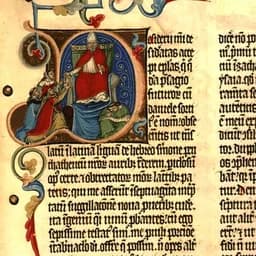
St. Jerome (c. 347–420)

Commentary on Matthew (on Matthew 9:27–31) As preserved in the Catena Aurea, trans. J. H. Newman, 1841. Public domain. Full text: https://www.ccel.org/ccel/aquinas/catena1.ii.ix.html

On the title "Son of David" as proof of the real incarnation, against the heretics:

Let Marcion and Manichaeus, and the other heretics who mangle the Old Testament, hear this, and learn that the Saviour is called the Son of David; for if He was not born in the flesh, how is He the Son of David?

On their being healed not by the way but in the house, their faith first proved:

Yet were they not healed by the way-side and in passing as they had thought to be; but when He was entered into the house, they come unto Him; and first their faith is made proof of, that so they may receive the light of the true faith.

On the charge of silence, given from humility, and broken from gratitude:

The Lord from humility shunning the fame of His glorious works, gave them this charge, and they from gratitude cannot be silent respecting so great benefit.


St. Hilary of Poitiers (c. 310–367)

As preserved in the Catena Aurea on Matthew. Public domain.

On why He enjoined silence upon the blind men:

He enjoins silence on the blind men, because to preach was the Apostles' office.


St. Gregory the Great (c. 540–604)

From his Morals on Job, as preserved in the Catena Aurea on Matthew. Public domain.

On the question why the Almighty willed His works to be hidden, yet they were preached against His will:

We must enquire how this is that the Almighty, whose will and power are coextensive, should have here willed that His excellent works should be hid in silence, and is yet preached against His will, as it were, by these men who have received their sight.

On the answer: that Christ leaves His servants an example, their deeds hid by design yet published of compulsion:

It is only that He herein has left an example to His servants who follow Him, that they should desire their own good deeds to be hid, and that notwithstanding they should be made known against their will, that others may profit by their example. They should then be hid by design, and published of compulsion; their concealment is by our own watchfulness, their betrayal is for others' profit.


Note on sources and other Fathers

The Fathers gathered here meet on the same scene and press it from several sides. Chrysostom and Jerome both fix on the blind men's cry of faith and the title "Son of David." Chrysostom uses the title to show Christ leading them higher: when they answer "Yea, Lord," they "call Him no more Son of David, but soar higher, and acknowledge His dominion," and He seals their cure with "according to your faith," proclaiming the faith of the soul before opening the eyes of the body. He also turns the scene into an indictment, that men whose "eyes were struck out" believed by hearing alone, while those who saw the miracles would not. Jerome takes the very same title and makes it a weapon against the heretics who tore up the Old Testament: if Christ is truly "Son of David," then He was truly "born in the flesh," and Marcion and Manichaeus are answered. Jerome and Chrysostom agree, too, that the healing waited for the privacy of the house, where faith was first put to proof, and that the charge of silence was given in humility.

To these the Catena joins two further witnesses on the command of silence. St. Hilary of Poitiers reads it as a matter of order, that "to preach was the Apostles' office," not yet the office of the healed. St. Gregory the Great presses the deeper paradox, why the Almighty, "whose will and power are coextensive," should will His works hidden and yet let them be proclaimed against His will, and answers that Christ leaves His servants an example, "that they should desire their own good deeds to be hid, and that notwithstanding they should be made known against their will," so that "their concealment is by our own watchfulness, their betrayal is for others' profit."

The Catena gathers others not quoted here at length. Remigius notes that they rightly called Him Son of David, "because the Virgin Mary was of the line of David," and that He asked their faith so that, "confessed by their mouth," it might earn a higher reward. A widespread allegorical reading (in Remigius and Rabanus Maurus) sees the two blind men as the two peoples, Jews and Gentiles, enlightened by faith within the house of the Church. For verbatim public-domain English, Chrysostom's homily and the Catena Aurea as it preserves Jerome, Hilary, and Gregory are the principal sources.

Patristic sources