The healings at Gennesaret
Matt 14:34–36; Mark 6:53–56 · Later ministry in Galilee
Scripture
Matthew 14:34–36
nd when they were gone over, they came into the land of Gennesaret. 35And when the men of that place had knowledge of him, they sent out into all that country round about, and brought unto him all that were diseased; 36And besought him that they might only touch the hem of his garment: and as many as touched were made perfectly whole.
King James Version · public domain
Mateu 14:34–36
dhe si shkuanë përtej erthnë ndë dhet Gjennisaret. 35Edhe njerëzit’ e ati vendi, kur e njohnë, dërguanë ndëpër gjith’ato anë edhe i prunë ati gjith’ ata që kishinë keq. 36Edhe i luteshin’ ati të preknjënë pëqin’ e rrobës’ s’ati vetëmë; edhe sa e preknë ushëruanë.
Kristoforidhi, Dhiata e Re Toskërisht 1879 · zotërim publik
In their own words
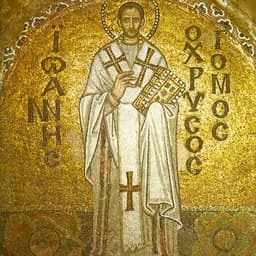
Let us also then touch the hem of His garment, or rather, if we be willing, we have Him entire.
St. John Chrysostom, Homilies on Matthew, Homily 50 (on Matthew 14:34–36)
Patristic sources
- St. John Chrysostom
- Homilies on Matthew, Hom. 50
Quoted from his complete NPNF Homily 50 on Matthew, which runs through Matt 14:36.
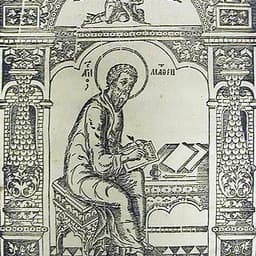
- Theophylact of Ohrid
- Explanation of the Gospel of Mark
Catena-only in public-domain English; the Stade translation (Chrysostom Press, 1993) is under copyright and is cited, not reproduced.
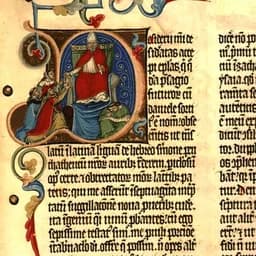
- St. Jerome
- Commentary on Matthew
Catena-only in public-domain English.
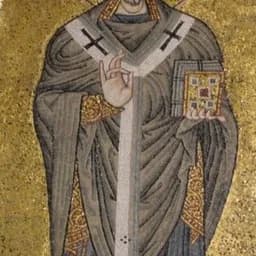
- St. Hilary of Poitiers
- Commentary on Matthew
Catena-only in public-domain English.
- St. Bede the Venerable
- Commentary on Mark
Catena-only in public-domain English; speaks here for the Markan account.
- St. Rabanus Maurus
- Commentary on Matthew
Later Western compiler; Catena-only, placed last.
Read the sources: Chrysostom, Homilies on Matthew, Homily 50 (CCEL) · Catena Aurea on Matthew, ch. 14 (CCEL) · Catena Aurea on Mark, ch. 6 (CCEL)
The healings at Gennesaret (Matt 14:34–36; Mark 6:53–56)
The texts below are quoted verbatim from public-domain English translations; nothing is paraphrased.
St. John Chrysostom (c. 347–407)
Homilies on the Gospel of Matthew, Homily 50 (on Matthew 14:34–36) Source: trans. Sir George Prevost, revised by M. B. Riddle, in the Nicene and Post-Nicene Fathers, First Series, Vol. 10. Public domain. Full text: https://www.ccel.org/ccel/schaff/npnf110.iii.L.html
On the higher faith of these people, who no longer sought a touch of His hand but only of His garment:
On the hem of His garment, and the yet greater gift of His whole body:
Theophylact of Ohrid (c. 1055–1107)
Explanation of the Gospel of Mark (on Mark 6:53–56) As preserved in the Catena Aurea on Mark. Public domain. Full text: https://www.ccel.org/ccel/aquinas/catena2.iii.vi.html
On the people of the country recognising Him as soon as He landed:
On their bringing the sick to Him, taught by the healing of the woman with the issue of blood:
St. Jerome (c. 347–420)
Commentary on Matthew (on Matthew 14:34–36) As preserved in the Catena Aurea on Matthew. Public domain. Full text: https://www.ccel.org/ccel/aquinas/catena1.ii.xiv.html
On the name Gennesaret, and the Church guided to shore:
On the hem of the garment:
St. Hilary of Poitiers (c. 310–367)
Commentary on Matthew (on Matthew 14:34–36) As preserved in the Catena Aurea on Matthew. Public domain. Full text: https://www.ccel.org/ccel/aquinas/catena1.ii.xiv.html
On the believers who met Him when the times of the Law were ended, and on the virtue that flows from the whole garment to the Apostles:
St. Bede the Venerable (c. 673–735)
Commentary on Mark (on Mark 6:53–56) As preserved in the Catena Aurea on Mark. Public domain. Full text: https://www.ccel.org/ccel/aquinas/catena2.iii.vi.html
On how they knew Him, and on the faith that would not keep the cure to itself:
St. Rabanus Maurus (c. 780–856)
Commentary on Matthew (on Matthew 14:34–36) As preserved in the Catena Aurea on Matthew. Public domain. Full text: https://www.ccel.org/ccel/aquinas/catena1.ii.xiv.html
On the name of the land:
On its meaning, and the rest that awaits us at the end: