I and the Father Are One
John 10:22–39 · Journey to Jerusalem
Scripture
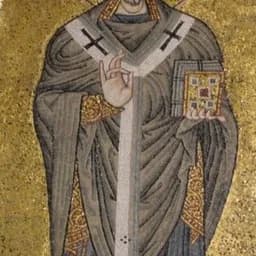
John 10:22–39
nd it was at Jerusalem the feast of the dedication, and it was winter. 23And Jesus walked in the temple in Solomon’s porch. 24Then came the Jews round about him, and said unto him, How long dost thou make us to doubt? If thou be the Christ, tell us plainly. 25Jesus answered them, I told you, and ye believed not: the works that I do in my Father’s name, they bear witness of me. 26But ye believe not, because ye are not of my sheep, as I said unto you. 27My sheep hear my voice, and I know them, and they follow me: 28And I give unto them eternal life; and they shall never perish, neither shall any man pluck them out of my hand. 29My Father, which gave them me, is greater than all; and no man is able to pluck them out of my Father’s hand. 30I and my Father are one. 31Then the Jews took up stones again to stone him. 32Jesus answered them, Many good works have I shewed you from my Father; for which of those works do ye stone me? 33The Jews answered him, saying, For a good work we stone thee not; but for blasphemy; and because that thou, being a man, makest thyself God. 34Jesus answered them, Is it not written in your law, I said, Ye are gods? 35If he called them gods, unto whom the word of God came, and the scripture cannot be broken; 36Say ye of him, whom the Father hath sanctified, and sent into the world, Thou blasphemest; because I said, I am the Son of God? 37If I do not the works of my Father, believe me not. 38But if I do, though ye believe not me, believe the works: that ye may know, and believe, that the Father is in me, and I in him. 39Therefore they sought again to take him: but he escaped out of their hand,
King James Version · public domain
Joani 10:22–39
dhe ubë e-kremteja e të-shënjtëruarit të hieroresë ndë Jerusalim, edhe ishte dimër. 23Edhe Jisuj ecënte ndë hieroret, ndë kamaret të Sollomonit. 24Judhenjtë pra e qerthëlluanë, edhe i thoshinë, Gjer kur mban ndë dyshim shpirtinë t’ënë? ndë je Krishti, na thuaj ndër sy. 25Jisuj u upërgjeq atyre, U thashë juve, edhe nukë besoni. Punëratë që bënj unë mb’emërit të t’im Eti, këto dëshmonjënë për mua. 26Po ju nukë besoni; sepse nukë jini prej dhënvet të mia. 27Sikundrë u thashë juve, dhënt’ e mia dëgjonjënë zënë t’im, edhe un’ i njoh; edhe më vinjënë pas. 28Edhe un’ u ap atyre jetë të-përjetëshme; edhe nukë dotë humbasënë për gjithë jetënë, edhe nukë dot’i rrëmbenjë njeri ato prej dorësë s’ime. 29Im Atë, që m’i ka dhënë, është më i-math se të-gjithë; edhe asnjë s’munt t’i rrëmbenjë prej dorës’ së t’im Eti. 30Unë edhe Ati jemi një. 31Përsëri pra Judhenjtë rroknë gurë, që t’i bininë me gurë. 32Jisuj u upërgjeq atyre, Shumë punëra të-mira u rrëfeva juve prej t’im Eti; për ç’punë nga ato më bini me gurë? 33Judhenjtë i upërgjeqnë, dyke thënë, Nukë të bjemë me gurë për punë të-mirë, po për vllasfimi, edhe sepse ti, ndonëse je njeri, e bën vetëhenë t’ënde Perëndi. 34Jisuj u upërgjeq atyre, Nuk’ është shkruarë ndë nomt t’uaj, “Unë thashë, Jeni perëndira?” 35Ndë qoftë, se quajti perëndira ata, mbë të-cilët ubë fjal’ e Perëndisë, (edhe shkronja s’munt të bjerë poshtë), 36Për atë që e shënjtëroj Ati, edhe e dërgoj ndë botët, ju thoni, Se ti vllasfimis, sepse thashë, Jam i Bir’ i Perëndisë? 37Ndë mos bënj punërat’ e t’im Eti, mos më besoni; 38Po ndë bënj, edhe ndë mos më besoni mua, beso-u-ni punëravet; që të njihni e të besoni, se Ati është tek unë, edhe unë tek ay. 39Kërkoninë pra përsëri t’a zënë; po dolli nga dora e atyreve.
Kristoforidhi, Dhiata e Re Toskërisht 1879 · zotërim publik
In their own words
I and the Father are One. By the word "One" He signifies the Sameness of their Essence: and by the word "are" He severs into two that which is understood, and again binds them up into One Godhead.
St. Cyril of Alexandria, Commentary on the Gospel of John, Book 7 (on John 10:30)
Patristic sources
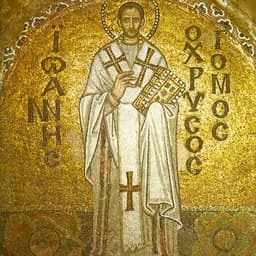
- St. John Chrysostom
- Homilies on the Gospel of St. John, Hom. 61
- St. Cyril of Alexandria
- Commentary on the Gospel of John, Book 7
- Theophylact of Ohrid
- Explanation of the Gospel of John
No standalone public-domain English of his John commentary exists; quoted through the Catena Aurea on John.
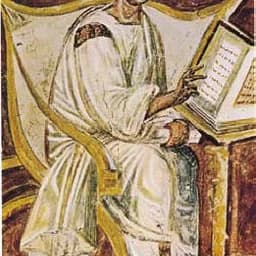
- Blessed Augustine of Hippo
- Tractates on the Gospel of John, Tractate 48
Venerated in the East as Blessed; his Johannine tractates are cited in later Byzantine catenae.
- St. Hilary of Poitiers
- On the Holy Trinity, Book 7
His anti-Arian exposition of the 'one' survives in public-domain English only through the Catena Aurea on John.
Read the sources: Chrysostom on John, Homily 61 (CCEL) · Cyril of Alexandria on John, Book 7 (tertullian.org) · Augustine, Tractate 48 on John (CCEL) · Catena Aurea on John (isidore.co)
I and the Father Are One (John 10:22–39)
The texts below are quoted verbatim from public-domain English translations; nothing is paraphrased.
St. John Chrysostom (c. 347–407)
Homilies on the Gospel of St. John, Homily 61 (on John 10:22–39) Source: trans. in the Nicene and Post-Nicene Fathers, First Series, Vol. 14. Public domain. Full text: https://www.ccel.org/ccel/schaff/npnf114/npnf114.iv.lxiii.html
On "I and the Father are One," spoken with reference to power:
On His refusing to set the Jews right, but confirming their inference:
On the works that prove Him in nothing inferior to the Father:
St. Cyril of Alexandria (c. 376–444)
Commentary on the Gospel of John, Book VII (on John 10:29–30) Source: trans. T. Randell, Library of Fathers, Vol. 48, 1885. Public domain. Full text: https://www.tertullian.org/fathers/cyril_on_john_07_book7.htm
On the hand of Christ, which is His power:
On "One" as the sameness of essence:
On the Arian reading refuted — oneness of essence, not merely of will:
Theophylact of Ohrid (c. 1055–1107)
Explanation of the Gospel of John (on John 10:22) As preserved in the Catena Aurea on John. Public domain. Full text: https://isidore.co/aquinas/english/CAJohn.htm
On the winter, which marks the nearness of the Passion:
On Him "whom the Father hath sanctified," set apart to be sacrificed:
Blessed Augustine of Hippo (354–430)
Tractates on the Gospel of John, Tractate 48 (on John 10:22–39) Source: trans. John Gibb, in the Nicene and Post-Nicene Fathers, First Series, Vol. 7. Public domain. Full text: https://www.ccel.org/ccel/schaff/npnf107/npnf107.iii.xlix.html
On the hand of the Father and the Son, which is one power:
On what the Jews grasped that the Arians do not:
On the argument from Psalm 82:
On the prerogative of the Lord and the privilege of the servant:
St. Hilary of Poitiers (c. 310–367)
On the Holy Trinity (on John 10:29–30) As preserved in the Catena Aurea on John. Public domain. Full text: https://isidore.co/aquinas/english/CAJohn.htm
On "My Father which gave Me them" as the language of conscious power:
On the unity of nature, not of will, against the heretics: