Jesus before Annas
John 18:13–14, 19–24 · Passion week in Jerusalem
Scripture
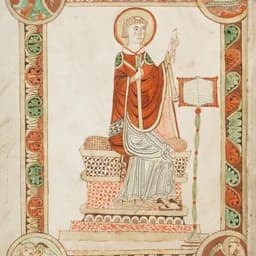
John 18:13–14, 19–24
nd led him away to Annas first; for he was father in law to Caiaphas, which was the high priest that same year. 14Now Caiaphas was he, which gave counsel to the Jews, that it was expedient that one man should die for the people. 19The high priest then asked Jesus of his disciples, and of his doctrine. 20Jesus answered him, I spake openly to the world; I ever taught in the synagogue, and in the temple, whither the Jews always resort; and in secret have I said nothing. 21Why askest thou me? ask them which heard me, what I have said unto them: behold, they know what I said. 22And when he had thus spoken, one of the officers which stood by struck Jesus with the palm of his hand, saying, Answerest thou the high priest so? 23Jesus answered him, If I have spoken evil, bear witness of the evil: but if well, why smitest thou me? 24Now Annas had sent him bound unto Caiaphas the high priest.
King James Version · public domain
Joani 18:13–14, 19–24
epse ish i vjehërri i Kaiafësë, i-cili ishte kryeprift i ati viti. 14Edhe Kaiafa ishte ay që këshilloj Judhenjtë, se është mirë të humbasë një njeri për llauzinë. 19Kryeprifti pra pyeti Jisunë për nxënësit’ e ati edhe për mësimn’ e ati. 20Jisuj i upërgjeq, Unë faqeza fola ndë botët; unë përhere mësova njerëzitë ndë sinagogjit edhe ndë hieroret, ku nga të gjithë anëtë mblidhenë Judhenjtë, edhe mbë të-fshehëtë nukë fola asgjë. 21Ç’më pyet? pyet ata që kanë dëgjuarë ç’ufola atyre; na këta dinë sa thash’ unë. 22Edhe ay kur tha këto, një nga shërbëtorëtë që rrinte përanë i ra një shuplakë Jisujt, dyke thënë, Kështu i përgjigjesh kryepriftit? 23Jisuj i upërgjeq, Ndë fola keq, dëshmo për të-keqenë; po ndë fola mirë, përse më rreh? 24Edhe Anna e dërgoj lidhurë te kryeprifti Kaiafë.
Kristoforidhi, Dhiata e Re Toskërisht 1879 · zotërim publik
In their own words
What could be more audacious than this? Shudder, O heaven, be astounded, O earth, at the long-suffering of the Lord, and the senselessness of the servants!
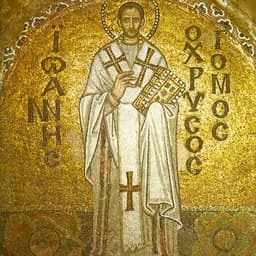
St. John Chrysostom, Homilies on the Gospel of John, Hom. 83 (on John 18:22)
Patristic sources
- St. John Chrysostom
- Homilies on the Gospel of John, Hom. 83
- St. Cyril of Alexandria
- Commentary on the Gospel of John, Book 11
- Theophylact of Ohrid
- Explanation of the Gospel of John
His Gospel exegesis survives in public-domain English only through the Catena Aurea.
- Blessed Augustine of Hippo
- Tractates on the Gospel of John, Tractate 113
Venerated in the East as Blessed; his Johannine tractates are cited in later Byzantine catenae.
- St. Bede the Venerable
- Commentary on the Gospel of John
His Gospel exposition survives in public-domain English only through the Catena Aurea.
Read the sources: Chrysostom on John, Homily 83 (CCEL) · Cyril of Alexandria on John, Book 11 (tertullian.org) · Augustine, Tractates on John, Tractate 113 (CCEL) · Catena Aurea on John (isidore.co)
Jesus before Annas (John 18:13–14, 19–24)
The texts below are quoted verbatim from public-domain English translations; nothing is paraphrased.
St. John Chrysostom (c. 347–407)
Homilies on the Gospel of St. John, Homily 83 (on John 18:13–24) Source: trans. in the Nicene and Post-Nicene Fathers, First Series, Vol. 14. Public domain. Full text: https://www.ccel.org/ccel/schaff/npnf114/npnf114.iv.lxxxv.html
On why they led Him first to Annas:
On the high priest's questioning Him of His doctrine:
On "Why askest thou Me? Ask them which heard Me":
On the officer who smote Him, and the long-suffering of the Lord:
On His answer, though He had power to do otherwise:
St. Cyril of Alexandria (c. 376–444)
Commentary on the Gospel of John, Book 11 (on John 18:13–23) Source: trans. T. Randell, Library of Fathers, 1885. Public domain. Full text: https://www.tertullian.org/fathers/cyril_on_john_11_book11.htm
On the binding of Christ, Who came to loose our chains:
On "I have spoken openly to the world ... and in secret spake I nothing":
On the pattern of long-suffering that Christ sets before us:
Theophylact of Ohrid (c. 1055–1107)
Explanation of the Gospel of John (on John 18:13–23) As preserved in the Catena Aurea on John. Public domain. Full text: https://www.isidore.co/aquinas/CAJohn.htm
On the Lord's willing surrender after every warning was spurned:
On "If I have spoken evil, bear witness of the evil: but if well, why smitest thou Me?":
Blessed Augustine of Hippo (354–430)
Tractates on the Gospel of John, Tractate 113 (on John 18:13–27) Source: trans. in the Nicene and Post-Nicene Fathers, First Series, Vol. 7. Public domain. Full text: https://www.ccel.org/ccel/schaff/npnf107/npnf107.iii.cxiv.html
On "I spake openly to the world ... in secret have I said nothing":
On why nothing He taught could be turned into a charge:
On the Lord's answer to the officer who struck Him:
On the power He held back, that He might teach us patience:
On these precepts being fulfilled in the heart, not by outward show:
St. Bede the Venerable (c. 673–735)
Commentary on the Gospel of John (on John 18:13) As preserved in the Catena Aurea on John. Public domain. Full text: https://www.isidore.co/aquinas/CAJohn.htm
On why Christ was led first to Annas, guilt joined to guilt: