Lord, Lord: I Never Knew You
Matt 7:21–23; Luke 6:46 · Early ministry in Galilee
Scripture
Matthew 7:21–23
ot every one that saith unto me, Lord, Lord, shall enter into the kingdom of heaven; but he that doeth the will of my Father which is in heaven. 22Many will say to me in that day, Lord, Lord, have we not prophesied in thy name? and in thy name have cast out devils? and in thy name done many wonderful works? 23And then will I profess unto them, I never knew you: depart from me, ye that work iniquity.
King James Version · public domain
Mateu 7:21–23
ukë dotë hynjë ndë mbretërit të qiejvet kushdo që më thotë, Zot, Zot; po ay që bën dashurimn’ e t’im Et që është ndë qiejt. 22Shumë veta dotë më thonë nd’atë ditë, Zot, Zot, nukë profitepsmë mb’emërit t’ënt, edhe mb’emërit t’ënt nxuarmë djaj, edhe mb’emërit t’ënt bëmë shumë çudira? 23Po atëhere dot’u rrëfenj atyre, Se kurrë nuk’ u kam njohurë juve; ikëni prej meje ju që keni punuarë paudhërinë.
Kristoforidhi, Dhiata e Re Toskërisht 1879 · zotërim publik
In their own words
And the proof of holiness is not to work miracles, but to love our neighbour as ourselves, to think truly of God, and of our neighbour better than of ourselves.
St. Gregory the Great, Moralia in Job, Book XX (on Matthew 7:21–23) (Catena Aurea)
Patristic sources
- St. John Chrysostom
- Homilies on Matthew, Hom. XXIV
- St. Cyril of Alexandria
- Commentary on Luke, Sermon XXXIV
- Blessed Augustine of Hippo
- Our Lord's Sermon on the Mount, Book II
Venerated in the East as Blessed; here read from his exposition of the Sermon on the Mount.
- St. Jerome
- Commentary on Matthew
Catena-only in public-domain English; quoted from the Catena Aurea on Matthew.
- St. Hilary of Poitiers
- Commentary on Matthew
Catena-only in public-domain English; quoted from the Catena Aurea on Matthew.
- St. Gregory the Great
- Moralia in Job, Book XX
His Gospel exegesis is Catena-only in public-domain English; quoted from the Catena Aurea on Matthew.
Read the sources: Chrysostom, Homilies on Matthew, Hom. XXIV (CCEL) · Cyril of Alexandria on Luke, Sermon XXXIV (tertullian.org) · Augustine, Our Lord's Sermon on the Mount, Book II (CCEL) · Catena Aurea on Matthew 7 (CCEL)
Lord, Lord: I Never Knew You (Matthew 7:21–23; Luke 6:46)
The texts below are quoted verbatim from public-domain English translations; nothing is paraphrased.
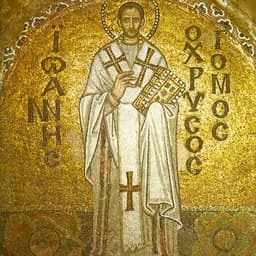
St. John Chrysostom (c. 347–407)
Homilies on the Gospel of Matthew, Homily XXIV (on Matthew 7:21–23) Source: trans. in the Nicene and Post-Nicene Fathers, First Series, Vol. 10. Public domain. Full text: https://www.ccel.org/ccel/schaff/npnf110/npnf110.iii.XXIV.html
On why He says "the will of my Father" and not "my will":
On the fearful saying "I never knew you":
That the working of miracles is no advantage, nor their absence any loss, where the life is heeded:
St. Cyril of Alexandria (c. 376–444)
Commentary on the Gospel of Luke, Sermon XXXIV (on Luke 6:46) Source: trans. R. Payne Smith, 1859. Public domain. Full text: https://www.tertullian.org/fathers/cyril_on_luke_03_sermons_26_38.htm
On the Lukan form, "why call ye me Lord, Lord, and do not the things which I say":
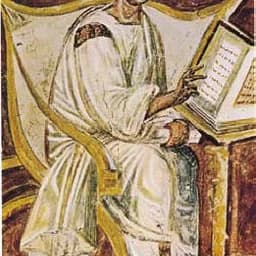
Blessed Augustine of Hippo (354–430)
Our Lord's Sermon on the Mount, Book II (on Matthew 7:21–23) Source: trans. in the Nicene and Post-Nicene Fathers, First Series, Vol. 6. Public domain. Full text: https://www.ccel.org/ccel/schaff/npnf106.v.iii.xxv.html
On why saying "Lord, Lord" is not itself the good fruit:
On the warning not to be deceived even by works and miracles:
St. Jerome (c. 347–420)
Commentary on Matthew (on Matthew 7:21–23) As preserved in the Catena Aurea on Matthew. Public domain. Full text: https://www.ccel.org/ccel/aquinas/catena1.ii.vii.html
On refusing the faith of those whose evil works destroy their sound doctrine:
On why He says "who work iniquity" and not "who have worked":
St. Hilary of Poitiers (c. 310–367)
Commentary on Matthew (on Matthew 7:21–23) As preserved in the Catena Aurea on Matthew. Public domain. Full text: https://www.ccel.org/ccel/aquinas/catena1.ii.vii.html
On the hypocrites who claim the works as spoken of themselves:
St. Gregory the Great (c. 540–604)
Moralia in Job, Book XX (on Matthew 7:21–23) As preserved in the Catena Aurea on Matthew. Public domain. Full text: https://www.ccel.org/ccel/aquinas/catena1.ii.vii.html
On charity and humility, not mighty works, as the mark of holiness: