Mary Magdalene Meets the Risen Christ
John 20:11–18; Mark 16:9–11 · Post-Resurrection
Scripture
John 20:11–18
ut Mary stood without at the sepulchre weeping: and as she wept, she stooped down, and looked into the sepulchre, 12And seeth two angels in white sitting, the one at the head, and the other at the feet, where the body of Jesus had lain. 13And they say unto her, Woman, why weepest thou? She saith unto them, Because they have taken away my LORD, and I know not where they have laid him. 14And when she had thus said, she turned herself back, and saw Jesus standing, and knew not that it was Jesus. 15Jesus saith unto her, Woman, why weepest thou? whom seekest thou? She, supposing him to be the gardener, saith unto him, Sir, if thou have borne him hence, tell me where thou hast laid him, and I will take him away. 16Jesus saith unto her, Mary. She turned herself, and saith unto him, Rabboni; which is to say, Master. 17Jesus saith unto her, Touch me not; for I am not yet ascended to my Father: but go to my brethren, and say unto them, I ascend unto my Father, and your Father; and to my God, and your God. 18Mary Magdalene came and told the disciples that she had seen the LORD, and that he had spoken these things unto her.
King James Version · public domain
Joani 20:11–18
dhe Maria rrinte përanë varrit dyke qarë përjashta; edhe tek po qante, uunj ndë varrt; 12Edhe vë re dy ëngjëj me rroba të-bardha dyke ndënjurë njeri nga krej e tjatëri nga këmbëtë, atje ku qe trupi i Jisujt. 13Edhe ata i thonë asaj, Grua, përse qan? U thot’ atyre, Sepse ngritnë t’im Zot, edhe nukë di ku e kanë vënë. 14Edhe si tha këto, ukthye prapa, edhe vë re Jisunë dyke ndënjurë, edhe nuk’ e dinte se ësht’ Jisuj. 15Jisuj i tha asaj, Grua, përse qan? cilinë kërkon? Po ajo dyke pandehurë, se është kopshtari, i thotë, Zot, ndë e ngrite ti, thuaj-më ku e ke vënë, edhe unë dot’a ngre atë. 16Jisuj i thot’ asaj, Marie! Ajo kthenet’ e i thotë, Ravuni! që do me thënë, Mësonjës. 17Jisuj i thot’ asaj, Mos m’upshet; sepse edhe s’kam hipurë tek im Atë; po shko te vëllezërit’ e mi, edhe u thuaj atyre, Po hipënj tek im Atë edhe tek Ati juaj, edhe te Perëndia im edhe te Perëndia juaj. 18Vjen Maria Magdhalinë, e u ep zë nxënëset, se pa Zotinë, edhe se i tha asaj këto fjalë.
Kristoforidhi, Dhiata e Re Toskërisht 1879 · zotërim publik
In their own words
For whereas in Paradise the woman gave the man the deadly fruit, a woman from the sepulchre announced life to men; a woman delivers the message of Him who raises us from the dead, as a woman had delivered the words of a serpent who slew us.
St. Gregory the Great, Forty Gospel Homilies, Hom. 25 (on John 20:11–18) (Catena Aurea)
Patristic sources
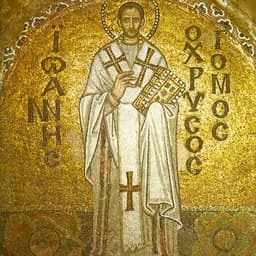
- St. John Chrysostom
- Homilies on the Gospel of St. John, Hom. 86
- St. Cyril of Alexandria
- Commentary on the Gospel of John, Book 12
- Theophylact of Ohrid
- Explanation of the Gospel of John
Catena-only in public-domain English; his Gospel commentary survives here through the Catena Aurea.
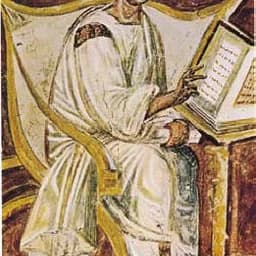
- Blessed Augustine of Hippo
- Tractates on the Gospel of John, Tractate 121
Venerated in the East as Blessed; his Johannine tractates are cited in later Byzantine catenae.
- St. Hilary of Poitiers
- On the Trinity
Quoted through the Catena Aurea on John.
- St. Gregory the Great
- Forty Gospel Homilies, Hom. 25
Quoted through the Catena Aurea on John; Hurst's 1990 translation is copyright-locked.
- St. Bede the Venerable
- Homilies on the Gospels
Catena-only in public-domain English for the Gospels.
Read the sources: Chrysostom on John, Homily 86 (CCEL) · Cyril of Alexandria on John, Book 12 (tertullian.org) · Augustine, Tractates on John, Tractate 121 (CCEL) · Catena Aurea on John (isidore.co)
Mary Magdalene Meets the Risen Christ (John 20:11–18)
The texts below are quoted verbatim from public-domain English translations; nothing is paraphrased.
St. John Chrysostom (c. 347–407)
Homilies on the Gospel of St. John, Homily 86 (on John 20:11–18) Source: trans. in the Nicene and Post-Nicene Fathers, First Series, Vol. 14. Public domain. Full text: https://www.ccel.org/ccel/schaff/npnf114/npnf114.iv.lxxxviii.html
On why Mary wept at the tomb when the disciples had gone home:
On the one word "Mary," by which she knew Him:
On "Touch Me not":
On "I am not yet ascended to My Father":
St. Cyril of Alexandria (c. 376–444)
Commentary on the Gospel of John, Book XII (on John 20:11–18) Source: trans. T. Randell, Library of Fathers, 1885. Public domain. Full text: https://www.tertullian.org/fathers/cyril_on_john_12_book12.htm
On her recognition and her "Rabboni":
On why the risen Lord now forbids the touch He once freely allowed:
On Mary as not yet having received the Spirit:
Theophylact of Ohrid (c. 1055–1107)
Explanation of the Gospel of John (on John 20:15) As preserved in the Catena Aurea on John. Public domain. Full text: https://isidore.co/aquinas/english/CAJohn.htm
On why she wished to bear the body away:
Blessed Augustine of Hippo (354–430)
Tractates on the Gospel of John, Tractate 121 (on John 20:11–18) Source: trans. in the Nicene and Post-Nicene Fathers, First Series, Vol. 7. Public domain. Full text: https://www.ccel.org/ccel/schaff/npnf107/npnf107.iii.cxxii.html
On her calling the gardener "Sir" and Jesus "Master":
On her turning first in body and then in heart:
On "Touch me not" as a summons to fuller faith:
On "I ascend unto my Father, and your Father":
St. Hilary of Poitiers (c. 310–367)
On the Trinity (on John 20:17) As preserved in the Catena Aurea on John. Public domain. Full text: https://isidore.co/aquinas/english/CAJohn.htm
On the heretics who read "My Father and your Father" against Christ's Godhead:
St. Gregory the Great (c. 540–604)
Forty Gospel Homilies, Homily 25 (on John 20:11–18) As preserved in the Catena Aurea on John. Public domain. Full text: https://isidore.co/aquinas/english/CAJohn.htm
On the persevering love that seeks until it finds:
On the woman sent to announce life where a woman had once brought death:
St. Bede the Venerable (c. 673–735)
Homilies on the Gospels (on John 20:11–18) As preserved in the Catena Aurea on John. Public domain. Full text: https://isidore.co/aquinas/english/CAJohn.htm
On Mary Magdalene as a figure of the Church that preaches: