New Cloth on an Old Garment
Matt 9:16; Mark 2:21; Luke 5:36 · Early ministry in Galilee
Scripture
Matthew 9:16
o man putteth a piece of new cloth unto an old garment, for that which is put in to fill it up taketh from the garment, and the rent is made worse.
King James Version · public domain
Mateu 9:16
dhe asndonjë nukë vë anërë pëlhure së-re mbi rrobë të-vjetërë; sepse të-mbushurit’ e asaj heq nga rroba, edhe të-grisuritë bënetë më të-keq.
Kristoforidhi, Dhiata e Re Toskërisht 1879 · zotërim publik
In their own words
My disciples are not yet become strong, but have need of much consideration; they are not yet renewed by the Spirit. On men in such a state it is not behoveful to lay a burden of precepts.
St. John Chrysostom, Homilies on Matthew, Hom. 30 (Catena Aurea)
Patristic sources
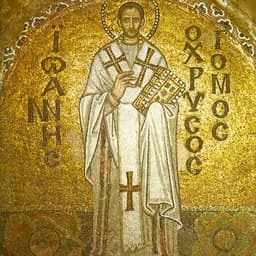
- St. John Chrysostom
- Homilies on Matthew, Hom. 30
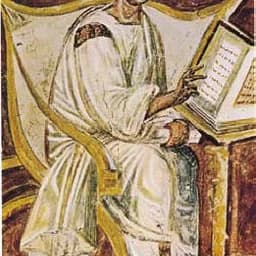
- Blessed Augustine of Hippo
- Sermons, Serm. 210
Venerated in the East as Blessed; here his exposition survives in the condensed Catena wording, not the NPNF translation.
- St. Jerome
- Commentary on Matthew
Catena-only in public-domain English.
- St. Hilary of Poitiers
- Commentary on Matthew
Catena-only in public-domain English.
- Remigius of Auxerre
- Commentary on Matthew
A later Western compiler, not one of the Fathers; his Gospel exposition survives only through the Catena.
Read the sources: Catena Aurea on Matthew, ch. 9 (CCEL)
New Cloth on an Old Garment (Matthew 9:16; Mark 2:21; Luke 5:36)
The texts below are quoted verbatim from public-domain English translations; nothing is paraphrased.
St. John Chrysostom (c. 347–407)
Homilies on the Gospel of Matthew, Homily 30 (on Matthew 9:16) As preserved in the Catena Aurea on Matthew. Public domain. The fuller homily appears in the Nicene and Post-Nicene Fathers, First Series, Vol. 10: https://ccel.org/ccel/schaff/npnf110 Full text: https://www.ccel.org/ccel/aquinas/catena1.ii.ix.html
On why the rigour of fasting is not laid on disciples not yet strengthened:
Blessed Augustine of Hippo (354–430)
Sermons, Sermon 210, 3 (on Matthew 9:16) As preserved in the Catena Aurea on Matthew. Public domain. Full text: https://www.ccel.org/ccel/aquinas/catena1.ii.ix.html
On the cloth as the fasting that is a feast of the Spirit:
St. Jerome (c. 347–420)
Commentary on Matthew (on Matthew 9:16) As preserved in the Catena Aurea on Matthew. Public domain. Full text: https://www.ccel.org/ccel/aquinas/catena1.ii.ix.html
On the old garment as the Scribes and Pharisees, and the new cloth as the Gospel precepts they could not bear:
St. Hilary of Poitiers (c. 310–367)
Commentary on Matthew (on Matthew 9:16) As preserved in the Catena Aurea on Matthew. Public domain. Full text: https://www.ccel.org/ccel/aquinas/catena1.ii.ix.html
On the examples showing that souls and bodies weakened by sin cannot yet bear the new grace:
Remigius (c. 841–908)
Commentary on Matthew (on Matthew 9:16) As preserved in the Catena Aurea on Matthew. Public domain. (Remigius of Auxerre is a later Western compiler, not one of the Fathers; included here because the Catena is the only public-domain English of his Gospel exposition.) Full text: https://www.ccel.org/ccel/aquinas/catena1.ii.ix.html
On the old garment as the disciples not yet renewed, and the new cloth as the new grace of the Gospel: