Passing through the crowd at Nazareth
Luke 4:28–30 · Early ministry in Galilee
Scripture
Luke 4:28–30
nd all they in the synagogue, when they heard these things, were filled with wrath, 29And rose up, and thrust him out of the city, and led him unto the brow of the hill whereon their city was built, that they might cast him down headlong. 30But he passing through the midst of them went his way,
King James Version · public domain
Lluka 4:28–30
dhe gjith’ ata që ishinë ndë Sinagogjit, kur dëgjuanë këto, umbushnë me zëmërim. 29Edhe ungritnë edhe e nxuarrë jashtë qytetit; edhe e prunë gjer ndë buzët të malit, përmbi të-cilinë ishte ndërtuarë qytet’ i atyre, që t’a rrëzoninë përposh. 30Po ay shkoj ndëpër mest t’atyreve, edhe iku.
Kristoforidhi, Dhiata e Re Toskërisht 1879 · zotërim publik
In their own words
He went through the midst of them without taking any notice, so to say, of their attempt ... For it depended on Him to suffer, or not to suffer; for He is Lord of times as well as of things.
St. Cyril of Alexandria, Commentary on the Gospel of Luke (on Luke 4:28–30)
Patristic sources
- St. John Chrysostom
- Homily fragment on Luke 4:30 (Catena Aurea)
No continuous commentary on Luke; quoted as preserved in the Catena Aurea on Luke, collated against the Oxford scan (archaic 'shews'). NB: the isidore.co reading text is modernized and does not carry this archaic wording.
- St. Cyril of Alexandria
- Commentary on Luke, on Luke 4:28–30
Quoted from his own continuous Commentary on Luke (Payne Smith, 1859); both quotes are exact substrings of the tertullian.org page (sermons 12–25). PD.
- St. Ambrose of Milan
- Exposition of the Gospel of Luke, Book IV
Standalone English (Tomkinson) is copyright-locked; quoted as preserved in the Catena Aurea on Luke, collated against the Oxford scan. Both quotes tagged 'Ambrose.' in the Oxford text.
- St. Bede the Venerable
- Commentary on the Gospel of Luke, on Luke 4:29–30
No public-domain English of his Luke commentary; quoted as preserved in the Catena Aurea on Luke, collated against the Oxford scan (archaic 'Cast Thyself down'). Both quotes tagged 'Bede.' (mis-tag trap checked).
Read the sources: Cyril on Luke, Sermons 12–25 (Tertullian.org) · Catena Aurea on Luke, Oxford ed. Vol. 4 — St. Luke Pt. 1 (Archive.org scan)
Passing through the crowd at Nazareth (Luke 4:28–30)
The texts below are quoted verbatim from public-domain English translations; nothing is paraphrased.
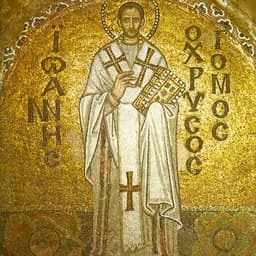
St. John Chrysostom (c. 347–407)
As preserved in the Catena Aurea on Luke. Public domain.
On the single scene that shows both natures, His standing unseized and His departure:
St. Cyril of Alexandria (c. 376–444)
Commentary on the Gospel of Luke (on Luke 4:28–30) Source: trans. R. Payne Smith, 1859. Public domain. Full text: https://www.tertullian.org/fathers/cyril_on_luke_02_sermons_12_25.htm
On why His own townsmen, enraged, cast Him out and so condemned themselves:
On His passing untouched through their midst, as One awaiting the appointed time of His suffering:
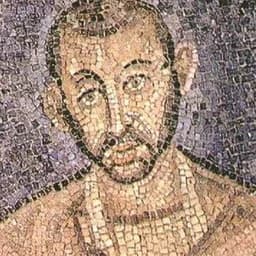
St. Ambrose of Milan (c. 339–397)
Exposition of the Gospel of Luke, Book IV (on Luke 4:29–30) As preserved in the Catena Aurea on Luke. Public domain.
On the Lord who forces no one, and abandons none who seek Him:
On His endurance as voluntary, not necessary:
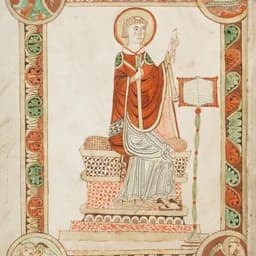
St. Bede the Venerable (c. 673–735)
Commentary on the Gospel of Luke (on Luke 4:29–30) As preserved in the Catena Aurea on Luke. Public domain.
On the Nazarenes who outdid the devil himself:
On why the hour and place of His death were not yet come: