Peter and John Run to the Tomb
Luke 24:12; John 20:3–10 · Post-Resurrection
Scripture
Luke 24:12
hen arose Peter, and ran unto the sepulchre; and stooping down, he beheld the linen clothes laid by themselves, and departed, wondering in himself at that which was come to pass.
King James Version · public domain
Lluka 24:12
dhe Pjetri ungrit e vate me vrap ndë vartt; edhe uunj e pa pëlhuratë që ishinë përdhe vetëmë; Edhe iku dyke çuditurë me vetëhen’ e ti për këtë punë.
Kristoforidhi, Dhiata e Re Toskërisht 1879 · zotërim publik
In their own words
But why do the clothes lie apart, while the napkin was wrapped together by itself? That thou mayest learn that it was not the action of men in confusion or haste, the placing some in one place, some in another, and the wrapping them together. From this they believed in the Resurrection.
St. John Chrysostom, Homilies on the Gospel of John, Homily 85 (on John 20:1–9)
Patristic sources
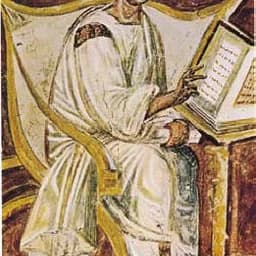
- Blessed Augustine of Hippo
- Tractates on the Gospel of John, Tractate 121
Venerated in the East as Blessed; his Tractate 121 is the fullest patristic witness on this pericope, which is why it leads the entry.
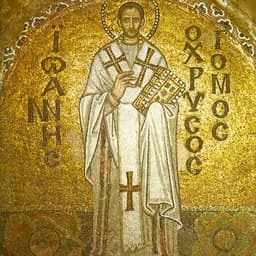
- St. John Chrysostom
- Homilies on the Gospel of John, Hom. 85
- St. Cyril of Alexandria
- Commentary on the Gospel of John, Book XII
- Theophylact of Ohrid
- Explanation of the Gospel of John
No standalone public-domain English of his Gospel exegesis exists; quoted through the Catena Aurea on John.
- St. Gregory the Great
- Forty Gospel Homilies
His Gospel homilies are public-domain in English only through the Catena Aurea (the modern Hurst translation is under copyright).
Read the sources: Augustine, Tractate 121 on John (CCEL) · Chrysostom on John, Homily 85 (CCEL) · Cyril of Alexandria on John, Book XII (tertullian.org) · Catena Aurea on John (isidore.co)
Peter and John Run to the Tomb (John 20:3–10; Luke 24:12)
The texts below are quoted verbatim from public-domain English translations; nothing is paraphrased.
Blessed Augustine of Hippo (354–430)
Tractates on the Gospel of John, Tractate 121 (on John 20:1–9) Source: trans. John Gibb and James Innes, Nicene and Post-Nicene Fathers, First Series, Vol. 7. Public domain. Full text: https://www.ccel.org/ccel/schaff/npnf107.iii.cxxi.html
On the beloved disciple, who tells of his own outrunning of Peter as though he spoke of another:
On the one who reached the tomb first and yet yielded the entrance:
On what "he saw, and believed" can mean, since as yet they knew not the scripture:
St. John Chrysostom (c. 347–407)
Homilies on the Gospel of John, Homily 85 (on John 20:1–9) Source: trans. G. T. Stupart, Nicene and Post-Nicene Fathers, First Series, Vol. 14. Public domain. Full text: https://www.ccel.org/ccel/schaff/npnf114.iv.lxxxvii.html
On the linen clothes lying as a sign of the Resurrection, for no thief would strip and fold:
On the napkin wrapped by itself, proof of an act done without haste or confusion:
On the Evangelist's freedom from boasting, who yields the closer search to Peter:
St. Cyril of Alexandria (c. 376–444)
Commentary on the Gospel of John, Book XII (on John 20:1–9) Source: trans. T. Randell, Library of Fathers, 1885. Public domain. Full text: https://www.tertullian.org/fathers/cyril_on_john_12_book12.htm
On the two disciples who ran and came as competent witnesses, being two in number as the Law enjoined:
On inferring the Resurrection from the linen clothes, before ever they met the risen Lord:
Theophylact of Ohrid (c. 1055–1107)
Explanation of the Gospel of John (on John 20:3–8) As preserved in the Catena Aurea on John. Public domain. Full text: https://isidore.co/aquinas/english/CAJohn.htm
On Peter the prompt and John the contemplative, and which of them saw first into the mystery:
St. Gregory the Great (c. 540–604)
Forty Gospel Homilies (on John 20:3–8) As preserved in the Catena Aurea on John. Public domain. Full text: https://isidore.co/aquinas/english/CAJohn.htm
On why Peter and John outran the rest to the sepulchre:
On the napkin found apart and wrapped together, a figure of the hidden things of God: