Peter's Denial
Matt 26:69–75; Mark 14:66–72; Luke 22:54–62; John 18:15–27 · Passion week in Jerusalem
Scripture
Matthew 26:69–75
ow Peter sat without in the palace: and a damsel came unto him, saying, Thou also wast with Jesus of Galilee. 70But he denied before them all, saying, I know not what thou sayest. 71And when he was gone out into the porch, another maid saw him, and said unto them that were there, This fellow was also with Jesus of Nazareth. 72And again he denied with an oath, I do not know the man. 73And after a while came unto him they that stood by, and said to Peter, Surely thou also art one of them; for thy speech bewrayeth thee. 74Then began he to curse and to swear, saying, I know not the man. And immediately the cock crew. 75And Peter remembered the word of Jesus, which said unto him, Before the cock crow, thou shalt deny me thrice. And he went out, and wept bitterly.
King James Version · public domain
Mateu 26:69–75
dhe Pjetri rrinte përjashta ndë avlit; edhe i erdhi përanë një shërbëtore dyke thënë, Edhe ti ishnje bashkë me Jisu Galileasinë. 70Po ay e mohoj përpara të-gjithëve, dyke thënë, Nukë di se ç’thua. 71Edhe ay kur dolli ndë derët të avllisë, e pa atë një tjatërë, edhe u thot’ atyre që ishinë atje, Edhe ky ish bashkë me Jisu Nazareasinë. 72Edhe përsëri e mohoj me be, Se nuk’ e njoh njerinë. 73Edhe pas pakëzë erthnë përan’ ati ata që ishinë dyke ndënjurë e i thanë Pjetrit, Me të-vërtetë edhe ti je nga ata; sepse edhe të-foluritë t’ënt të dëften ty. 74Atëhere zuri të nemnjë e të bënjë be, Se nuk’ e njoh njerinë. 75Edhe për-një-here këndoj këndesi. Atëhere i ra ndër mëntt Pjetrit fjal’ e Jisujt që i pat thënë, Se para se të këndonjë këndesi, tri herë dotë më mohonjç; edhe dolli jashtë, e qau hidhurë.
Kristoforidhi, Dhiata e Re Toskërisht 1879 · zotërim publik
In their own words
For this reason it should seem he was permitted to waver, that the remedy of penitence might be exhibited in the head of the Church, and that none should dare to trust in his own strength, when even the blessed Peter could not escape the danger of frailty.
St. Leo the Great, Sermon 60, on the Lord's Passion (Catena Aurea)
Patristic sources
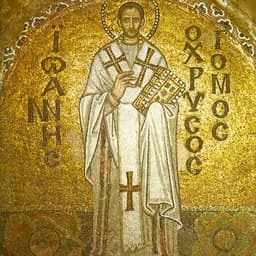
- St. John Chrysostom
- Homilies on Matthew, Hom. 85
- Origen of Alexandria
- Commentary on Matthew
Quoted here only as preserved in the Catena Aurea on Matthew (his own Commentary on Matthew survives in PD English only to Matt 22:33); some of his speculations were condemned in 553, but this allegorical reading is unaffected.
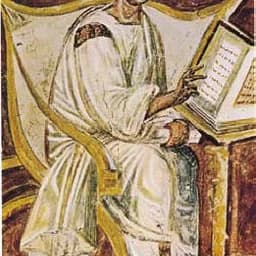
- Blessed Augustine of Hippo
- Tractates on John, Tractate 113
Venerated in the East as Blessed; his Johannine tractates are cited in later Byzantine catenae.
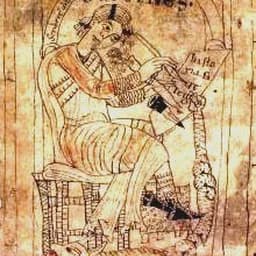
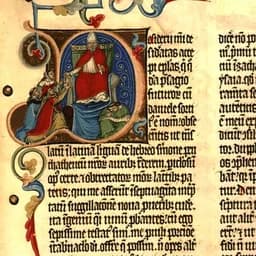
- St. Jerome
- Commentary on Matthew
His Gospel exegesis survives in PD English only through the Catena Aurea.
- St. Ambrose of Milan
- Exposition of the Gospel of Luke
His Luke exposition is applied by the Catena to the Matthew parallel; PD English survives only through the Catena Aurea.
- St. Leo the Great
- Sermon 60, on the Lord's Passion
Preserved on this passage only through the Catena Aurea on Matthew.
Read the sources: Chrysostom on Matthew, Homily 85 (CCEL) · Augustine, Tractates on John, Tractate 113 (CCEL) · Catena Aurea on Matthew 26 (CCEL)
Peter's Denial (Matthew 26:69–75; Mark 14:66–72; Luke 22:54–62; John 18:15–27)
The texts below are quoted verbatim from public-domain English translations; nothing is paraphrased.
St. John Chrysostom (c. 347–407)
Homilies on the Gospel of Matthew, Homily 85 (on Matthew 26:69–75) Source: trans. in the Nicene and Post-Nicene Fathers, First Series, Vol. 10. Public domain. Full text: https://www.ccel.org/ccel/schaff/npnf110/npnf110.iii.LXXXI.html
On the weakness of self-confidence, that he who had drawn his sword is overcome by a servant girl:
On the look of the Lord, which Luke records, that came to Peter instead of a voice:
On why he wept in secret:
Origen of Alexandria (c. 185–254)
Commentary on Matthew (on Matthew 26:69–75) As preserved in the Catena Aurea on Matthew. Public domain. Full text: https://www.ccel.org/ccel/aquinas/catena1.ii.xxvi.html
Reading the three questioners as the powers that in every age press men to deny Christ (a spiritual interpretation; Origen's speculative excesses were later censured at the Fifth Ecumenical Council, but this allegory is unaffected):
Blessed Augustine of Hippo (354–430)
Tractates on the Gospel of John, Tractate 113 (on John 18:15–27) Source: trans. in the Nicene and Post-Nicene Fathers, First Series, Vol. 7. Public domain. Full text: https://www.ccel.org/ccel/schaff/npnf107/npnf107.iii.cxiv.html
On the vain confidence of him who had promised to lay down his life:
On what it is to deny Christ:
St. Jerome (c. 347–420)
Commentary on Matthew (on Matthew 26:69–75) As preserved in the Catena Aurea on Matthew. Public domain. Full text: https://www.ccel.org/ccel/aquinas/catena1.ii.xxvi.html
On the look that called forth the bitter tears, and on Peter's going out to repent:
St. Ambrose of Milan (c. 339–397)
Exposition of the Gospel of Luke (on Matthew 26:69–75) As preserved in the Catena Aurea on Matthew. Public domain. Full text: https://www.ccel.org/ccel/aquinas/catena1.ii.xxvi.html
On why the fall was suffered, that the Lord's own word should stand:
St. Leo the Great (c. 400–461)
Sermon 60, on the Lord's Passion (on Matthew 26:69–75) As preserved in the Catena Aurea on Matthew. Public domain. Full text: https://www.ccel.org/ccel/aquinas/catena1.ii.xxvi.html
On why the chief of the apostles was permitted to waver:
On the tears of repentance, which had the power of a second baptism: