All entriesmiracle

Raising of Lazarus

John 11:1–44 · Journey to Jerusalem

John 11:1–44

ow a certain man was sick, named Lazarus, of Bethany, the town of Mary and her sister Martha. 2(It was that Mary which anointed the Lord with ointment, and wiped his feet with her hair, whose brother Lazarus was sick.) 3Therefore his sisters sent unto him, saying, Lord, behold, he whom thou lovest is sick. 4When Jesus heard that, he said, This sickness is not unto death, but for the glory of God, that the Son of God might be glorified thereby. 5Now Jesus loved Martha, and her sister, and Lazarus. 6When he had heard therefore that he was sick, he abode two days still in the same place where he was. 7Then after that saith he to his disciples, Let us go into Judaea again. 8His disciples say unto him, Master, the Jews of late sought to stone thee; and goest thou thither again? 9Jesus answered, Are there not twelve hours in the day? If any man walk in the day, he stumbleth not, because he seeth the light of this world. 10But if a man walk in the night, he stumbleth, because there is no light in him. 11These things said he: and after that he saith unto them, Our friend Lazarus sleepeth; but I go, that I may awake him out of sleep. 12Then said his disciples, Lord, if he sleep, he shall do well. 13Howbeit Jesus spake of his death: but they thought that he had spoken of taking of rest in sleep. 14Then said Jesus unto them plainly, Lazarus is dead. 15And I am glad for your sakes that I was not there, to the intent ye may believe; nevertheless let us go unto him. 16Then said Thomas, which is called Didymus, unto his fellowdisciples, Let us also go, that we may die with him. 17Then when Jesus came, he found that he had lain in the grave four days already. 18Now Bethany was nigh unto Jerusalem, about fifteen furlongs off: 19And many of the Jews came to Martha and Mary, to comfort them concerning their brother. 20Then Martha, as soon as she heard that Jesus was coming, went and met him: but Mary sat still in the house. 21Then said Martha unto Jesus, Lord, if thou hadst been here, my brother had not died. 22But I know, that even now, whatsoever thou wilt ask of God, God will give it thee. 23Jesus saith unto her, Thy brother shall rise again. 24Martha saith unto him, I know that he shall rise again in the resurrection at the last day. 25Jesus said unto her, I am the resurrection, and the life: he that believeth in me, though he were dead, yet shall he live: 26And whosoever liveth and believeth in me shall never die. Believest thou this? 27She saith unto him, Yea, Lord: I believe that thou art the Christ, the Son of God, which should come into the world. 28And when she had so said, she went her way, and called Mary her sister secretly, saying, The Master is come, and calleth for thee. 29As soon as she heard that, she arose quickly, and came unto him. 30Now Jesus was not yet come into the town, but was in that place where Martha met him. 31The Jews then which were with her in the house, and comforted her, when they saw Mary, that she rose up hastily and went out, followed her, saying, She goeth unto the grave to weep there. 32Then when Mary was come where Jesus was, and saw him, she fell down at his feet, saying unto him, Lord, if thou hadst been here, my brother had not died. 33When Jesus therefore saw her weeping, and the Jews also weeping which came with her, he groaned in the spirit, and was troubled, 34And said, Where have ye laid him? They said unto him, Lord, come and see. 35Jesus wept. 36Then said the Jews, Behold how he loved him! 37And some of them said, Could not this man, which opened the eyes of the blind, have caused that even this man should not have died? 38Jesus therefore again groaning in himself cometh to the grave. It was a cave, and a stone lay upon it. 39Jesus said, Take ye away the stone. Martha, the sister of him that was dead, saith unto him, Lord, by this time he stinketh: for he hath been dead four days. 40Jesus saith unto her, Said I not unto thee, that, if thou wouldest believe, thou shouldest see the glory of God? 41Then they took away the stone from the place where the dead was laid. And Jesus lifted up his eyes, and said, Father, I thank thee that thou hast heard me. 42And I knew that thou hearest me always: but because of the people which stand by I said it, that they may believe that thou hast sent me. 43And when he thus had spoken, he cried with a loud voice, Lazarus, come forth. 44And he that was dead came forth, bound hand and foot with graveclothes: and his face was bound about with a napkin. Jesus saith unto them, Loose him, and let him go.

King James Version · public domain

Joani 11:1–44

dhe ishte një njeri i-sëmurë, që quhej Llazar, nga Vithania, nga fshati i Mariësë edhe i Marthësë, së motrës’ s’asaj. 2(Edhe Maria ishte ajo që leu Zotinë me vaj ere, edhe fshiu këmbët’ e ati me flokët’ e saj, së-cilësë i vëllaj, Llazari, ishte sëmurë). 3Të motëratë pra dërguanë, dyke thënë, Zot, na ay që do ti tek është sëmurë. 4Edhe Jisuj kur dëgjoj tha, Këjo sëmundje nuk’ është për vdekje, po për lavdin’ e Perëndi së, që të lavduronet’ i Bir’ i Perëndisë me anë t’asaj. 5Edhe Jisuj donte Marthën’ edhe të motërën’ e asaj edhe Llazarinë. 6Kur dëgjoj pra se është sëmurë, atëhere mbeti dy dit mb’atë vënt ku ishte. 7Pastaj pas kësaj u thotë nxënëset, Letë vemi prapë ndë Judhe. 8Nxënësit’ i thonë, Ravvi, ndashti Judhenjtë kërkoninë të të vrisinë me gurë, edhe përsëri vete atje? 9Jisuj upërgjeq, A nukë ka dy-mbë-dhjetë orë dita? nd’ectë ndonjë ditënë, nukë pengonetë, sepse sheh dritën’ e kësaj bote. 10Po nd’ectë ndonjë natënë, pengonetë, sepse s’ka dritë nd’atë. 11Këto tha, edhe pastaj u thot’ atyre, Llazari miku ynë fjejti; po vete që t’a sgjonj. 12Nxënësit’ e ti i thanë pra, Zot, ndë fjejti, dotë shpëtonjë. 13Po Jisuj kishte thënë për vdekjen’ e ati; po ata pandehnë se thotë për të-fjejturit’ e gjumit. 14Atëhere pra Jisuj u tha atyre faqeza, Llazari vdiq. 15Edhe gëzonem për ju, që të besoni, sepse nukë qesh’ atje; po letë vemi tek ay. 16Thomaj pra, që thuhetë binjak, u tha bashkë-nxënëset të ti, Letë vemi edhe neve, që të vdesëmë bashkë me atë. 17Kur erdhi pra Jisuj, e gjeti se kishte ndashti katrë dit ndë varrt. 18Edhe Vithania ishte afërë Jerusalimit sindonja pesë-mbë-dhjetë stadhe. 19Edhe shumë veta prej Judhenjet kishin’ ardhurë te Martha e te Maria, që t’i ngushëlloninë për të vëllan’ e atyreve. 20Martha pra kur dëgjoj, se po vjen Jisuj, i dolli përpara; edhe Maria rrinte ndë shtëpit. 21Martha pra i tha Jisujt, Zot, t’ishnje këtu im vëlla nukë dotë vdiste. 22Po edhe ndashti e di, se sa t’i lypënjç Perëndisë, dotë t’i apë Perëndia. 23Jisuj i thot’ asaj, Yt vëlla dotë ngjalletë. 24I thot’ ati Martha, E di se dotë ngjalletë ndë të-ngjallurit ndë ditët të-pastajme. 25Jisuj i tha, Unë jam të-ngjallurit’ edhe jeta; ay që më beson, edhe ndë vdektë, dotë rronjë. 26Edhe kushdo që rron edhe më beson, nukë dotë vdesë për gjithë jetënë. A e beson këtë? 27I thot’ ati, Po, Zot, unë kam besuarë, se ti je Krishti, i Bir’ i Perëndisë, që ke ardhurë ndë botët. 28Edhe ajo si tha këto, vate e thërriti fshehuraj Mariënë të motërën’ e saj, e i tha, Mësonjësi është këtu, edhe po të thërret. 29Ajo kur dëgjoj, ngrihetë çpejt, edhe vjen tek ay. 30(Jisuj edhe s’kishte ardhurë ndë fshatt, po ishte ndë atë vënt që i dolli përpara Martha.) 31Judhenjtë pra që ishinë bashkë me atë ndë shtëpit edhe e ngushëlloninë, kur panë Mariënë se ungrit çpejt e dolli, i vanë prapa, dyke thënë, Se po vete ndë varrt për të qar’ atje. 32Maria pra si erdhi atje ku ishte Jisuj, kur e pa atë, i ra ndër këmbë, dyke thën’ ati, Zot, nd’ishnje këtu, vëllaj nukë dotë më vdiste. 33Jisuj pra kur pa atë dyke qarë, edhe ata Judhenjtë që kishin’ ardhurë bashkë me atë dyke qarë, psherëtiti ndë shpirtt të ti, edhe utrumbullua, 34E tha, Ku e keni vënë? 35I thonë, Zot, Zot, eja e shih. Jisuj derdhi lot. 36Judhenjtë pra thoshinë, Shih sa e donte. 37Po ca prej atyre thanë, Nukë muntte ky që hapi syt’ e të-verbërit të bënte, që edhe ky të mos vdiste? 38Jisuj pra përsëri dyke psherëtiturë ndër vetëhe vjen ndë varrt. Edhe ishte një shpellë, edhe mbi atë ishte vënë një gur. 39Jisuj thotë, Ngrini gurinë. Martha, e motëra e të-vdekurit, i thotë, Zot, qelbetë ndashti; sepse është katrë ditsh. 40Jisuj i thot’ asaj, Nukë të thashë, se ndë besofsh, dotë shohç lavdin’ e Perëndisë? 41Ngritnë pra gurinë, (ku ishte vënë i-vdekuri). Edhe Jisuj ngriti sytë përpjetë, e tha, Atë, të falem ndersë, se më dëgjove. 42Edhe un’ e dinjam, se përherë më dëgjon; po këtë e thashë për këtë llauzinë që rri këtu rreth, që të besonjënë, se ti më dërgove. 43Edhe si tha këto, thërriti me zë të-math, Llazar, dil jashtë. 44Edhe i-vdekuri dolli, lidhurë këmbët’ e duartë me rripa pëlhure; edhe faqeja e ati ishte pshtjellë me rizë. Jisuj u thot’ atyre, Sgjidh-e-ni, edhe lër-e-ni të vejë.

Kristoforidhi, Dhiata e Re Toskërisht 1879 · zotërim publik

Summary

The greatest sign before the Passion, and the one the Fathers read most fully as a unity of Christ's two natures: He weeps at the tomb as true man, and He raises the dead with a word as true God. Chrysostom and Cyril alike dwell on this, that the same Lord who asks "Where have you laid him?" as though He did not know, and who is troubled and weeps, then calls a four-days-dead man back by a mere command. The questions and the tears are not ignorance or weakness but condescension, that the bystanders might testify to the death and leave no room to doubt the miracle.

"I am the resurrection and the life" is the heart of it. The Fathers underline that Christ does not give resurrection as a gift apart from Himself; He is resurrection in His own Person, so that to be joined to Him is already to have passed from death to life. The four days and the stench underline that this is real death and corruption, not a swoon. Lazarus comes out still bound in graveclothes, an image of humanity to be loosed, and "Loose him, and let him go" is heard as the Church's own ministry of unbinding from sin and death.

This is the threshold of the Passion, for here the council resolves to put Jesus to death, so that the one restored to life becomes the occasion of the Life-giver's own dying. The episode prefigures both Christ's Resurrection and the general resurrection of all, yet the tradition marks the difference: Lazarus rose still mortal and would die again, while Christ rose immortal, the firstfruits who dies no more. So the Church keeps Lazarus Saturday on the eve of Holy Week, confessing that Christ confirmed the common resurrection before His own suffering.

In their own words

On this account He biddeth them take away the stone from the tomb, to show that He raiseth the man.

St. John Chrysostom, Homilies on the Gospel of St. John, Homily LXIII, section 2 (on John xi. 39); NPNF1 Vol. 14

The Raising of Lazarus (John 11)

Public-Domain Patristic Commentary

Of all the signs in the Gospels, the raising of Lazarus stands at the threshold of the Passion. Lazarus, "he whom Thou lovest," falls sick; the Lord delays two days, and by the time He comes His friend has lain four days in the tomb. He meets Martha with the words "I am the resurrection, and the life," weeps before the grave, commands the stone taken away, and cries with a loud voice, "Lazarus, come forth." The dead man comes out bound hand and foot, and the Lord says, "Loose him, and let him go." It is the miracle that hardens His enemies into the resolve to kill Him, and it is told only in John.

Because this sign holds, as Augustine says, "a foremost place in preaching," the greatest Fathers are gathered below at length, quoted verbatim from public-domain translations and from the Catena Aurea on John (St. Thomas Aquinas, trans. J. H. Newman, 1841). Chrysostom reads the account pastorally and against the Arians; Cyril reads it dogmatically, as the work of the Word who is Life by nature; Theophylact follows the Greek tradition on the Lord's true humanity; Origen marks the obedience due to Christ's commands; Augustine reads it as the parable of the soul dead in sin and raised by grace; and Bede gathers the historical and moral senses. Together they hold the history and its meaning.


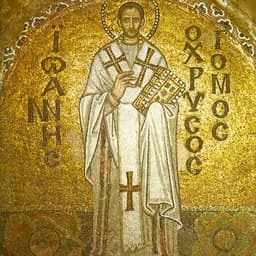
St. John Chrysostom (c. 347–407)

From his Homilies on the Gospel of John (Homilies 62–64), NPNF translation. Public domain.

On why sickness befalls even those dearest to God:

Many men, when they see any of those who are pleasing to God suffering anything terrible, as, for instance, having fallen into sickness, or poverty, and any other the like, are offended, not knowing that to those especially dear to God it belongeth to endure these things; since Lazarus also was one of the friends of Christ, and was sick.

On why the Lord delayed until corruption had set in:

Wherefore tarried He? That Lazarus might breathe his last, and be buried; that none might be able to assert that He restored him when not yet dead, saying that it was a lethargy, a fainting, a fit, but not death. On this account He tarried so long, that corruption began, and they said, "He now stinketh."

On the saying that needs no helper:

To prove more clearly His authority, He replieth, "I am the Resurrection and the Life." Showing that He needed no other to help Him, if so be that He Himself is the Life; since if He needed another, how could He be "the Resurrection and the Life"?

On why the Evangelist dwells on His tears:

Why doth the Evangelist carefully in several places mention that "He wept," and that, "He groaned"? That thou mayest learn that He had of a truth put on our nature. For had He not been of our nature, He would not once and again have been mastered by grief.

On the prayer offered not from need but for the bystanders:

"I thank Thee that Thou hast heard Me." Who now ever prayed in this manner? Before uttering any prayer, He saith, "I thank Thee," showing that He needed not prayer ... "And I knew that Thou hearest Me always." This He said not as though He Himself were powerless, but to show that His will and the Father's is one.

On the loud cry, the independent authority, and the freedom from display:

After assuming the attitude of one praying, show by His actions His independent authority? ... and said not, Arise, but, "Come forth," conversing with the dead man as though living. What can be equal to this authority? ... Jesus commanded to loose him, in order that having touched and having been near him, they might see that it was really he. And He saith, "Let him go." Seest thou His freedom from boastfulness?


St. Cyril of Alexandria (c. 376–444)

From his Commentary on John (Book VII, on John 11), trans. T. Randell, 1885. Public domain.

On why He raised the dead rather than healed the sick, a work of greater power:

And He deferred His arrival in order that He might not heal him while sick, but raise him when dead; which is a work of greater power, so that He would be more greatly glorified.

On why He calls death "sleep," having made man for immortality:

Shewing His own God-befitting power, He calls the departure of the human soul from the body by the name of sleep, and very rightly: for He does not think it proper to call it death, Who created man for immortality ... the temporary death of our body is in the sight of God really a sleep and nothing different, brought to an end by a mere and single sign from that which is by nature Life, namely, Christ.

On the true life that the Resurrection bestows:

Having previously explained the force of the mystery in Himself, and shown plainly that He is by Nature Life and Very God, He demands assent to the faith ... For although we are all raised to life through Christ, yet this [eternal life given to the faithful] is the true life, namely, to live unendingly in bliss; for to be restored to life only for punishment differs nothing from death.

On why the Word was made flesh, to subdue our weakness in Christ first:

He groans in the spirit, that is, in the power of the Holy Spirit He reproves in some way His Own Flesh ... For indeed on this account the Almighty Word of God was made in Flesh, or rather was made Flesh, that He might strengthen the weaknesses of the flesh by the energies of His own Spirit, and withdraw our nature from too earthly feelings ... Surely it is an infirmity of human nature to be abjectly overcome by griefs, but this as well as the rest is brought into subjection, in Christ first, that it may be also in us.

On the tears wept not for Lazarus only but for all humanity:

And the Lord weeps, seeing the man made in His own image marred by corruption, that He may put an end to our tears. For for this cause He also died, even that we may be delivered from death ... the Jews thought that He wept on account of the death of Lazarus, but He wept out of compassion for all humanity, not bewailing Lazarus only, but understanding that which happens to all, that the whole of humanity is made subject to death.


Theophylact of Ohrid (c. 1050–1107)

As preserved in the Catena Aurea on John. Public domain.

On the devotion and faith hidden in the sisters' message:

And because they were women and it did not become them to leave their home if they could help it. Great devotion and faith is expressed in these words, Behold, he whom you love is sick. Such was their idea of our Lord's power, that they were surprised, that one, whom He loved, could be seized with sickness.

On the day and the night read as the time before and during the Passion:

Some understand the day to be the time preceding the Passion, the night to be the Passion. In this sense, while it is day, would mean, before My Passion; You will not stumble before My Passion, because the Jews will not persecute you; but when the night, i.e. My Passion, comes, then shall you be beset with darkness and difficulties.

On why the Lord rejoiced that He was not present, that faith might be strengthened:

Some have understood this place thus. I rejoice, He says, for your sakes; for if I had been there, I should have only cured a sick man; which is but an inferior sign of power. But since in My absence he has died, you will now see that I can raise even the dead putrefying body, and your faith will be strengthened.

On His true humanity, neither feigned nor unmeasured:

To prove His human nature He sometimes gives it free vent, while at other times He commands, and restrains it by, the power of the Holy Ghost. Our Lord allows His nature to be affected in these ways both to prove that He is very Man, not Man in appearance only; and also to teach us by His own example the due measures of joy and grief. For the absence altogether of sympathy and sorrow is brutal, the excess of them is womanly.


Origen (c. 185–254)

As preserved in the Catena Aurea on John. Public domain.

On letting nothing come between the commands of Jesus and their doing:

The delay in taking away the stone was caused by the sister of the dead, who said, By this time he stinks, for he has been dead four days. If she had not said this, it would not be said, Jesus said, Take away the stone. Some delay had arisen; it is best to let nothing come between the commands of Jesus and doing them.


Blessed Augustine of Hippo (354–430)

From his Tractates on the Gospel of John (Tractate 49, NPNF translation); the closing reflection on the grave-clothes is preserved in the Catena Aurea on John (Newman trans.). Public domain.

On the deed that is less wonderful than the Worker:

Among all the miracles wrought by our Lord Jesus Christ, the resurrection of Lazarus holds a foremost place in preaching. But if we consider attentively who did it, our duty is to rejoice rather than to wonder. A man was raised up by Him who made man ... It is a greater deed to create men than to raise them again from the dead. Yet He deigned both to create and to raise again; to create all, to resuscitate some.

On the weight of sinful habit, of which Lazarus four days dead is the figure:

Certainly the universal expectation of the bystanders was that Lazarus, one who had been dead four days, would live again; let us hear, and rise again. How many are there in this audience who are crushed down under the weighty mass of some sinful habit!

On the glory of God revealed in raising even the corrupt:

What does He mean by this, you shall see the glory of God? That He can raise to life even one who is putrid and has been four days [dead]. For all have sinned, and come short of the glory of God; and, Where sin abounded, grace also did superabound.

On the hidden grace that raises the one crushed by habit:

With what difficulty does one rise who lies crushed under the heavy burden of a habit of sinning! And yet he does rise: he is quickened by hidden grace within; and after that loud voice he rises. For what followed? He cried with a loud voice, Lazarus, come forth.

On coming forth as the confession that grace draws out of us:

While you despise [Christ], you lie in the arms of death ... but when you make confession, you come forth. For what is this coming forth, but the open acknowledgment you make of your state, in quitting, as it were, the old refuges of darkness? ... Accordingly, when the dead man had come forth, still bound; confessing, yet guilty still; that his sins also might be taken away, the Lord said to His servants: Loose him, and let him go.

On the grave-clothes, the napkin, and the loosing yet to be completed:

That Lazarus came forth from the grave, signifies the soul's deliverance from carnal sins. That he came bound up in grave clothes means, that even we who are delivered from carnal things ... yet cannot, so long as we are in the body, be free from the besetments of the flesh. That his face was bound about with a napkin means, that we do not attain to full knowledge in this life. And when our Lord says, Loose him, and let him go, we learn that in another world all veils will be removed, and that we shall see face to face.


St. Bede the Venerable (c. 673–735)

As preserved in the Catena Aurea on John. Public domain.

On the meaning of the name Lazarus, who was most helped:

After our Lord had departed to the other side of Jordan, it happened that Lazarus fell sick ... Lazarus signifies helped. Of all the dead which our Lord raised, he was most helped, for he had lain dead four days, when our Lord raised him to life.

On Thomas's forward zeal, unmindful of his own frailty:

The disciples, checked by our Lord's answer to them, dared no longer oppose; and Thomas, more forward than the rest, says, Let us also go that we may die with him. What an appearance of firmness! He speaks as if he could really do what he said; unmindful, like Peter, of his frailty.

On the cave that is called a monument:

A cave is a hollow in a rock. It is called a monument, because it reminds us of the dead.


Note on sources and other Fathers

The readings interlock. Chrysostom defends the reality of the miracle and the equality of the Son: the delay was so that "corruption began" and none could cry fraud, the tears prove He "had of a truth put on our nature," and the prayer at the tomb was offered "not as though He Himself were powerless, but to show that His will and the Father's is one," so that "Come forth" displays His "independent authority." Cyril presses the same equality into dogma: He raised the dead rather than the sick because that "is a work of greater power"; He calls death "sleep" because He "created man for immortality"; and the groaning at the grave is the Word, made flesh, subduing human weakness "in Christ first, that it may be also in us," weeping "out of compassion for all humanity." Theophylact, carrying forward the Greek tradition, weighs the sisters' faith, reads the day and night as the time before and during the Passion, and guards the Lord's true and measured humanity, "very Man, not Man in appearance only." Origen draws the practical lesson, that "it is best to let nothing come between the commands of Jesus and doing them." Augustine turns from the history to its meaning: Lazarus four days dead is the soul "crushed down under the weighty mass of some sinful habit," "quickened by hidden grace," who "comes forth" in confession and is loosed by Christ's ministers. Bede adds the historical and moral senses, that Lazarus, "most helped," and the impulsive Thomas, "unmindful, like Peter, of his frailty," alike instruct us.

Other Fathers gathered in the Catena add still more: Gregory the Great, Peter Chrysologus, and the Western Glosses preached and commented on the raising, and the Catena Aurea (St. Thomas Aquinas, trans. J. H. Newman, 1841) preserves these many voices.

Patristic sources