Render unto Caesar
Matt 22:15–22; Mark 12:13–17; Luke 20:20–26 · Passion week in Jerusalem
Scripture
Matthew 22:15–22
hen went the Pharisees, and took counsel how they might entangle him in his talk. 16And they sent out unto him their disciples with the Herodians, saying, Master, we know that thou art true, and teachest the way of God in truth, neither carest thou for any man: for thou regardest not the person of men. 17Tell us therefore, What thinkest thou? Is it lawful to give tribute unto Caesar, or not? 18But Jesus perceived their wickedness, and said, Why tempt ye me, ye hypocrites? 19Shew me the tribute money. And they brought unto him a penny. 20And he saith unto them, Whose is this image and superscription? 21They say unto him, Caesar’s. Then saith he unto them, Render therefore unto Caesar the things which are Caesar’s; and unto God the things that are God’s. 22When they had heard these words, they marvelled, and left him, and went their way.
King James Version · public domain
Mateu 22:15–22
tëhere Farisenjtë van’ e bënë këshillë, si t’a zënë ndë lak me fjalë. 16Edhe dërgojnë tek ay nxënësit’ e tyre bashkë me Irodhianëtë, dyke thënë, Mësonjës, e dimë se je i-vërtetë, edhe mëson udhën’ e Perëndisë me të-vërtetë edhe nukë do të dish as për ndonjë gjë; sepse nukë shikon mbë faqe njerëzish. 17Thuaj-na pra, Ç’të duketë? është e udhësë t’i apëmë pagesë Qesarit, apo jo? 18Po Jisuj si njohu djallëzin’ e atyre, tha, Ç’më ngisni, ipokritër? 19Dëfte-më-ni monedhën’ e pagesësë. 20Edhe ata i prunë një dinar. Edhe ay u thot’ atyre, E kujt është këjo fytyrë edhe këjo përmbishkronjë? 21Ata i thonë, E Qesarit. Atëhere u thot’ atyre, Epni pra Qesarit ç’janë të Qesarit, edhe Perëndisë ç’janë të Perëndisë. 22Edhe ata kur dëgjuanë uçuditnë, edhe e lan’ atë, e iknë.
Kristoforidhi, Dhiata e Re Toskërisht 1879 · zotërim publik
In their own words
For Caesar's coin is in the gold, in which His image was portrayed, that is, God's coin, on which the Divine image is stamped; give therefore your money to Caesar, but preserve a conscience void of offence for God.
St. Hilary of Poitiers, Commentary on Matthew (on Matthew 22:15–22) (Catena Aurea)
Patristic sources
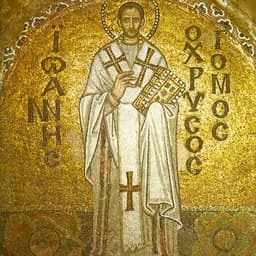
- St. John Chrysostom
- Homilies on Matthew, Hom. 70
- St. Cyril of Alexandria
- Commentary on Luke, Sermon 135
- Origen of Alexandria
- Commentary on Matthew (Catena Aurea)
Heading prints "Origen"; some of his opinions were condemned in 553, so his allegorical reading is received with care.
- St. Jerome
- Commentary on Matthew (Catena Aurea)
- St. Hilary of Poitiers
- Commentary on Matthew (Catena Aurea)
Read the sources: Chrysostom on Matthew, Homily 70 (CCEL) · Cyril on Luke, Sermon 135 (tertullian.org) · Catena Aurea on Matthew 22 (CCEL)
Render unto Caesar (Matthew 22:15–22; Mark 12:13–17; Luke 20:20–26)
The texts below are quoted verbatim from public-domain English translations; nothing is paraphrased.
St. John Chrysostom (c. 347–407)
Homilies on the Gospel of Matthew, Homily 70 (on Matthew 22:15–22) Source: trans. in the Nicene and Post-Nicene Fathers, First Series, Vol. 10. Public domain. Full text: https://www.ccel.org/ccel/schaff/npnf110.iii.LXVII.html
On the flattery that masked their plot:
On "Render unto Cæsar the things that are Cæsar's":
On the limit of what Cæsar may claim:
St. Cyril of Alexandria (c. 376–444)
Commentary on the Gospel of Luke, Sermon 135 (on Luke 20:20–26) Source: trans. R. Payne Smith, Library of Fathers, 1859. Public domain. Full text: https://www.tertullian.org/fathers/cyril_on_luke_13_sermons_135_145.htm
On the renewed rage of the questioners:
On what God requires of us, beyond the coin that is Caesar's:
Origen of Alexandria (c. 185–254)
Commentary on Matthew (on Matthew 22:15–22) As preserved in the Catena Aurea on Matthew. Public domain. Full text: https://www.ccel.org/ccel/aquinas/catena1.ii.xxii.html
On the moral sense, the body's necessaries paid to Caesar and the soul's virtue offered to God (a reading received with the caution his allegories elsewhere invite):
On the balance between flesh and virtue:
St. Jerome (c. 347–420)
Commentary on Matthew (on Matthew 22:15–22) As preserved in the Catena Aurea on Matthew. Public domain. Full text: https://www.ccel.org/ccel/aquinas/catena1.ii.xxii.html
On the first excellence of the answerer, who reads His examiners' hearts:
On the tempters confuted out of their own words:
On the things that are God's:
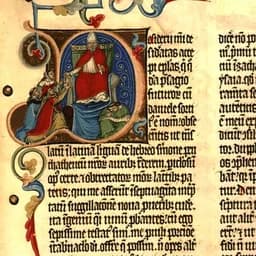
St. Hilary of Poitiers (c. 310–367)
Commentary on Matthew (on Matthew 22:15–22) As preserved in the Catena Aurea on Matthew. Public domain. Full text: https://www.ccel.org/ccel/aquinas/catena1.ii.xxii.html
On the two coins, Caesar's stamped on the gold and God's stamped on man:
On the lawful protection we accept from the power that claims tribute: