Salt of the Earth and Light of the World
Matt 5:13–16 · Early ministry in Galilee
Scripture
Matthew 5:13–16
e are the salt of the earth: but if the salt have lost his savour, wherewith shall it be salted? it is thenceforth good for nothing, but to be cast out, and to be trodden under foot of men. 14Ye are the light of the world. A city that is set on an hill cannot be hid. 15Neither do men light a candle, and put it under a bushel, but on a candlestick; and it giveth light unto all that are in the house. 16Let your light so shine before men, that they may see your good works, and glorify your Father which is in heaven.
King James Version · public domain
Mateu 5:13–16
u jeni krip’ e dheut; po ndë uprishtë kripa, me se dotë kripetë? as për farë gjëje s’vëjen më, përveç të hidhetë jashtë, edhe të shkeletë nga njerëzitë. 14Ju jeni drit’ e botësë. Një qytet që është mbi mal nukë munt të fshihetë. 15As nukë ndesnjënë kandilinë, që t’a vënë atë ndënë shinikt, po e vënë mbi kandilert, edhe ndrit mbë gjith’ ata që janë ndë shtëpit. 16Kështu letë ndritnjë drita juaj përpara njerëzvet, që të shohënë punëtë t’uaj të-mira, e të lavdurojn’ Atinë t’uaj që është ndë qiejt.
Kristoforidhi, Dhiata e Re Toskërisht 1879 · zotërim publik
In their own words
The Apostles are preachers of heavenly things, and thus, as it were, salters with eternity; rightly called "the salt of the earth," as by the virtue of their teaching, they, as it were, salt and preserve bodies for eternity.
St. Hilary of Poitiers, Commentary on Matthew (Catena Aurea)
Patristic sources
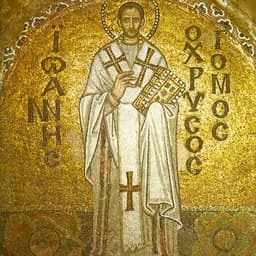
- St. John Chrysostom
- Homilies on Matthew, Hom. 15
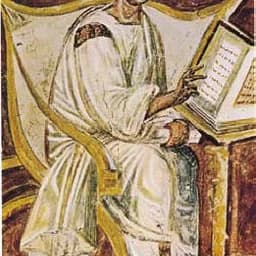
- Blessed Augustine of Hippo
- Our Lord's Sermon on the Mount, Book I, Ch. 6–7
Venerated in the East as Blessed; his Sermon on the Mount is the fullest early Latin exposition of Matt 5:13–16.
- St. Jerome
- Commentary on Matthew
Catena-only in public-domain English; quoted through the Catena Aurea on Matthew.
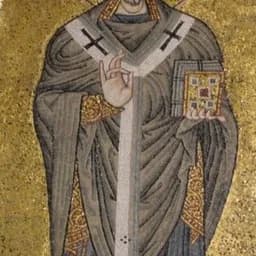
- St. Hilary of Poitiers
- Commentary on Matthew
Catena-only in public-domain English; quoted through the Catena Aurea on Matthew.
- Remigius
- Commentary on Matthew
A later Western compiler (Remigius of Auxerre), quoted only through the Catena Aurea on Matthew.
Read the sources: Chrysostom, Homilies on Matthew, Homily 15 (CCEL) · Augustine, Our Lord's Sermon on the Mount, Book I (CCEL) · Catena Aurea on Matthew 5 (CCEL)
Salt of the Earth and Light of the World (Matthew 5:13–16)
The texts below are quoted verbatim from public-domain English translations; nothing is paraphrased.
St. John Chrysostom (c. 347–407)
Homilies on the Gospel of Matthew, Homily 15 (on Matthew 5:13–16) Source: trans. in the Nicene and Post-Nicene Fathers, First Series, Vol. 10. Public domain. Full text: https://www.ccel.org/ccel/schaff/npnf110/npnf110.iii.XV.html
On why "salt of the earth" lays the whole world upon the apostles:
On the salt that loses its savour — the teacher who falls:
On the disciples set as a city on a hill, conspicuous to all:
On good works that shine without vainglory:
Blessed Augustine of Hippo (354–430)
Our Lord's Sermon on the Mount, Book I, Chapters 6–7 (on Matthew 5:13–16) Source: trans. in the Nicene and Post-Nicene Fathers, First Series, Vol. 6. Public domain. Full text: https://www.ccel.org/ccel/schaff/npnf106/npnf106.v.ii.vi.html
On who is judged the insipid salt:
On who is trodden under foot of men:
On hiding the lamp under a bushel measure:
On the added words "and glorify your Father which is in heaven":
St. Jerome (c. 347–420)
Commentary on Matthew (on Matthew 5:13–16) As preserved in the Catena Aurea on Matthew. Public domain. Full text: https://www.ccel.org/ccel/aquinas/catena1.ii.v.html
On the salt that seasons the human race:
On the salt that has lost its savour:
On the boldness of preaching that hides for no fear:
St. Hilary of Poitiers (c. 310–367)
Commentary on Matthew (on Matthew 5:13–16) As preserved in the Catena Aurea on Matthew. Public domain. Full text: https://www.ccel.org/ccel/aquinas/catena1.ii.v.html
On the apostles as salters with eternity:
On the nature of light to spread its rays:
On good works that shine to the honour of God, not of men:
Remigius (c. 841–908)
Commentary on Matthew (on Matthew 5:13–16) As preserved in the Catena Aurea on Matthew. Public domain. (A later Western compiler, quoted only through the Catena.) Full text: https://www.ccel.org/ccel/aquinas/catena1.ii.v.html
On the salt required upon every acceptable sacrifice:
On the apostles sent forth like the beams of the Sun of righteousness: