Second miraculous catch of fish
John 21:1–14 · Post-Resurrection
Scripture
John 21:1–14
fter these things Jesus shewed himself again to the disciples at the sea of Tiberias; and on this wise shewed he himself. 2There were together Simon Peter, and Thomas called Didymus, and Nathanael of Cana in Galilee, and the sons of Zebedee, and two other of his disciples. 3Simon Peter saith unto them, I go a fishing. They say unto him, We also go with thee. They went forth, and entered into a ship immediately; and that night they caught nothing. 4But when the morning was now come, Jesus stood on the shore: but the disciples knew not that it was Jesus. 5Then Jesus saith unto them, Children, have ye any meat? They answered him, No. 6And he said unto them, Cast the net on the right side of the ship, and ye shall find. They cast therefore, and now they were not able to draw it for the multitude of fishes. 7Therefore that disciple whom Jesus loved saith unto Peter, It is the Lord. Now when Simon Peter heard that it was the Lord, he girt his fisher’s coat unto him, (for he was naked,) and did cast himself into the sea. 8And the other disciples came in a little ship; (for they were not far from land, but as it were two hundred cubits,) dragging the net with fishes. 9As soon then as they were come to land, they saw a fire of coals there, and fish laid thereon, and bread. 10Jesus saith unto them, Bring of the fish which ye have now caught. 11Simon Peter went up, and drew the net to land full of great fishes, an hundred and fifty and three: and for all there were so many, yet was not the net broken. 12Jesus saith unto them, Come and dine. And none of the disciples durst ask him, Who art thou? knowing that it was the Lord. 13Jesus then cometh, and taketh bread, and giveth them, and fish likewise. 14This is now the third time that Jesus shewed himself to his disciples, after that he was risen from the dead.
King James Version · public domain
Joani 21:1–14
astaj Jisuj u’a dëfteu vetëhen’ e ti përsëri nxënëset ndë dett të Tiveriadhësë; edhe e dëfteu kështu. 2Ishinë bashkë Simon Pjetri edhe Thomaj që thuhetë Binjak, edhe Nathanaili që është nga Kanaja e Galilesë, edhe të bijt e Zevedheut, edhe dy të-tjerë nga nxënësit’ e ati. 3Simon Pjetri u thot’ atyre, Vete të gjuanj pishqe. I thonë, Vijmë edhe neve bashkë me ty. Duallnë edhe hipnë ndë lundrët për-një-here, edhe atë natë nukë zunë asgjë. 4Po tani si ubë mëngjes, Jisuj ndënji ndë buzët të detit; po nxënësitë nuk’ e njohnë se është Jisuj. 5Jisuj pra u thot’ atyre. Djemthit’ e mi, mos keni ndonjë gjë për të ngrënë? 6I upërgjeqnë, jo. Edhe ay u tha atyre, Hithni rrietënë mb’anët të-djathtë të lundrësë, edhe dotë gjeni. E hothnë pra, edhe s’muntnë më t’a hiqninë nga shumica e pishqevet. 7Ay nxënësi pra, që donte Jisuj, i thotë Pjetrit, Eshtë Zoti. Edhe Simon Pjetri, kur dëgjoj se është Zoti, upshtuall me petkunë, (sepse ishte lakuriq,) edhe uhoth ndë dett. 8Edhe nxënësit’ e-tjerë erthnë me lundrëzënë, (sepse nuk’ ishte lark tokësë, po sindonja dy qint kut,) dyke hequrë rrietën’ e pishqevet. 9Edhe si sbritnë pra mbë tokët, shohënë, se atje ishte një zjarr i-ndezurë, edhe një peshk vënë mbi atë, edhe bukë. 10Jisuj u thot atyre, Bini nga pishqetë që zutë tashi. 11Simon Pjetri hipi edhe hoqi rrietënë mbi tokët plot me pishke të mëdhenj, një qint e pesë-dhjet’ e tre. 12Jisuj u thot’ atyre. Ejani e drekohi. Po asndonjë nga nxënësitë nukë kuxonte t’a pyesë, Cili je ti? sepse e dininë se është Zoti. 13Vjen pra Jisuj edhe merr bukënë e u’a ep, edhe peshkunë gjithashtu. 14Këjo ësht’ e-treta herë që udëftye tashi Jisuj te nxënësit’ e ti, passi ungjall prej së-vdekurish.
Kristoforidhi, Dhiata e Re Toskërisht 1879 · zotërim publik
In their own words
For He no longer made things out of matter already subsisting, as, through a certain dispensation, He did before the Crucifixion.
St. John Chrysostom, Homilies on the Gospel of John, Homily LXXXVII, section [2] (on John xxi. 1–14); NPNF1 Vol. 14
Patristic sources
- St. John Chrysostom
- Homilies on John, Hom. 87
- St. Cyril of Alexandria
- Commentary on John, Book XII (on John 21)
- Theophylact of Ohrid
- Commentary on John, on John 21
- Blessed Augustine
- Tractates on John, Tract. 122
Read the sources: Chrysostom on John (CCEL) · Augustine, Tractates on John (CCEL)
The Second Catch of Fish (John 21:1–14)
The texts below are quoted verbatim from public-domain English translations; nothing is paraphrased.
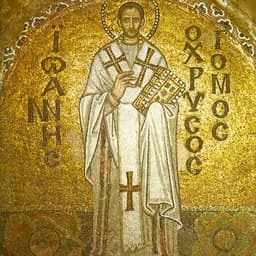
St. John Chrysostom (c. 347–407)
From his Homilies on the Gospel of John (Homily 87, on John 21), NPNF translation. Public domain.
On why they had gone back to fishing:
On the several signs, and that he no longer worked from existing matter:
On Peter's love, that could not wait for the boat:
On the reverent silence of the disciples at the meal:
St. Cyril of Alexandria (c. 376–444)
Commentary on the Gospel of St. John, Book 12 (on John 21:1–14) Source: trans. P. E. Pusey & T. Randell, 1874–1885. Public domain. Full text: https://www.tertullian.org/fathers/cyril_on_john_12_book12.htm
On why the risen Christ grants a third appearance, and works a visible miracle to confirm His promise:
On the fruitless night as the old preaching, and the cast on the right side as the surpassing teaching of Christ:
On the fire of coals and the fish already caught, showing that it is Christ's own power, not the Apostles', that begins the work:
On the meal at which Christ Himself feeds the labourers, as a type of the blessings He will apportion:
Theophylact of Ohrid (c. 1055–1107)
From his Explanation of the Gospel of John, as compiled in the Catena Aurea on John. Public domain.
On Peter's girding himself as a mark of modesty:
On the fish brought to prove the reality of the risen body:
On the night without the Sun as a figure of the prophets before Christ:
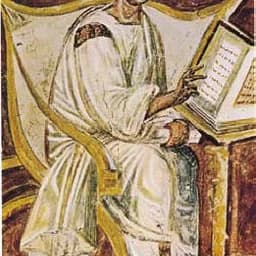
Blessed Augustine of Hippo (354–430)
From his Tractates on the Gospel of John, as compiled in the Catena Aurea on John. Public domain.
On the disciples returning to a lawful craft for their living:
On the draught as a figure of the Church at the end of the world:
On the two draughts, the right side, and the net unbroken:
On the number of the fishes, a hundred and fifty-three:
St. Gregory the Great (c. 540–604)
From his Homilies on the Gospels (Homily 24), as compiled in the Catena Aurea on John. Public domain.
On the craft that may be resumed after conversion, and the one that may not:
On the sea as this world and the shore as the rest eternal:
On the meal of the seven as the banquet of the perfected:
St. Bede the Venerable (c. 673–735)
From his Exposition of the Gospel of John, as compiled in the Catena Aurea on John. Public domain.
On the two hundred cubits as the twofold love:
On the broiled fish as Christ, who became bread for us: