The Sermon on the Plain: Love Your Enemies
Luke 6:27–36 · Early ministry in Galilee
Scripture


Luke 6:27–36
ut I say unto you which hear, Love your enemies, do good to them which hate you, 28Bless them that curse you, and pray for them which despitefully use you. 29And unto him that smiteth thee on the one cheek offer also the other; and him that taketh away thy cloak forbid not to take thy coat also. 30Give to every man that asketh of thee; and of him that taketh away thy goods ask them not again. 31And as ye would that men should do to you, do ye also to them likewise. 32For if ye love them which love you, what thank have ye? for sinners also love those that love them. 33And if ye do good to them which do good to you, what thank have ye? for sinners also do even the same. 34And if ye lend to them of whom ye hope to receive, what thank have ye? for sinners also lend to sinners, to receive as much again. 35But love ye your enemies, and do good, and lend, hoping for nothing again; and your reward shall be great, and ye shall be the children of the Highest: for he is kind unto the unthankful and to the evil. 36Be ye therefore merciful, as your Father also is merciful.
King James Version · public domain
Lluka 6:27–36
o u them juve që dëgjoni, Doni armiqtë t’uaj; bëj-u-ni mirë atyreve që u kanë çmir; 28Bekoni ata që u mallëkonjënë; edhe faluni për ata që u dëmëtonjënë. 29Ati që të të bjerë shuplakë ndë faqet, kthe-i edhe tjatrënë, edhe ati që të merr rrobënë t’ënde, mos i ndalo edhe këmishënë. 30Edhe kujdo që lypën prej teje ep-i, edhe ati që merr të-tuatë, mos j’a lyp prapë. 31Edhe sikundrë doni t’u bënjënë juve njerëzitë, edhe ju bëni atyreve gjithashtu. 32Edhe ndë daçi ata që u duanë juve, çfarë hiri kini ju? sepse edhe fajtorëtë duan’ ata që i duanë. 33Edhe ndë u bëfshi mirë atyreve, që ubënjënë mirë juve, ç’farë hiri keni ju? sepse edhe fajtorëtë gjithatë bënjënë. 34Edhe ndë u dhënçi hua atyreve, prej të-cilëvet shpreni t’i merrni prapë, ç’farë hiri keni ju? sepse edhe fajtorëtë u apënë hua fajtorëvet, që t’i marrënë prapë një nga një. 35Po doni armiqtë t’uaj, edhe bëni mirë, edhe epni hua, pa pasurë ndonjë shpresë më; edhe atëhere paga juaj dotë jet’ e-shumë, edhe dotë jini të bijt’ e të-Lartit; sepse ay ësht’ i-mirë mb’ata që nuk’j’a njohënë të-mirënë edhe mbë të-këqinjtë. 36Bëhi pra të-përdëllyershim, sikundrë edhe ati juaj ësht’ i-përdëllyershim.
Kristoforidhi, Dhiata e Re Toskërisht 1879 · zotërim publik
In their own words
For virtue restores us to the form of God, and imprints on our souls certain characters as it were of the supreme nature.
St. Cyril of Alexandria, Commentary on Luke, Sermon 29 (on Luke 6:27–36)
Patristic sources
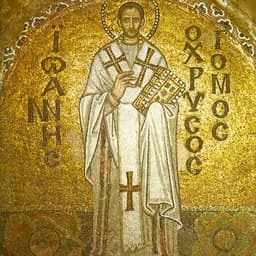
- St. John Chrysostom
- Homilies on Matthew, Hom. 18
Expounds the parallel command in Matthew 5:43–48; the Lukan Catena cites the same Homily 18.
- St. Cyril of Alexandria
- Commentary on Luke, Sermon 29
The tier-1 Luke spine (Payne Smith, 1859).
- St. Basil the Great
- As preserved in the Catena Aurea on Luke
- St. Gregory of Nyssa
- As preserved in the Catena Aurea on Luke
- St. Ambrose of Milan
- As preserved in the Catena Aurea on Luke
Ambrose's Exposition of Luke has no standalone public-domain English; quoted through the Catena.
- St. Bede the Venerable
- As preserved in the Catena Aurea on Luke
Read the sources: Chrysostom on Matthew, Homily 18 (CCEL) · Cyril of Alexandria on Luke, Sermon 29 (tertullian.org) · Catena Aurea on Luke (isidore.co)
The Sermon on the Plain: Love Your Enemies (Luke 6:27–36)
The texts below are quoted verbatim from public-domain English translations; nothing is paraphrased.
St. John Chrysostom (c. 347–407)
Homilies on the Gospel of Matthew, Homily 18 (on Matthew 5:43–48) Source: trans. in the Nicene and Post-Nicene Fathers, First Series, Vol. 10. Public domain. Full text: https://www.ccel.org/ccel/schaff/npnf110/npnf110.iii.XVIII.html
On the ascending steps by which the command to love enemies sets us on the very summit of virtue (expounding the same precept in its Matthean form):
On the reward that is greater than earth or the kingdom of heaven — to become like God:
St. Cyril of Alexandria (c. 376–444)
Commentary on the Gospel of Luke, Sermon XXIX (on Luke 6:27–36) Source: trans. R. Payne Smith, Library of Fathers, 1859. Public domain. Full text: https://www.tertullian.org/fathers/cyril_on_luke_03_sermons_26_38.htm
On the righteousness of the Gospel that is "over and above" the law:
On giving to every one that asketh, and forgiving even one's enemies:
On making oneself toward others what one would have them be (the golden rule):
On "Be ye therefore merciful," which restores us to the form of God:
St. Basil the Great (c. 330–379)
As preserved in the Catena Aurea on Luke. Public domain. Full text: https://isidore.co/aquinas/english/CALuke.htm
On doing good to enemies in both soul and body:
On how readily we call our enemies those who merely slight us, and on the dishonour of a prince eager to avenge himself:
St. Gregory of Nyssa (c. 335–395)
As preserved in the Catena Aurea on Luke. Public domain. Full text: https://isidore.co/aquinas/english/CALuke.htm
On "lend, hoping for nothing again," and the sin of exacting interest from the poor:
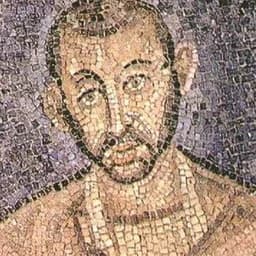
St. Ambrose of Milan (c. 339–397)
As preserved in the Catena Aurea on Luke. Public domain. Full text: https://isidore.co/aquinas/english/CALuke.htm
On why the love of enemies is set last, as the greatest of the virtues:
On the reward of mercy, which is adoption as sons of the Highest who is kind to the unthankful:
St. Bede the Venerable (c. 673–735)
As preserved in the Catena Aurea on Luke. Public domain. Full text: https://isidore.co/aquinas/english/CALuke.htm
On the turn from what the disciples suffer to how they must act toward those who hate them:
On the seeming difficulty that the prophets uttered curses against their enemies: