The Agony in Gethsemane
Matt 26:36–46; Mark 14:32–42; Luke 22:39–46 · Passion week in Jerusalem
Scripture
Matthew 26:36–46
hen cometh Jesus with them unto a place called Gethsemane, and saith unto the disciples, Sit ye here, while I go and pray yonder. 37And he took with him Peter and the two sons of Zebedee, and began to be sorrowful and very heavy. 38Then saith he unto them, My soul is exceeding sorrowful, even unto death: tarry ye here, and watch with me. 39And he went a little farther, and fell on his face, and prayed, saying, O my Father, if it be possible, let this cup pass from me: nevertheless not as I will, but as thou wilt. 40And he cometh unto the disciples, and findeth them asleep, and saith unto Peter, What, could ye not watch with me one hour? 41Watch and pray, that ye enter not into temptation: the spirit indeed is willing, but the flesh is weak. 42He went away again the second time, and prayed, saying, O my Father, if this cup may not pass away from me, except I drink it, thy will be done. 43And he came and found them asleep again: for their eyes were heavy. 44And he left them, and went away again, and prayed the third time, saying the same words. 45Then cometh he to his disciples, and saith unto them, Sleep on now, and take your rest: behold, the hour is at hand, and the Son of man is betrayed into the hands of sinners. 46Rise, let us be going: behold, he is at hand that doth betray me.
King James Version · public domain
Mateu 26:36–46
tëhere Jisuj vjen bashkë me ata ndë një fshat që thuhetë Gjethsimani; edhe u thotë nxënësvet, Rrini aty, gjer sa të vete e të falem atje. 37Edhe mori me vetëhe Pjetrin’ edhe të dy bijt’ e Zevedheut, e zuri të hidhëronet’ e t’i vinjë rëndë. 38Atëhere u thot’ atyre, Shpirti im ësht’ i hidhëruarshim gjer mbë vdekje; mbetuni këtu, edhe rrini sgjuarë bashkë me mua. 39Edhe si vate pakëzë më tej, ra mbë faqe përmbys, dyke falur’ e dyke thënë, Ati im, ndë qoftë se munt të bënetë, letë hiqetë prej meje këjo kupë; po jo si dua unë, po si të duash ti. 40Edhe vjen te nxënësitë, e i gjen ata dyke fjeturë, edhe i thotë Pjetrit, Kështu nukë munttë të rrini sgjuarë një orë bashkë me mua? 41Rrini sgjuarë edhe faluni, që të mos hyni ndë ngasje; sepse shpirti im ësht’ i gatishim, po mishi ësht’ i pafuqishim. 42Prapë për-së-dyti vate edhe ufal, dyke thënë, Ati im, ndë qoftë se nukë munt të hiqetë prej meje këjo kupë, që të mos e pi atë, letë bënetë ënda jote. 43Edhe erdhi e i gjen përsëri dyke fjeturë; sepse syt’ e atyre ishinë rënduarë. 44Edhe si i la ata, vate përsëri e ufal për-së-treti, dyke thënë po atë fjalë. 45Atëhere vjen te nxënësit’ e ti edhe u thot’ atyre, Flini pra, edhe prëhi; ja tek uafërua ora, edhe i Bir’ i njeriut epetë ndë duar fajtorësh. 46Ngrehuni letë vemi; ja tek uafërua ay që dotë më apë ndër duar.
Kristoforidhi, Dhiata e Re Toskërisht 1879 · zotërim publik
In their own words
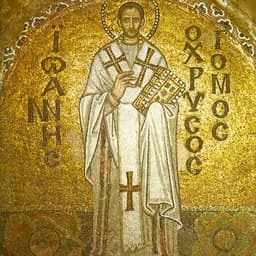
By saying then, "If it be possible, let it pass from me," He showed His humanity; but by saying, "Nevertheless not as I will, but as Thou wilt," He showed His virtue and self-command, teaching us even when nature pulls us back, to follow God.
St. John Chrysostom, Homilies on the Gospel of Matthew, Homily 83 (on Matthew 26:36–46)
Patristic sources
- St. John Chrysostom
- Homilies on Matthew, Hom. 83
The tier-1 Matthew spine; read directly from NPNF1-10, not the Catena.
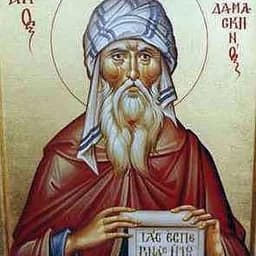
- St. John of Damascus
- The Orthodox Faith, Book III
The great dyothelite witness; his Exposition of the Orthodox Faith grounds the two-wills reading against the Monothelites. Quoted as condensed in the Catena Aurea on Matthew.
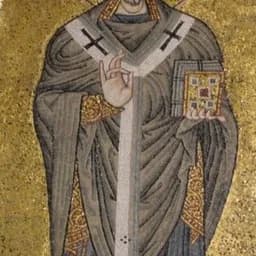
- St. Hilary of Poitiers
- Commentary on Matthew
Catena-only in public-domain English.
- St. Jerome
- Commentary on Matthew
Catena-only in public-domain English.
- Blessed Augustine of Hippo
- Expositions on the Psalms, Ps. 32
Venerated in the East as Blessed; here read through the Catena Aurea on Matthew.
- St. Leo the Great
- Sermon 58
Catena-only in public-domain English for this passage.
Read the sources: Chrysostom on Matthew, Homily 83 (CCEL) · Catena Aurea on Matthew 26 (CCEL)
The Agony in Gethsemane (Matthew 26:36–46)
The texts below are quoted verbatim from public-domain English translations; nothing is paraphrased.
St. John Chrysostom (c. 347–407)
Homilies on the Gospel of Matthew, Homily 83 (on Matthew 26:36–46) Source: trans. in the Nicene and Post-Nicene Fathers, First Series, Vol. 10. Public domain. Full text: https://www.ccel.org/ccel/schaff/npnf110/npnf110.iii.LXXIX.html
On "Sit ye here, while I go and pray yonder":
On why the sweat and the angel are set down, that no one might call the agony feigned:
On "not as I will, but as thou wilt":
On the many proofs of the incarnation gathered here:
St. John of Damascus (c. 676–749)
The Orthodox Faith, Book III (on Matthew 26:38–39) As preserved in the Catena Aurea on Matthew. Public domain. Full text: https://www.ccel.org/ccel/aquinas/catena1.ii.xxvi.html
On the natural fear by which the soul shrinks from death, which He endured voluntarily:
On the passions being in Christ both by nature and beyond nature, never of compulsion:
St. Hilary of Poitiers (c. 310–367)
Commentary on Matthew (on Matthew 26:37–38) As preserved in the Catena Aurea on Matthew. Public domain. Full text: https://www.ccel.org/ccel/aquinas/catena1.ii.xxvi.html
On whose fear it was, that His agony was not for Himself but for the disciples He had taken:
St. Jerome (c. 347–420)
Commentary on Matthew (on Matthew 26:37–41) As preserved in the Catena Aurea on Matthew. Public domain. Full text: https://www.ccel.org/ccel/aquinas/catena1.ii.xxvi.html
On the sorrow that proves the reality of the manhood, felt by pro-passion:
On "the spirit indeed is willing, but the flesh is weak":
Blessed Augustine of Hippo (354–430)
Expositions on the Psalms, Psalm 32 (on Matthew 26:39) As preserved in the Catena Aurea on Matthew. Public domain. Full text: https://www.ccel.org/ccel/aquinas/catena1.ii.xxvi.html
On the private human will which the Head figures for us, and its yielding to God:
St. Leo the Great (c. 400–461)
Sermon 58 (on Matthew 26:42) As preserved in the Catena Aurea on Matthew. Public domain. Full text: https://www.ccel.org/ccel/aquinas/catena1.ii.xxvi.html
On "Thy will be done" as the health of the whole body: