The Anointing at Bethany
Matt 26:6–13; Mark 14:3–9; John 12:1–8 · Passion week in Jerusalem
Scripture
Matthew 26:6–13
ow when Jesus was in Bethany, in the house of Simon the leper, 7There came unto him a woman having an alabaster box of very precious ointment, and poured it on his head, as he sat at meat. 8But when his disciples saw it, they had indignation, saying, To what purpose is this waste? 9For this ointment might have been sold for much, and given to the poor. 10When Jesus understood it, he said unto them, Why trouble ye the woman? for she hath wrought a good work upon me. 11For ye have the poor always with you; but me ye have not always. 12For in that she hath poured this ointment on my body, she did it for my burial. 13Verily I say unto you, Wheresoever this gospel shall be preached in the whole world, there shall also this, that this woman hath done, be told for a memorial of her.
King James Version · public domain
Mateu 26:6–13
dhe Jisuj kur ishte ndë Vithani, ndë shtëpit të Simonit të-krromosurë, 7Erdhi përan’ ati një grua që kishte një allavastrë me vaj ere shumë të-shtrënjtë, edhe e derthi mbi kryet t’ati tek ishte dyke ndënjurë ndë mësallët. 8Edhe nxënësit’ e ati kur panë, uzëmëruanë, e thanë, Për ç’punë të humbasë këjo gjë? 9Sepse ky vaj ere munt të shitej me shumë nder, edhe t’epej ndëpër të vobeqt. 10Edhe Jisuj si kupëtoj, u tha atyre, Përse i epni mundime kësaj gruaje? sepse këjo bëri punë të-mirë tek unë. 11Sepse të-vobeqtë i keni për-herë me vetëhenë t’uaj; po mua nukë më kini përherë. 12Sepse këjo, kur derdhi këtë vaj ere mbi trupt t’im, e bëri këtë për të-kalluritë t’im ndë varr. 13Me të-vërtetë po u them juve, Kudo që të leçitetë ky ungjill ndë gjithë botët, dotë flitetë edhe ç’punë bëri këjo, që të mbahetë mënt.
Kristoforidhi, Dhiata e Re Toskërisht 1879 · zotërim publik
In their own words
For, He says, love for the poor is very praiseworthy, only let it be put after veneration of God.
St. Cyril of Alexandria, Commentary on the Gospel of John, Book 8 (on John 12:8)
Patristic sources
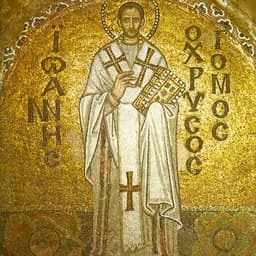
- St. John Chrysostom
- Homilies on the Gospel of Matthew, Hom. 80
The Greek spine of the Matthew narrative; he reads the anointing as an act of honor to Christ and a foretelling of the Gospel's spread to the nations.
- St. Cyril of Alexandria
- Commentary on the Gospel of John, Book 8
Only the fragments of Book 8 survive; they cover John 12:3–8 directly (Randell, LFC, 1885).
- Origen of Alexandria
- Commentary on Matthew
Catena-only in PD English; quoted here from his uncontested moral exegesis of the oil.
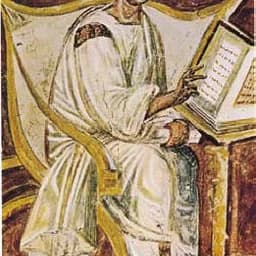
- Blessed Augustine of Hippo
- Tractates on the Gospel of John, Tractate 50
Venerated in the East as Blessed; his Johannine tractates are cited in later Byzantine catenae.
- St. Jerome
- Commentary on Matthew
Catena-only in PD English on all four Gospels.
- St. Hilary of Poitiers
- Commentary on Matthew
Catena-only in PD English.
Read the sources: Chrysostom on Matthew, Homily 80 (CCEL) · Cyril of Alexandria on John, Book 8 (tertullian.org) · Augustine, Tractates on John, Tractate 50 (CCEL) · Catena Aurea on Matthew 26 (CCEL)
The Anointing at Bethany (Matthew 26:6–13; Mark 14:3–9; John 12:1–8)
The texts below are quoted verbatim from public-domain English translations; nothing is paraphrased.
St. John Chrysostom (c. 347–407)
Homilies on the Gospel of Matthew, Homily 80 (on Matthew 26:6–13) Source: trans. in the Nicene and Post-Nicene Fathers, First Series, Vol. 10. Public domain. Full text: https://www.ccel.org/ccel/schaff/npnf110/npnf110.iii.LXXVI.html
On why she came not for a bodily cure but for honor only, laying her own head at His feet:
On His refusal to let the woman's budding work be marred by the disciples' reproof:
On the deed remembered wherever the Gospel is preached, while the exploits of kings sink into silence:
St. Cyril of Alexandria (c. 376–444)
Commentary on the Gospel of John, Book 8 (on John 12:3–8) Source: trans. T. Randell, Library of Fathers, 1885. Public domain. Full text: https://www.tertullian.org/fathers/cyril_on_john_08_book8.htm
On Judas's complaint as ignorance masking greed, and the honor due to God before the poor:
On "Let her alone," by which the Lord clears the woman and covertly reproves the traitor:
On the poor loved, yet only after the veneration of God:
Origen of Alexandria (c. 185–254)
Commentary on Matthew (on Matthew 26:6–13) As preserved in the Catena Aurea on Matthew. Public domain. Full text: https://www.ccel.org/ccel/aquinas/catena1.ii.xxvi.html
On the two ointments, the feet anointed by works of mercy toward men and the head by what is done for God alone (a passage of his uncontested exegesis):
Blessed Augustine of Hippo (354–430)
Tractates on the Gospel of John, Tractate 50 (on John 12:1–8) Source: trans. in the Nicene and Post-Nicene Fathers, First Series, Vol. 7. Public domain. Full text: https://www.ccel.org/ccel/schaff/npnf107/npnf107.iii.li.html
On anointing the feet of Jesus by a good life and wiping them with the hair, that is, giving one's superfluity to the poor:
On Judas already lost long before the betrayal, following with his body and not his heart:
St. Jerome (c. 347–420)
Commentary on Matthew (on Matthew 26:11–13) As preserved in the Catena Aurea on Matthew. Public domain. Full text: https://www.ccel.org/ccel/aquinas/catena1.ii.xxvi.html
On "me ye shall not have always" as spoken of His bodily presence:
On His foreknowledge that the Gospel would be preached throughout the whole world:
St. Hilary of Poitiers (c. 310–367)
Commentary on Matthew (on Matthew 26:6–13) As preserved in the Catena Aurea on Matthew. Public domain. Full text: https://www.ccel.org/ccel/aquinas/catena1.ii.xxvi.html
On the woman as a figure of the Gentiles who give glory to God in Christ's passion: