The Anointing by the Sinful Woman
Luke 7:36–50 · Passion week in Jerusalem
Scripture
Luke 7:36–50
nd one of the Pharisees desired him that he would eat with him. And he went into the Pharisee’s house, and sat down to meat. 37And, behold, a woman in the city, which was a sinner, when she knew that Jesus sat at meat in the Pharisee’s house, brought an alabaster box of ointment, 38And stood at his feet behind him weeping, and began to wash his feet with tears, and did wipe them with the hairs of her head, and kissed his feet, and anointed them with the ointment. 39Now when the Pharisee which had bidden him saw it, he spake within himself, saying, This man, if he were a prophet, would have known who and what manner of woman this is that toucheth him: for she is a sinner. 40And Jesus answering said unto him, Simon, I have somewhat to say unto thee. And he saith, Master, say on. 41There was a certain creditor which had two debtors: the one owed five hundred pence, and the other fifty. 42And when they had nothing to pay, he frankly forgave them both. Tell me therefore, which of them will love him most? 43Simon answered and said, I suppose that he, to whom he forgave most. And he said unto him, Thou hast rightly judged. 44And he turned to the woman, and said unto Simon, Seest thou this woman? I entered into thine house, thou gavest me no water for my feet: but she hath washed my feet with tears, and wiped them with the hairs of her head. 45Thou gavest me no kiss: but this woman since the time I came in hath not ceased to kiss my feet. 46My head with oil thou didst not anoint: but this woman hath anointed my feet with ointment. 47Wherefore I say unto thee, Her sins, which are many, are forgiven; for she loved much: but to whom little is forgiven, the same loveth little. 48And he said unto her, Thy sins are forgiven. 49And they that sat at meat with him began to say within themselves, Who is this that forgiveth sins also? 50And he said to the woman, Thy faith hath saved thee; go in peace.
King James Version · public domain
Lluka 7:36–50
dhe një nga Farisenjtë i lutej të hajë bashkë me atë; edhe ay hyri ndë shtëpit të Fariseut, edhe ndënji ndë mësallët. 37Edhe javoka, një grua nd’atë qytet, e-cila ishte fajtore, kur mori vesh, se kishte rënë ndë shtëpit të Fariseut, pruri një allavastrë me vaj erërash; 38Edhe ndënji prapa përanë këmbëvet t’ati dyke qarë, edhe zuri e lakte këmbët’ e ati me lottë, edhe j’a fshinte me flokët’ e kres’ së saj, edhe puthte këmbët’ e ati, edhe j’a lyente me vajn’ e erëravet. 39Edhe Fariseu që e kish thërriturë, kur pa, tha me vetëhen’ e ti, dyke thënë, Ky po të ishte profit, dotë njihte cila edhe ç’farë gruaje ësht’ ajo që e prek, se është fajtore. 40Edhe Jisuj i upërgjeq e i tha ati, Simon, diç kam të të them. Edhe ay i thotë, Mësonjës, thuaj. 41Një hua-dhënës kishte dy detorë; njëri i kishte detyrë pesë qint dinarë, edhe tjetëri pesë-dhjetë. 42Edhe passi nukë kishinë t’j’a laninë, u’a fali të dyve. Thuaj pra, Cili nga ata dot’e dojë më tepërë? 43Edhe Simoni upërgjeq e tha, Më duketë, se ay, të-cilit i fali më të-shumatë. Edhe ay i tha, Drejtë gjykove. 44Edhe si ukthye nga gruaja, i tha Simonit, A e sheh këtë grua? Hyra ndë shtëpit t’ënde, edhe ti nukë më dhe ujë për të larë këmbëtë; po ajo me lottë më lagu këmbëtë, edhe me flokët’ (e kres’ së saj) i fshiu. 45Ti nukë më puthe; po ajo, që kur hyra, nukë pushoj dyke puthurë këmbët’ e mia. 46Ti me vaj nukë më leve kryetë; po ajo me vaj erërash më leu këmbëtë. 47Përandaj po të them, Janë ndjerë fajet’ e asaj të-shumë; sepse deshi shumë; po ati që i ndjenenë pak, pak do. 48Pastaj i tha asaj, Të janë ndjerë fajetë. 49Edhe ata që kishinë ndënjurë ndë mësallët zunë të thonë me vetëhen’ e tyre, Cili është ky që edhe faje ndjen? 50Edhe ay i tha gruasë, Besa jote të shpëtoj; hiq ndë paqtim.
Kristoforidhi, Dhiata e Re Toskërisht 1879 · zotërim publik
In their own words
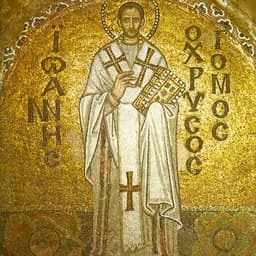
Thus the harlot became then more honorable than the virgins. For no sooner was she inflamed with penitence, than she burst forth in love for Christ.
St. John Chrysostom, as preserved in the Catena Aurea on Luke (on Luke 7:36–50)
Patristic sources
- St. John Chrysostom
- Commentary as preserved in the Catena Aurea on Luke (on Luke 7:36–50)
- St. Cyril of Alexandria
- Commentary on Luke, Sermon 40
- St. Gregory of Nyssa
- As preserved in the Catena Aurea on Luke (on Luke 7:36–50)
- Titus of Bostra
- As preserved in the Catena Aurea on Luke (on Luke 7:36–50)
His Luke commentary survives in PD English only through the Catena Aurea.
- Theophylact of Ohrid
- As preserved in the Catena Aurea on Luke (on Luke 7:50)
- St. Gregory the Great
- As preserved in the Catena Aurea on Luke (on Luke 7:36–50)
His Forty Gospel Homilies survive in PD English only through the Catena Aurea.
Read the sources: Cyril of Alexandria, Commentary on Luke, Sermons 39–46 (tertullian.org) · Catena Aurea on Luke (isidore.co)
The Anointing by the Sinful Woman (Luke 7:36–50)
The texts below are quoted verbatim from public-domain English translations; nothing is paraphrased.
St. John Chrysostom (c. 347–407)
As preserved in the Catena Aurea on Luke. Public domain. Full text: https://isidore.co/aquinas/english/CALuke.htm
On the penitent's love outrunning the virgins:
On why those plunged deep in evil follow hard after good:
On presuming on no virtue and despairing of no sin:
St. Cyril of Alexandria (c. 376–444)
Commentary on the Gospel of Luke, Sermon XL (on Luke 7:36–50) Source: trans. R. Payne Smith, Library of Fathers, 1859. Public domain. Full text: https://www.tertullian.org/fathers/cyril_on_luke_04_sermons_39_46.htm
On the new way of salvation opened by Christ:
On the sinful woman who fled for refuge to Christ:
On the godlike authority of "Thy sins are forgiven thee":
On not being troubled by the greatness of former sins:
St. Gregory of Nyssa (c. 335–395)
As preserved in the Catena Aurea on Luke. Public domain. Full text: https://isidore.co/aquinas/english/CALuke.htm
On those who justify themselves and keep apart from sinners:
On the woman standing behind with downcast eyes:
Titus of Bostra (d. c. 378)
As preserved in the Catena Aurea on Luke. Public domain. Full text: https://isidore.co/aquinas/english/CALuke.htm
On the lesser debtor who still stands in need of pardon:
On the tears she poured forth being harder than water to give:
On the pride that keeps the lesser sinner from healing:
Theophylact of Ohrid (c. 1055–1107)
As preserved in the Catena Aurea on Luke. Public domain. Full text: https://isidore.co/aquinas/english/CALuke.htm
On "Go in peace" as the adding of good works to forgiveness:
St. Gregory the Great (c. 540–604)
As preserved in the Catena Aurea on Luke. Public domain. Full text: https://isidore.co/aquinas/english/CALuke.htm
On the woman running to wash her shame at the fountain of mercy:
On her turning the number of her faults into as many virtues:
On the Physician set between two sick persons:
On the fire of charity that consumes the rust of sin: