The Beatitudes
Matt 5:1–12; Luke 6:20–26 · Early ministry in Galilee
Scripture
Matthew 5:1–12
nd seeing the multitudes, he went up into a mountain: and when he was set, his disciples came unto him: 2And he opened his mouth, and taught them, saying, 3Blessed are the poor in spirit: for theirs is the kingdom of heaven. 4Blessed are they that mourn: for they shall be comforted. 5Blessed are the meek: for they shall inherit the earth. 6Blessed are they which do hunger and thirst after righteousness: for they shall be filled. 7Blessed are the merciful: for they shall obtain mercy. 8Blessed are the pure in heart: for they shall see God. 9Blessed are the peacemakers: for they shall be called the children of God. 10Blessed are they which are persecuted for righteousness’ sake: for theirs is the kingdom of heaven. 11Blessed are ye, when men shall revile you, and persecute you, and shall say all manner of evil against you falsely, for my sake. 12Rejoice, and be exceeding glad: for great is your reward in heaven: for so persecuted they the prophets which were before you.
King James Version · public domain
Mateu 5:1–12
dhe ay kur pa gjindjenë, hipi ndë malt, edhe si ndënji, i erthnë përanë nxënësit’ e ti. 2Edhe atëhere hapi gojën’ e ti, e i mësonte dyke thënë, 3Lum të vobeqtë ndë shpirt; sepse e atyre është mbretëri’ e qiejvet. 4Lum ata që bëjnë vajë; sepse ata dotë ngushëllonenë. 5Luma ata që janë të-butë; sepse ata dotë trashëgonjënë dhenë. 6Lum ata që kanë uri e et për drejtërinë; sepse ata dotë nginjenë. 7Lum ata që janë të-përdëllyershim; sepse ata dotë përdëllenenë. 8Lum ata që kanë zëmërë të-qëruarë; sepse ata dotë shohënë Perëndinë. 9Lum ata që bëjnë paqtim; sepse ata dotë quhenë bij Perëndie. 10Lum ata që ndiqenë për punë drejtërie; sepse e atyreve është mbretëri’ e qiejvet. 11Të-lumurë jeni ju, kur t’u çpërnderonjën’ e t’u ndjekënë, e të thonë kundrë jush çdo farë fjale të-keqe me të-rremë për punë t’ime. 12Gëzohi e gazmohi, sepse paga juaj është e-shumë ndë qiejt; sepse kështu ndoqnë edhe profitëritë që kanë qënë përpara jush.
Kristoforidhi, Dhiata e Re Toskërisht 1879 · zotërim publik
In their own words
Therefore, you see, in each instance, by the former precept making way for the following one, He hath woven a sort of golden chain for us.
St. John Chrysostom, Homilies on Matthew, Homily 15 (on Matthew 5:1–12)
Patristic sources
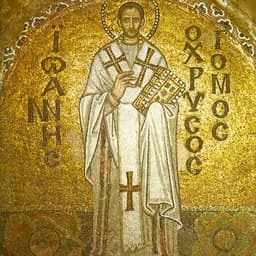
- St. John Chrysostom
- Homilies on Matthew, Hom. 15
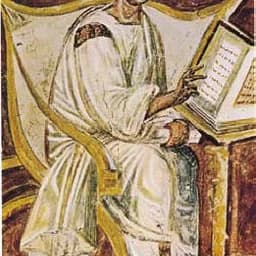
- Blessed Augustine of Hippo
- Our Lord's Sermon on the Mount, Book I
Venerated in the East as Blessed; his ordered exposition of the Sermon on the Mount treats each Beatitude in turn.
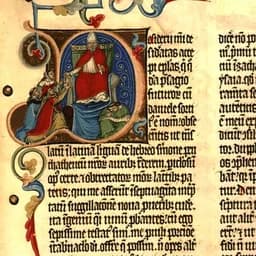
- St. Jerome
- Commentary on Matthew
Catena-only in public-domain English; quoted through the Catena Aurea on Matthew.
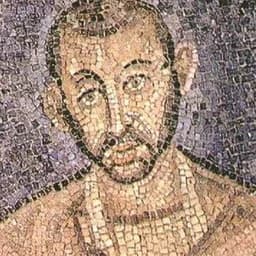
- St. Ambrose of Milan
- Exposition of the Gospel of Luke
The Catena cites his Luke exposition (in Luc.) on the Beatitudes; Catena-only in public-domain English.
- St. Hilary of Poitiers
- Commentary on Matthew
Catena-only in public-domain English; quoted through the Catena Aurea on Matthew.
Read the sources: Chrysostom, Homilies on Matthew, Homily 15 (CCEL) · Augustine, Our Lord's Sermon on the Mount, Book I (CCEL) · Catena Aurea on Matthew, ch. 5 (CCEL)
The Beatitudes (Matthew 5:1–12; Luke 6:20–26)
The texts below are quoted verbatim from public-domain English translations; nothing is paraphrased.
St. John Chrysostom (c. 347–407)
Homilies on the Gospel of Matthew, Homily 15 (on Matthew 5:1–12) Source: trans. in the Nicene and Post-Nicene Fathers, First Series, Vol. 10. Public domain. Full text: https://www.ccel.org/ccel/schaff/npnf110/npnf110.iii.XV.html
On "the poor in spirit," the humble who lower themselves by choice:
On the golden chain by which each beatitude makes way for the one that follows:
On "Blessed are the meek, for they shall inherit the earth":
On "Blessed are the pure in heart, for they shall see God":
Blessed Augustine of Hippo (354–430)
Our Lord's Sermon on the Mount, Book I (on Matthew 5:1–12) Source: trans. in the Nicene and Post-Nicene Fathers, First Series, Vol. 6. Public domain. Full text: https://www.ccel.org/ccel/schaff/npnf106/npnf106.v.ii.i.html
On "the poor in spirit" as the humble and God-fearing, where blessedness must begin:
On the meek and the earth they shall by inheritance possess:
On "Blessed are the pure in heart: for they shall see God":
On "Blessed are the peacemakers: for they shall be called the children of God":
St. Jerome (c. 347–420)
As preserved in the Catena Aurea on Matthew. Public domain. Full text: https://www.ccel.org/ccel/aquinas/catena1.ii.v.html
On the mourning that the beatitude intends:
On those who hunger and thirst after righteousness:
On "Blessed are the peacemakers," beginning within the heart:
St. Ambrose of Milan (c. 339–397)
As preserved in the Catena Aurea on Matthew. Public domain. Full text: https://www.ccel.org/ccel/aquinas/catena1.ii.v.html
On meekness as the lesson that follows poverty:
On the mourning for sin that follows poverty and meekness:
On the hunger and thirst for righteousness that follows mourning:
On beginning peace within oneself before extending it to others:
St. Hilary of Poitiers (c. 310–367)
As preserved in the Catena Aurea on Matthew. Public domain. Full text: https://www.ccel.org/ccel/aquinas/catena1.ii.v.html
On those that mourn:
On the longing of the saints filled in heaven:
On "Blessed are the merciful: for they shall obtain mercy":
On the peacemakers and the reward of adoption: