The Betrayal and Arrest
Matt 26:47–56; Mark 14:43–52; Luke 22:47–53; John 18:1–12 · Passion week in Jerusalem
Scripture
Matthew 26:47–56
nd while he yet spake, lo, Judas, one of the twelve, came, and with him a great multitude with swords and staves, from the chief priests and elders of the people. 48Now he that betrayed him gave them a sign, saying, Whomsoever I shall kiss, that same is he: hold him fast. 49And forthwith he came to Jesus, and said, Hail, master; and kissed him. 50And Jesus said unto him, Friend, wherefore art thou come? Then came they, and laid hands on Jesus, and took him. 51And, behold, one of them which were with Jesus stretched out his hand, and drew his sword, and struck a servant of the high priest’s, and smote off his ear. 52Then said Jesus unto him, Put up again thy sword into his place: for all they that take the sword shall perish with the sword. 53Thinkest thou that I cannot now pray to my Father, and he shall presently give me more than twelve legions of angels? 54But how then shall the scriptures be fulfilled, that thus it must be? 55In that same hour said Jesus to the multitudes, Are ye come out as against a thief with swords and staves for to take me? I sat daily with you teaching in the temple, and ye laid no hold on me. 56But all this was done, that the scriptures of the prophets might be fulfilled. Then all the disciples forsook him, and fled.
King James Version · public domain
Mateu 26:47–56
dhe ay tek ishte po dyke folurë, ja tek erdhi Judha, një nga të dy-mbë-dhjetë, edhe bashkë me atë erthnë shumë gjindje me thikë e me dru nga an’ e krye-priftërvet edhe të pleqvet të llauzit. 48Edhe ay që e epte atë ndër duar u dha atyre shënjë, dyke thënë, Atë që të puth unë, ay është; zir-e-ni. 49Edhe përnjëhere erdhi përanë Jisujt e tha, Gëzohu, Ravvi; edhe e puthi. 50Edhe Jisuj i tha, Mik, përse erdhe? Atëhere uafëruanë e vunë duartë mbi Jisunë, edhe e zunë. 51Edhe ja një nga ata që sihinë bashkë me Jisunë ngjati dorënë, e nxori thikën’ e ti, edhe i ra shërbëtorit të krye-priftit, e i preu veshnë. 52Atëhere Jisuj i thot’ ati, Kthe thikënë t’ënde ndë vëntt të saj; sepse gjith’ata që vënë dorë mbë thikë, prej thike dotë humbasënë. 53Apo të duketë se nukë munt ndashti t’i lutem t’im Eti, edhe të më nxjerrë përpara më tepërë se dy-mbë-dhjetë legjeona ëngjëjsh? 54Qysh dotë mbushenë pra shkronjatë, se kështu gjan të bënetë? 55Mb’atë orë Jisuj i tha gjindjesë, Posi mbë kursar keni dalë me thikë e me dru të më ziri? për dita rrinjam te ju dyke mësuarë ndë hieroret, edhe nukë më zutë. 56Po gjithë këjo ubë, që të mbushenë shkronjat’ e profitërvet. Atëhere gjithë nxënësitë e lanë, e iknë.
Kristoforidhi, Dhiata e Re Toskërisht 1879 · zotërim publik
In their own words
What will He do when He cometh as judge, who did this when giving Himself up to be judged? What will be His power when He cometh to reign, who had this power when He came to die?
Blessed Augustine of Hippo, Tractates on the Gospel of John, Tractate 112 (on John 18:1–12)
Patristic sources
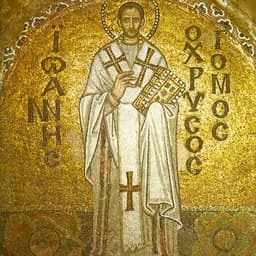
- St. John Chrysostom
- Homilies on the Gospel of Matthew, Hom. 83
- Homilies on the Gospel of Matthew, Hom. 84
The Catena Aurea tags the sword-saying to his Homily 84; the kiss and the reproach of Judas fall in Homily 83.
- St. Cyril of Alexandria
- Commentary on the Gospel of John, Book XI
Randell's Library of Fathers translation (1885), transcribed by Roger Pearse and released to the public domain.
- Origen of Alexandria
- Commentary on Matthew
Quoted only through the Catena Aurea; on the innocuous points here, not the speculations condemned in 553.
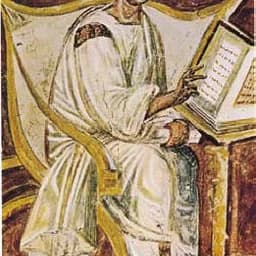
- Blessed Augustine of Hippo
- Tractates on the Gospel of John, Tractate 112
Venerated in the East as Blessed; his Johannine tractates are cited in later Byzantine catenae.
- St. Jerome
- Commentary on Matthew
Catena-only in public-domain English for his Gospel exegesis.
- St. Leo the Great
- Sermons
Preserved through the Catena Aurea on Matthew (tagged Serm. 22).
Read the sources: Chrysostom on Matthew, Homilies 83–84 (CCEL, NPNF1-10) · Cyril of Alexandria on John, Book XI (tertullian.org) · Augustine, Tractate 112 on John (CCEL, NPNF1-7) · Catena Aurea on Matthew 26 (CCEL)
The Betrayal and Arrest (Matthew 26:47–56)
The texts below are quoted verbatim from public-domain English translations; nothing is paraphrased.
St. John Chrysostom (c. 347–407)
Homilies on the Gospel of Matthew, Homilies 83–84 (on Matthew 26:47–56) Source: trans. in the Nicene and Post-Nicene Fathers, First Series, Vol. 10. Public domain. Full text: https://www.ccel.org/ccel/schaff/npnf110/npnf110.iii.lxxix.html
On the traitor's kiss:
On "Friend, wherefore art thou come?" and the reproach recorded by another Evangelist:
On the two things by which He comforted the disciples, the word against the sword and the prayer to the Father:
St. Cyril of Alexandria (c. 376–444)
Commentary on the Gospel of John, Book XI (on John 18:1–12) Source: trans. T. Randell, Library of Fathers, 1885. Public domain. Full text: https://www.tertullian.org/fathers/cyril_on_john_11_book11.htm
On the crowd that came against Him with lanterns and torches:
On the Lord going of His own will to meet His sufferings:
On "I am he," and the multitude bowed down to the earth:
Origen of Alexandria (c. 185–254)
Commentary on Matthew (on Matthew 26:47–50) As preserved in the Catena Aurea on Matthew. Public domain. Full text: https://www.ccel.org/ccel/aquinas/catena1.ii.xxvi.html
On "Lo, he that shall betray me draweth near":
On why the traitor chose a kiss for his sign:
Blessed Augustine of Hippo (354–430)
Tractates on the Gospel of John, Tractate 112 (on John 18:1–12) Source: trans. in the Nicene and Post-Nicene Fathers, First Series, Vol. 7. Public domain. Full text: https://www.ccel.org/ccel/schaff/npnf107/npnf107.iii.cxiii.html
On the single voice that cast the armed crowd to the ground:
On the power shown by Him who came to die:
St. Jerome (c. 347–420)
Commentary on Matthew (on Matthew 26:53–55) As preserved in the Catena Aurea on Matthew. Public domain. Full text: https://www.ccel.org/ccel/aquinas/catena1.ii.xxvi.html
On the more than twelve legions of angels:
On the Scriptures that must be fulfilled:
On seeking with swords and staves Him who taught daily in the temple:
St. Leo the Great (c. 400–461)
Sermons (on Matthew 26:52) As preserved in the Catena Aurea on Matthew. Public domain. Full text: https://www.ccel.org/ccel/aquinas/catena1.ii.xxvi.html
On why the Lord would not refuse to be apprehended: