The Blind Leading the Blind
Luke 6:39; Matt 15:14 · Early ministry in Galilee
Scripture
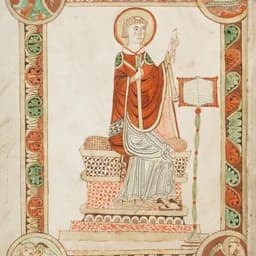
Luke 6:39
nd he spake a parable unto them, Can the blind lead the blind? shall they not both fall into the ditch?
King James Version · public domain
Lluka 6:39
dhe u tha atyre një paravoli: mos munt i-verbërë t’i heqë udhë të-verbërit? a nukë dotë bjenë që të dy ndë gropë?
Kristoforidhi, Dhiata e Re Toskërisht 1879 · zotërim publik
In their own words
This they must do, as having already first received their sight, and a mind illuminated with the divine light, lest they should be blind leaders of the blind.
St. Cyril of Alexandria, Commentary on Luke, Sermon 29 (on Luke 6:39)
Patristic sources
- St. John Chrysostom
- Homilies on Matthew, Hom. 51
- St. Cyril of Alexandria
- Commentary on Luke, Sermon 29
- Theophylact of Ohrid
- Explanation of Luke
Preserved in public-domain English only through the Catena Aurea.
- St. Jerome
- Commentary on Matthew
His Gospel exegesis survives in public-domain English only through the Catena Aurea.
- St. Bede the Venerable
- Commentary on Luke
His Gospel homilies survive in public-domain English only through the Catena Aurea.
Read the sources: Chrysostom on Matthew, Homily 51 (CCEL) · Cyril on Luke, Sermons 26–38 (tertullian.org) · Catena Aurea on Matthew, ch. 15 (CCEL) · Catena Aurea on Luke, Vol. 1, Oxford 1841 (archive.org)
The Blind Leading the Blind (Luke 6:39; Matthew 15:14)
The texts below are quoted verbatim from public-domain English translations; nothing is paraphrased.
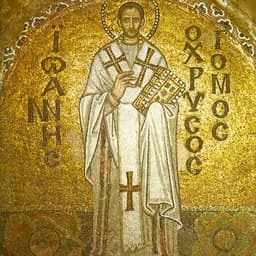
St. John Chrysostom (c. 347–407)
Homilies on the Gospel of Matthew, Homily 51 (on Matthew 15:14) Source: trans. in the Nicene and Post-Nicene Fathers, First Series, Vol. 10. Public domain. Full text: https://www.ccel.org/ccel/schaff/npnf110/npnf110.iii.LI.html
On why Christ leaves the offended Pharisees alone as blind guides:
St. Cyril of Alexandria (c. 376–444)
Commentary on the Gospel of Luke, Sermon 29 (on Luke 6:39) Source: trans. R. Payne Smith, Library of Fathers, 1859. Public domain. Full text: https://www.tertullian.org/fathers/cyril_on_luke_03_sermons_26_38.htm
On the parable as a necessary lesson for the disciples, the future teachers of the world:
On the disciple who is not above his teacher:
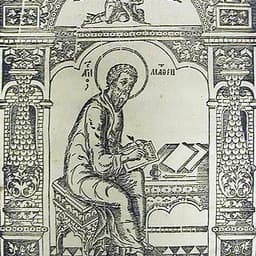
Theophylact of Ohrid (c. 1055–1107)
Explanation of the Gospel of Luke (on Luke 6:39) As preserved in the Catena Aurea on Luke, trans. J. H. Newman, 1841. Public domain. Full text: https://archive.org/details/CatenaAureaNewEdV4
On the judge who sins in the very same way as the man he corrects:
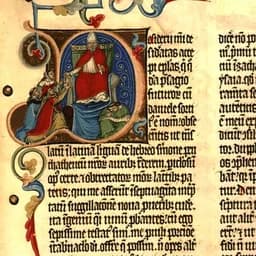
St. Jerome (c. 347–420)
Commentary on Matthew (on Matthew 15:14) As preserved in the Catena Aurea on Matthew. Public domain. Full text: https://www.ccel.org/ccel/aquinas/catena1.ii.xv.html
On the Saviour's command to leave evil teachers to their own will:
St. Bede the Venerable (c. 673–735)
Commentary on Luke (on Luke 6:39) As preserved in the Catena Aurea on Luke, trans. J. H. Newman, 1841. Public domain. Full text: https://archive.org/details/CatenaAureaNewEdV4
On the blind heart that cannot cure another's corruption: