The Boy Jesus in the Temple
Luke 2:41–52 · Infancy and childhood
Scripture
Luke 2:41–52
ow his parents went to Jerusalem every year at the feast of the passover. 42And when he was twelve years old, they went up to Jerusalem after the custom of the feast. 43And when they had fulfilled the days, as they returned, the child Jesus tarried behind in Jerusalem; and Joseph and his mother knew not of it. 44But they, supposing him to have been in the company, went a day’s journey; and they sought him among their kinsfolk and acquaintance. 45And when they found him not, they turned back again to Jerusalem, seeking him. 46And it came to pass, that after three days they found him in the temple, sitting in the midst of the doctors, both hearing them, and asking them questions. 47And all that heard him were astonished at his understanding and answers. 48And when they saw him, they were amazed: and his mother said unto him, Son, why hast thou thus dealt with us? behold, thy father and I have sought thee sorrowing. 49And he said unto them, How is it that ye sought me? wist ye not that I must be about my Father’s business? 50And they understood not the saying which he spake unto them. 51And he went down with them, and came to Nazareth, and was subject unto them: but his mother kept all these sayings in her heart. 52And Jesus increased in wisdom and stature, and in favour with God and man.
King James Version · public domain
Lluka 2:41–52
dhe prindërit’ e ati vininë për mot ndë Jerusalim për të-kremten’ e pashkësë. 42Edhe kur ubë dy-mbë-dhjetë vjeç, ata hipnë ndë Jerusalim pas zakonit të së-kremtesë; 43Edhe si mbaruanë dittë, mbë të-kthyerit të tyre, djali Jisu mbeti prapa ndë Jerusalim; edhe Josifi edh’ e ëma nukë dijnë. 44Po dyke pandehurë, se ay ishte mb’udhë me shokëtë, ecnë një dit’ udhë; edhe e kërkoninë ndëpër far’ e fist e ndëpër të-njohurit. 45Edhe passi nuk’ e gjetnë, u kthyenë prapë ndë Jerusalim dyke kërkuar’ atë. 46Edhe pas tri ditsh e gjetnë ndë hieroret, dyke ndenjurë ndë mest të mësonjësvet, e dyke dëgjuar’ ata, e dyke pyetur’ ata. 47Edhe gjith’ ata që e dëgjoninë maniteshinë për mëndjen’ e për të-përgjegjurat e ati. 48Edhe kur e pan’ atë, uhabitnë; edhe e ëma i tha, O bir, ç’na bëre kështu? na yt atë edhe unë tek po të kërkojmë me pikëllim. 49Edhe ay u tha atyre, Përse më kërkonitë? nuk’ e dinitë, se unë duhetë të jem ndë punët të t’im et? 50Po ata nuk’ e kupëtuanë fjalënë që u tha atyre. 51Edhe sbriti bashkë me ata, edhe erdhi ndë Nazaret; edhe ishte dyk’ ubindurë nd’ata. Edhe e ëma ruante gjithë këto fjalë ndë zëmërët të saj. 52Edhe Jisuj vinte mbarë nd’urtësi e ndë moshë e ndë hir përpara Perëndisë e njerëzet.
Kristoforidhi, Dhiata e Re Toskërisht 1879 · zotërim publik
In their own words
Mark the wisest of mothers, Mary the mother of true wisdom, becomes the scholar or disciple of the Child. For she yielded to Him not as to a boy, nor as to a man, but as unto God.
St. Bede the Venerable, Commentary on Luke (on Luke 2:51) (Catena Aurea)
Patristic sources
- St. Cyril of Alexandria
- Commentary on Luke, Sermon 5
- St. John Chrysostom
- Catena Aurea on Luke (Luke 2:41–52)
- Theophylact of Ohrid
- Explanation of Luke (Catena Aurea)
- Origen of Alexandria
- Homilies on Luke (Catena Aurea)
Some of Origen's speculations were condemned in 553; quoted here only for his exhortation to seek Christ in the temple and among the teachers of the Church.
- St. Ambrose of Milan
- Exposition of Luke (Catena Aurea)
- St. Bede the Venerable
- Commentary on Luke (Catena Aurea)
Read the sources: Cyril of Alexandria, Commentary on Luke, Sermons 1–11 (tertullian.org) · Catena Aurea on Luke (isidore.co)
The Boy Jesus in the Temple (Luke 2:41–52)
The texts below are quoted verbatim from public-domain English translations; nothing is paraphrased.
St. Cyril of Alexandria (c. 376–444)
Commentary on the Gospel of Luke, Sermon V (on Luke 2:41–52), trans. R. Payne Smith, Library of Fathers, 1859. Public domain. Full text: https://www.tertullian.org/fathers/cyril_on_luke_01_sermons_01_11.htm
On the boy carried up to Jerusalem and found among the doctors, as proof that he increased in wisdom:
On "Wist ye not that I must be about my Father's business?" — his first open witness to his divine Sonship:
On "Jesus increased in wisdom" — not a growth in the Word, but the gradual manifesting of his wisdom:
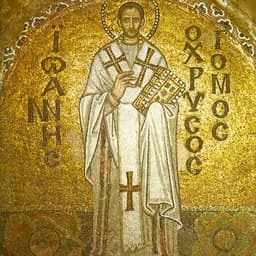
St. John Chrysostom (c. 347–407)
As preserved in the Catena Aurea on Luke (on Luke 2:41–52). Public domain. Full text: https://isidore.co/aquinas/english/CALuke.htm
On the single wonder that Luke records of his childhood:
Theophylact of Ohrid (c. 1055–1107)
As preserved in the Catena Aurea on Luke (on Luke 2:41–52). Public domain. Full text: https://isidore.co/aquinas/english/CALuke.htm
On "Jesus increased in wisdom" — his wisdom shown by degrees, not gained:
Origen of Alexandria (c. 185–254)
As preserved in the Catena Aurea on Luke (on Luke 2:41–52). Public domain. Full text: https://isidore.co/aquinas/english/CALuke.htm
On why Jesus is not found among his kinsfolk, but only in the temple:
On where those who seek him must look for him:
St. Ambrose of Milan (c. 339–397)
As preserved in the Catena Aurea on Luke (on Luke 2:41–52). Public domain. Full text: https://isidore.co/aquinas/english/CALuke.htm
On the two generations in Christ:
On his subjection at Nazareth as a mark of filial duty, not weakness:
St. Bede the Venerable (c. 673–735)
As preserved in the Catena Aurea on Luke (on Luke 2:41–52). Public domain. Full text: https://isidore.co/aquinas/english/CALuke.htm
On his sitting among the doctors, both hearing them and answering:
On "his mother kept all these sayings in her heart":
On the mother become disciple of her own Child: