The Budding Fig Tree
Matt 24:32–35; Mark 13:28–31; Luke 21:29–33 · Passion week in Jerusalem
Scripture
Matthew 24:32–35
ow learn a parable of the fig tree; When his branch is yet tender, and putteth forth leaves, ye know that summer is nigh: 33So likewise ye, when ye shall see all these things, know that it is near, even at the doors. 34Verily I say unto you, This generation shall not pass, till all these things be fulfilled. 35Heaven and earth shall pass away, but my words shall not pass away.
King James Version · public domain
Mateu 24:32–35
dhe nga drur’ i fikut mësoni paravolinë; kur bënetë ndashti deg’ e ati e-butë, edhe nxjer gjethetë, e dini se vera është afërë. 33Kështu edhe ju kur të shihni gjithë këto, t’a dini se ësht’ afërë ndër dyer. 34Me të-vërtetë po u them juve, ky bres nukë dotë shkonjë, gjersa të bënenë të-gjitha këto. 35Qielli edhe dheu dotë shkonjënë, po fjalët’ e mia nukë dotë shkonjënë.
Kristoforidhi, Dhiata e Re Toskërisht 1879 · zotërim publik
In their own words
Whereby He implies that He sets the Church before the whole creation. The creation shall suffer change, but the Church of the faithful and the words of the Gospel shall abide for ever.
Theophylact of Ohrid, Explanation of the Gospel of Luke (Catena Aurea)
Patristic sources
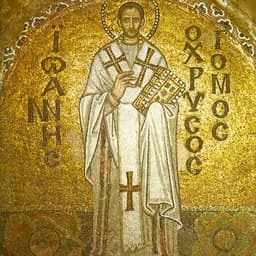
- St. John Chrysostom
- Homilies on the Gospel of Matthew, Hom. 77
- Theophylact of Ohrid
- Explanation of the Gospel of Luke
Cited here as preserved in the Catena Aurea on Luke; his standalone Explanation has no public-domain English edition.
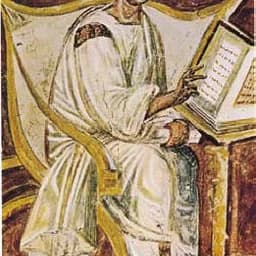
- Blessed Augustine of Hippo
- Questions on the Gospels, i.39
- Letter 199
Venerated in the East as Blessed; quoted here as preserved in the Catena Aurea on Matthew.
- St. Jerome
- Commentary on Matthew
- St. Ambrose of Milan
- Exposition of the Gospel of Luke
- St. Hilary of Poitiers
- Commentary on Matthew
- St. Bede the Venerable
- Exposition of the Gospel of Luke
Read the sources: Chrysostom, Homilies on Matthew, Homily 77 (CCEL) · Catena Aurea on Matthew, ch. 24 (CCEL) · Catena Aurea on Luke (isidore.co)
The Budding Fig Tree (Matthew 24:32–35; Mark 13:28–31; Luke 21:29–33)
The texts below are quoted verbatim from public-domain English translations; nothing is paraphrased.
St. John Chrysostom (c. 347–407)
Homilies on the Gospel of Matthew, Homily 77 (on Matthew 24:32–35) Source: trans. in the Nicene and Post-Nicene Fathers, First Series, Vol. 10. Public domain. Full text: https://www.ccel.org/ccel/schaff/npnf110/npnf110.iii.LXXIV.html
On why He answers their question about the time with the similitude of the fig tree:
On the summer the parable foretells:
On "this generation" as the generation of the faithful, not of the men then living:
On the permanence of His words above heaven and earth:
Theophylact of Ohrid (c. 1055–1107)
Explanation of the Gospel of Luke (on Luke 21:33) As preserved in the Catena Aurea on Luke. Public domain. Full text: https://isidore.co/aquinas/english/CALuke.htm
On the Church set above the whole creation:
Blessed Augustine of Hippo (354–430)
Questions on the Gospels and Letter 199 (on Matthew 24:32–33) As preserved in the Catena Aurea on Matthew. Public domain. Full text: https://www.ccel.org/ccel/aquinas/catena1.ii.xxiv.html
On the fig tree understood as the human race:
On why the Lord's coming presses ever nearer, though the day is unknown:
St. Jerome (c. 347–420)
Commentary on Matthew (on Matthew 24:32) As preserved in the Catena Aurea on Matthew. Public domain. Full text: https://www.ccel.org/ccel/aquinas/catena1.ii.xxiv.html
On the leafing fig tree as the monitory sign of an approaching end:
St. Ambrose of Milan (c. 339–397)
Exposition of the Gospel of Luke (on Luke 21:29–31) As preserved in the Catena Aurea on Luke. Public domain. Full text: https://isidore.co/aquinas/english/CALuke.htm
On the two things the fig tree shadows forth — ripening fruit or the luxuriance of sin:
St. Hilary of Poitiers (c. 310–367)
Commentary on Matthew (on Matthew 24:32–34) As preserved in the Catena Aurea on Matthew. Public domain. Full text: https://www.ccel.org/ccel/aquinas/catena1.ii.xxiv.html
On the mystical reading of the fig tree as the Synagogue:
On the asseveration "Verily":
St. Bede the Venerable (c. 673–735)
Exposition of the Gospel of Luke (on Luke 21:33) As preserved in the Catena Aurea on Luke. Public domain. Full text: https://isidore.co/aquinas/english/CALuke.htm
On what "heaven and earth shall pass away" does and does not mean: