The Burial by Joseph of Arimathea
Matt 27:57–61; Mark 15:42–47; Luke 23:50–56; John 19:38–42 · Passion week in Jerusalem
Scripture
Matthew 27:57–61
hen the even was come, there came a rich man of Arimathaea, named Joseph, who also himself was Jesus’ disciple: 58He went to Pilate, and begged the body of Jesus. Then Pilate commanded the body to be delivered. 59And when Joseph had taken the body, he wrapped it in a clean linen cloth, 60And laid it in his own new tomb, which he had hewn out in the rock: and he rolled a great stone to the door of the sepulchre, and departed. 61And there was Mary Magdalene, and the other Mary, sitting over against the sepulchre.
King James Version · public domain
Mateu 27:57–61
dhe si ungrys, erdhi një njeri i-pasurë nga Arimathea që e kishte emërinë Josif, që edhe ay vetë kishte qënë nxënës te Jisuj. 58Ky vate te Pillati e lypi trupin’ e Jisujt. Atëhere Pillati, urdhëroj t’i epetë trupi. 59Edhe Josifi mori trupnë edhe e pshtolli me pëlhurë të-pastrëtë; 60Edhe e vuri ndë varrt të ti të-ri, që e kishte rëmuarë ndë shkëmpt, edhe si rrukullisi një gur të-math ndë derët të varrit, iku. 61Edhe atje ishte Maria Magdhalini, edhe Maria tjatërë, dyke ndënjurë kundruell varrit.
Kristoforidhi, Dhiata e Re Toskërisht 1879 · zotërim publik
In their own words
As in the womb of the Virgin Mary no one was conceived before Him, and no one after Him, so in this sepulchre there was no one buried before Him, and no one after Him.
Blessed Augustine of Hippo, Tractates on the Gospel of John, Tractate 121 (on John 19:38–42)
Patristic sources
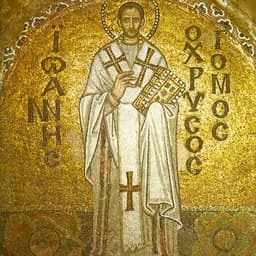
- St. John Chrysostom
- Homilies on Matthew, Hom. 88
Greek spine of the entry; on Joseph's boldness in begging the body and on the new tomb hewn against any charge of a substituted corpse.
- Origen of Alexandria
- Commentary on Matthew
Quoted with care; some of his speculations were condemned in 553, but this Catena excerpt (all touching the body clean, new, and great) is doctrinally unobjectionable. Catena-only in PD English here.
- Theophylact of Ohrid
- Explanation of John
No standalone PD English exists; quoted through the Catena Aurea on John.
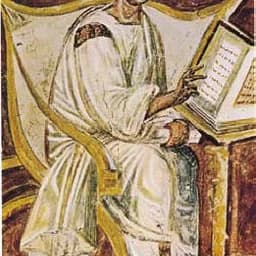
- Blessed Augustine of Hippo
- Tractates on John, Tractate 121
Venerated in the East as Blessed; his Johannine Tractates supply the Nicodemus and virgin-womb parallels.
- St. Jerome
- Commentary on Matthew
Catena-only in PD English on all four Gospels.
- St. Ambrose of Milan
- Exposition of Luke
Catena-only in PD English; the modern Tomkinson translation is copyright-locked.
- St. Bede the Venerable
- Commentary on Luke
Catena-only in PD English for the Gospels; supplies the sabbath-rest reading.
Read the sources: Chrysostom on Matthew (CCEL) · Augustine, Tractates on John (CCEL) · Catena Aurea on Matthew (CCEL) · Catena Aurea on Luke (isidore.co) · Catena Aurea on John (isidore.co)
The Burial by Joseph of Arimathea (Matthew 27:57–61; Mark 15:42–47; Luke 23:50–56; John 19:38–42)
The texts below are quoted verbatim from public-domain English translations; nothing is paraphrased.
St. John Chrysostom (c. 347–407)
Homilies on the Gospel of Matthew, Homily 88 (on Matthew 27:57–61) Source: trans. in the Nicene and Post-Nicene Fathers, First Series, Vol. 10. Public domain. Full text: https://www.ccel.org/ccel/schaff/npnf110
On the courage of Joseph, who begged the body when the disciples had fled:
On the new tomb, that none might suspect another had risen in His place:
Origen of Alexandria (c. 185–254)
Commentary on Matthew (on Matthew 27:57–61) As preserved in the Catena Aurea on Matthew. Public domain. Full text: https://www.ccel.org/ccel/aquinas/catena1.ii.xxvii.html
On why the Evangelist notes the clean linen, the new tomb, and the great stone:
On the women who kept watch over against the sepulchre:
Theophylact of Ohrid (c. 1055–1107)
Explanation of the Gospel of John (on John 19:38–42) As preserved in the Catena Aurea on John, trans. J. H. Newman, 1841. Public domain. Full text: https://isidore.co/aquinas/english/CAJohn.htm
On the new sepulchre, and the poverty the Lord took up for our sakes:
Blessed Augustine of Hippo (354–430)
Tractates on the Gospel of John, Tractate 121 (on John 19:38–42) Source: trans. in the Nicene and Post-Nicene Fathers, First Series, Vol. 7. Public domain. Full text: https://www.ccel.org/ccel/schaff/npnf107
On Nicodemus, who came to Jesus by night and now comes openly to His burial:
On the new sepulchre wherein was never man yet laid:
St. Jerome (c. 347–420)
Commentary on Matthew (on Matthew 27:57–61) As preserved in the Catena Aurea on Matthew. Public domain. Full text: https://www.ccel.org/ccel/aquinas/catena1.ii.xxvii.html
On why the Evangelist calls Joseph rich, that he might obtain the body from Pilate:
On the clean linen, and the pure heart that wraps the Lord:
On the new tomb, which signifies also the virgin womb of Mary:
St. Ambrose of Milan (c. 339–397)
Exposition of the Gospel of Luke (on Luke 23:50–56) As preserved in the Catena Aurea on Luke. Public domain. Full text: https://isidore.co/aquinas/english/CALuke.htm
On the new tomb, for the Conqueror of death has no grave of His own:
St. Bede the Venerable (c. 673–735)
Commentary on Luke (on Luke 23:50–56) As preserved in the Catena Aurea on Luke. Public domain. Full text: https://isidore.co/aquinas/english/CALuke.htm
On the tomb hewn in the rock, that none might say the body was stolen:
On the sabbath rest of the Lord in the tomb: