The Calling by the Sea of Galilee
Matt 4:18–22; Mark 1:16–20 · Beginning of the ministry
Scripture
Matthew 4:18–22
nd Jesus, walking by the sea of Galilee, saw two brethren, Simon called Peter, and Andrew his brother, casting a net into the sea: for they were fishers. 19And he saith unto them, Follow me, and I will make you fishers of men. 20And they straightway left their nets, and followed him. 21And going on from thence, he saw other two brethren, James the son of Zebedee, and John his brother, in a ship with Zebedee their father, mending their nets; and he called them. 22And they immediately left the ship and their father, and followed him.
King James Version · public domain
Mateu 4:18–22
dhe Jisuj tek ecënte përanë detit të Galilesë, pa dy vëllezër, Simoninë, që thuhej Pjetrë, edhe Andhrenë të vëllan’ e ati dyke hedhurë rrjetë ndë dett; sepse ishinë peshkatarë. 19Edhe u thot’ atyre: Ejani prapa meje, edhe dot’ u bënj juve peshkatarë njerëzish. 20Edhe ata për-një-herë lanë rrjetatë, e vanë pas ati. 21Edhe si vate më tej, pa dy vëllezër të-tjerë, Jakovinë të birin’ e Zevedheut, edhe Joaninë të vëllan’ e ati, ndë lundrët bashkë me Zevedhenë t’an’ e tyre, dyke ndrequrë rrjetat’ e tyre, edhe i thiri ata. 22Edhe ata për-një-herë lanë lundrën’ e tyre, edhe vanë pas ati.
Kristoforidhi, Dhiata e Re Toskërisht 1879 · zotërim publik
In their own words
Now fishers and unlettered men are sent to preach, that the faith of believers might be thought to lie in the power of God, not in eloquence or in learning.
St. Bede the Venerable, Commentary on Mark, Book 1 (Catena Aurea)
Patristic sources
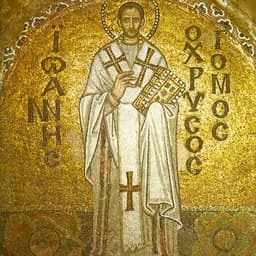
- St. John Chrysostom
- Homilies on the Gospel of Matthew, Hom. 14
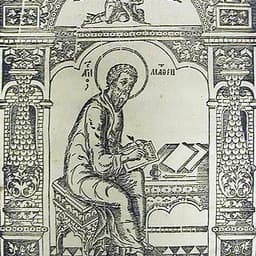
- Theophylact of Ohrid
- Explanation of the Gospel of Mark
Preserved only through the Catena Aurea; no standalone public-domain English edition of his Gospel commentaries exists.
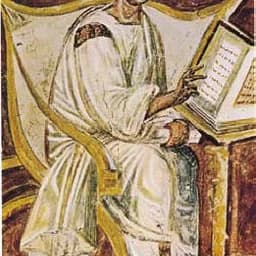
- Blessed Augustine of Hippo
- Sermon 197
- Tractate on the Gospel of John
Venerated in the East as Blessed; both extracts here are the Catena's condensation on Matthew.
- St. Gregory the Great
- Forty Gospel Homilies, Hom. 5
His Gospel homilies survive in public-domain English only through the Catena Aurea.
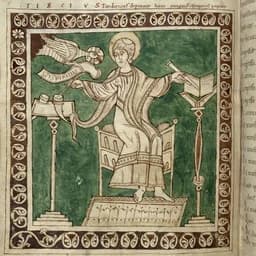
- St. Bede the Venerable
- Commentary on Mark, Bk. 1
- Remigius of Auxerre
- Catena Aurea on Mark
A later Western compiler; preserved only through the Catena Aurea.
Read the sources: Chrysostom, Homilies on Matthew, Homily 14 (CCEL) · Catena Aurea on Matthew, ch. 4 (CCEL) · Catena Aurea on Mark, ch. 1 (CCEL)
The Calling by the Sea of Galilee (Matthew 4:18–22; Mark 1:16–20)
The texts below are quoted verbatim from public-domain English translations; nothing is paraphrased.
St. John Chrysostom (c. 347–407)
Homilies on the Gospel of Matthew, Homily 14 (on Matthew 4:18–22) Source: trans. in the Nicene and Post-Nicene Fathers, First Series, Vol. 10. Public domain. Full text: https://www.ccel.org/ccel/schaff/npnf110/npnf110.iii.XIV.html
On their faith and their obedience, that they delayed not:
On believing so great a promise before they had seen any sign:
On the poverty disclosed in the mending of their nets:
Theophylact of Ohrid (c. 1055–1107)
Explanation of the Gospel of Mark (on Mark 1:16–20) As preserved in the Catena Aurea on Mark. Public domain. Full text: https://www.ccel.org/ccel/aquinas/catena2.iii.i.html
On the second calling, and why such labouring men were worthy to be the first disciples:
On following at once, and on leaving even a father who would hinder:
Blessed Augustine of Hippo (354–430)
Sermon 197 and Tractate on the Gospel of John (on Matthew 4:18–22) As preserved in the Catena Aurea on Matthew. Public domain. Full text: https://www.ccel.org/ccel/aquinas/catena1.ii.iv.html
On whom Christ chose to be His first heralds:
On why He gained the world by fishermen and not by orators:
St. Gregory the Great (c. 540–604)
Forty Gospel Homilies, Homily 5 (on Matthew 4:18–22) As preserved in the Catena Aurea on Matthew. Public domain. Full text: https://www.ccel.org/ccel/aquinas/catena1.ii.iv.html
On the obedience that weighs the will, not the amount forsaken:
On how he leaves much who keeps nothing for himself:
St. Bede the Venerable (c. 673–735)
Commentary on Mark, Book 1 (on Mark 1:16–20) As preserved in the Catena Aurea on Mark. Public domain. Full text: https://www.ccel.org/ccel/aquinas/catena2.iii.i.html
On why fishers and unlettered men are sent to preach:
Remigius of Auxerre (c. 841–908)
As preserved in the Catena Aurea on Mark. Public domain. Full text: https://www.ccel.org/ccel/aquinas/catena2.iii.i.html
On the net of preaching, and the fishing that makes men alive: