The Calling of Nathanael
John 1:43–51 · Beginning of the ministry
Scripture
John 1:43–51
he day following Jesus would go forth into Galilee, and findeth Philip, and saith unto him, Follow me. 44Now Philip was of Bethsaida, the city of Andrew and Peter. 45Philip findeth Nathanael, and saith unto him, We have found him, of whom Moses in the law, and the prophets, did write, Jesus of Nazareth, the son of Joseph. 46And Nathanael said unto him, Can there any good thing come out of Nazareth? Philip saith unto him, Come and see. 47Jesus saw Nathanael coming to him, and saith of him, Behold an Israelite indeed, in whom is no guile! 48Nathanael saith unto him, Whence knowest thou me? Jesus answered and said unto him, Before that Philip called thee, when thou wast under the fig tree, I saw thee. 49Nathanael answered and saith unto him, Rabbi, thou art the Son of God; thou art the King of Israel. 50Jesus answered and said unto him, Because I said unto thee, I saw thee under the fig tree, believest thou? thou shalt see greater things than these. 51And he saith unto him, Verily, verily, I say unto you, Hereafter ye shall see heaven open, and the angels of God ascending and descending upon the Son of man.
King James Version · public domain
Joani 1:43–51
dë të-nesërmet Jisuj deshi të dalë ndë Galilet edhe gjen Filipinë e i thotë, Eja pas meje. 44Edhe Filipi ishte nga Vithsaidhaja, nga qyteti i Andhreut edhe i Pjetrit. 45Filipi gjen Nathanailinë, edhe i thotë; Kemi gjetur’ atë që shkroj Moisiu ndë nomt, edhe profitëritë, të birin’ e Josifit që është nga Nazareti. 46Edhe Nathanaili i tha, A munt të dalë ndonjë gjë e-mirë nga Nazareti? Filipi thotë, Eja edhe shih. 47Jisuj pa Nathanailinë dyke ardhurë tek ay, edhe thotë për atë, Shih një Israilit me të-vërtetë, tek i-cili gënjeshtrë nukë ka. 48Nathanaili i thotë, Që ku më njeh? Jisuj upërgjeq e i tha, Para se të të thërresë Filipi, kur ishnje ndënë drut të fikut, unë të pashë. 49Nathanaili upërgjeq e i thotë, Ravvi, ti je i Bir’ i Perëndisë, ti je mbreti i Israilit. 50Jisuj upërgjeq e i tha, Sepse të thashë, se Të pashë ndënë drut të fikut beson? dotë shohç më të mëdha se këto. 51Pastaj i thotë, Me të-vërtetë, me të-vërtetë po u them juve, Që ndashti e paskëtaj dotë shihni qiellin të-hapurë, edhe ëngjëjt’ e Perëndisë dyke hipur’ e dyke sbriturë mbi të Birin’ e njeriut.
Kristoforidhi, Dhiata e Re Toskërisht 1879 · zotërim publik
In their own words
Fig leaves then signify sins. Nathanael then was under the fig-tree, as it were under the shadow of death.
Blessed Augustine of Hippo, Tractates on the Gospel of John, Tractate VII (on John 1:48)
Patristic sources
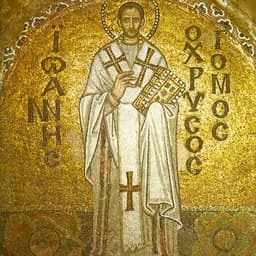
- St. John Chrysostom
- Homilies on the Gospel of St. John, Homilies 20–21
Quoted from his standalone Homilies on John (NPNF); Homily 20 treats John 1:43–48, Homily 21 the confession and the promise of John 1:49–51.
- St. Cyril of Alexandria
- Commentary on the Gospel of John, Book 2
Book 2 (Pusey, Library of Fathers, 1874) covers John 1:45–51.
- Theophylact of Ohrid
- Explanation of the Gospel of John
His Gospel commentary survives in public-domain English only through the Catena Aurea.
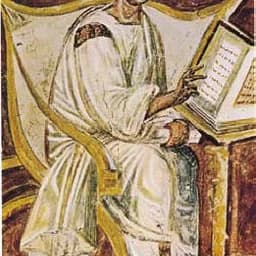
- Blessed Augustine of Hippo
- Tractates on the Gospel of John, Tractate 7
Venerated in the East as Blessed; his Johannine tractates are cited in later Byzantine catenae. Tractate 7 expounds John 1:34–51.
- Alcuin
- Commentary on the Gospel of John
A later Carolingian (Western) compiler; his John commentary is preserved in public-domain English only through the Catena Aurea.
Read the sources: Chrysostom, Homily 20 on John (CCEL) · Chrysostom, Homily 21 on John (CCEL) · Cyril of Alexandria, Commentary on John, Book 2 (tertullian.org) · Augustine, Tractate 7 on John (CCEL) · Catena Aurea on John (isidore.co)
The Calling of Nathanael (John 1:43–51)
The texts below are quoted verbatim from public-domain English translations; nothing is paraphrased.
St. John Chrysostom (c. 347–407)
Homilies on the Gospel of St. John, Homilies XX–XXI (on John 1:43–51) Source: trans. G. T. Stupart, in the Nicene and Post-Nicene Fathers, First Series, Vol. 14. Public domain. Full text: https://www.ccel.org/ccel/schaff/npnf114.iv.xxii.html
On Philip, who followed at the bare voice of Christ and at once became a preacher to others:
On the gentle, questioning form of Nathanael's doubt:
On why Nathanael's confession, unlike Peter's, is led up to something greater:
On the promised sight of the angels, by which the Lord shows Himself to be more than man:
St. Cyril of Alexandria (c. 376–444)
Commentary on the Gospel of John, Book II (on John 1:45–51) Source: trans. P. E. Pusey, Library of Fathers, 1874. Public domain. Full text: https://www.tertullian.org/fathers/cyril_on_john_02_book2.htm
On Philip's haste to seek out Nathanael, a man fond of learning:
On the way Christ led Nathanael to faith — not by signs, but by the knowledge that belongs to God alone:
On Nathanael's confession, in which he owns the Searcher of hearts:
On the angels ascending and descending, which reveal Him as Son of God by nature:
Theophylact of Ohrid (c. 1055–1107)
Explanation of the Gospel of John (on John 1:43–48) As preserved in the Catena Aurea on John. Public domain. Full text: https://isidore.co/aquinas/english/CAJohn.htm
On why Philip believed the instant he saw:
On Nathanael, who does not rest even in the Lord's praise but seeks further proof:
Blessed Augustine of Hippo (354–430)
Tractates on the Gospel of John, Tractate VII (on John 1:34–51) Source: trans. John Gibb, in the Nicene and Post-Nicene Fathers, First Series, Vol. 7. Public domain. Full text: https://www.ccel.org/ccel/schaff/npnf107.iii.viii.html
On what guile is — the doubled heart that Nathanael did not have:
On the fig tree as the shadow of death under which the Lord first saw him:
On the grace that sought us before we sought it:
On Jacob's ladder, whose angels are the preachers of Christ ascending and descending upon the Son of man:
Alcuin (c. 735–804)
Commentary on the Gospel of John (on John 1:43–44) As preserved in the Catena Aurea on John. Public domain. Full text: https://isidore.co/aquinas/english/CAJohn.htm
On following Jesus by imitating His humility and suffering (the words of Alcuin, a later Western compiler):
On the name Bethsaida and the future office of the fisher-apostles: