The Centurion's Confession
Matt 27:54; Mark 15:39; Luke 23:47 · Passion week in Jerusalem
Scripture
Matthew 27:54
ow when the centurion, and they that were with him, watching Jesus, saw the earthquake, and those things that were done, they feared greatly, saying, Truly this was the Son of God.
King James Version · public domain
Mateu 27:54
dhe urdhër-qindësi edhe ata që ishinë ba-shkë me atë dyke ruajturë Jisunë, kur panë tërmetin’ edhe ç’punëra ubënë, ufrikësuanë fort, e thanë, Me të-vërtetë ky paska qënë bir Perëndie.
Kristoforidhi, Dhiata e Re Toskërisht 1879 · zotërim publik
In their own words
Observe, that in the very midst of the offence of His passion the Centurion acknowledges the Son of God, while Arius in the Church proclaims Him a creature.
St. Jerome, Commentary on Matthew (on Matthew 27:54) (Catena Aurea)
Patristic sources
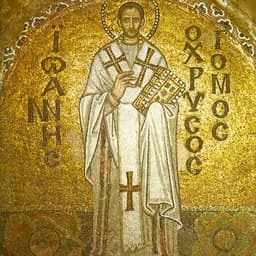
- St. John Chrysostom
- Homilies on Matthew, Hom. 88
- Theophylact of Ohrid
- Explanation of Luke
Catena-only in public-domain English; his Gospel commentaries survive for the project only through the Catena Aurea.
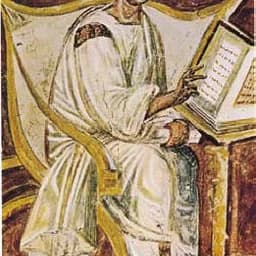
- Blessed Augustine of Hippo
- The Harmony of the Gospels, Book III
Venerated in the East as Blessed; the Catena preserves his harmonizing of Matthew and Luke on the centurion.
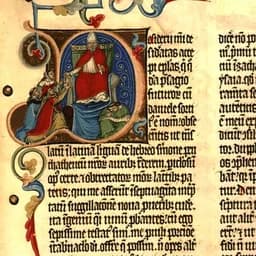
- St. Jerome
- Commentary on Matthew
Catena-only in public-domain English.
- St. Ambrose of Milan
- Exposition of Luke
Catena-only in public-domain English.
- St. Bede the Venerable
- Commentary on Luke
Catena-only in public-domain English for the Gospels.
Read the sources: Chrysostom on Matthew, Homily 88 (CCEL) · Catena Aurea on Matthew 27 (CCEL) · Catena Aurea on Luke (isidore.co)
The Centurion's Confession (Matthew 27:54; Mark 15:39; Luke 23:47)
The texts below are quoted verbatim from public-domain English translations; nothing is paraphrased.
St. John Chrysostom (c. 347–407)
Homilies on the Gospel of Matthew, Homily 88 (on Matthew 27:54) Source: trans. in the Nicene and Post-Nicene Fathers, First Series, Vol. 10. Public domain. Full text: https://www.ccel.org/ccel/schaff/npnf110.iii.LXXXIV.html
On the manner of the Lord's death, which drew the soldier to belief:
On the confession wrung from the soldier and the people after all their mockery, and on the tradition of his later martyrdom:
Theophylact of Ohrid (c. 1055–1107)
Explanation of the Gospel of Luke (on Luke 23:47) As preserved in the Catena Aurea on Luke. Public domain. Full text: https://isidore.co/aquinas/CALuke.htm
On the crucified Lord drawing the Gentile soldier to Himself, as He had foretold:
Blessed Augustine of Hippo (354–430)
The Harmony of the Gospels, Book III (on Matthew 27:54) As preserved in the Catena Aurea on Matthew. Public domain. Full text: https://www.ccel.org/ccel/aquinas/catena1.ii.xxvii.html
On the agreement of Matthew and Luke, that the centurion wondered at the Lord's death:
St. Jerome (c. 347–420)
Commentary on Matthew (on Matthew 27:54) As preserved in the Catena Aurea on Matthew. Public domain. Full text: https://www.ccel.org/ccel/aquinas/catena1.ii.xxvii.html
On the soldier confessing at the cross what Arius would afterward deny:
St. Ambrose of Milan (c. 339–397)
Exposition of the Gospel of Luke (on Luke 23:47) As preserved in the Catena Aurea on Luke. Public domain. Full text: https://isidore.co/aquinas/CALuke.htm
On the Gentile officer believing while the hardness of the Jews remained unmoved:
St. Bede the Venerable (c. 673–735)
Commentary on the Gospel of Luke (on Luke 23:47) As preserved in the Catena Aurea on Luke. Public domain. Full text: https://isidore.co/aquinas/CALuke.htm
On the Gentiles confessing openly where the synagogue kept silent:
On the centurion as a figure of the faith of the Church: