The Children in the Marketplace
Matt 11:16–19; Luke 7:31–35 · Early ministry in Galilee
Scripture
Matthew 11:16–19
ut whereunto shall I liken this generation? It is like unto children sitting in the markets, and calling unto their fellows, 17And saying, We have piped unto you, and ye have not danced; we have mourned unto you, and ye have not lamented. 18For John came neither eating nor drinking, and they say, He hath a devil. 19The Son of man came eating and drinking, and they say, Behold a man gluttonous, and a winebibber, a friend of publicans and sinners. But wisdom is justified of her children.
King James Version · public domain
Mateu 11:16–19
o me se t’a përgjanj këtë bres? u gjan çunavet të-vegjëlë që rrinë ndëpër tregjet, edhe u thërresënë shokëvet të tyre, e thonë, 17I ramë fyellit për ju, edhe nukë kërcyetë; u bëmë vajë edhe nukë qatë. 18Sepse erdhi Joani që as hante, as pinte; edhe thonë, se Ka djallinë. 19Erdhi i Bir’ i njeriut dyke ngrën’ e dyke pirë, e thonë, Ja njeri hamës e verëpirës, mik i kumerqarëve e i fajtorëve. Edhe dolli e-drejtë dituria nga bijt’ e saj.
Kristoforidhi, Dhiata e Re Toskërisht 1879 · zotërim publik
In their own words
Our Lord Jesus Christ is the Sun of Righteousness: a wicked man, then, in no way whatsoever defiles Him, though close at His side, and eating with Him.
St. Cyril of Alexandria, Commentary on Luke, Sermon 39 (on Luke 7:31–35)
Patristic sources
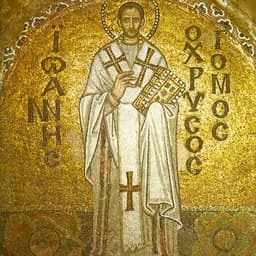
- St. John Chrysostom
- Homilies on Matthew, Hom. 37
- St. Cyril of Alexandria
- Commentary on Luke, Sermon 39
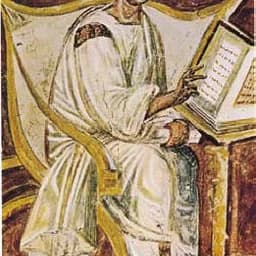
- Blessed Augustine of Hippo
- Questions on the Gospels, ii, 11
Venerated in the East as Blessed; here preserved through the Catena Aurea on Matthew.
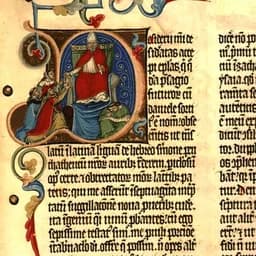
- St. Jerome
- Commentary on Matthew
Catena-only in public-domain English; quoted through the Catena Aurea on Matthew.
- St. Hilary of Poitiers
- Commentary on Matthew
Catena-only in public-domain English; quoted through the Catena Aurea on Matthew.
Read the sources: Chrysostom, Homilies on Matthew, Homily 37 (CCEL) · Cyril of Alexandria, Commentary on Luke, Sermon 39 (tertullian.org) · Catena Aurea on Matthew 11 (CCEL)
The Children in the Marketplace (Matthew 11:16–19; Luke 7:31–35)
The texts below are quoted verbatim from public-domain English translations; nothing is paraphrased.
St. John Chrysostom (c. 347–407)
Homilies on the Gospel of Matthew, Homily 37 (on Matthew 11:16–19) Source: trans. in the Nicene and Post-Nicene Fathers, First Series, Vol. 10. Public domain. Full text: https://www.ccel.org/ccel/schaff/npnf110/npnf110.iii.XXXVII.html
On John and Christ coming by opposite ways to accomplish one and the same thing:
On how either the fast or the feast should have won them, so that they are left without excuse:
St. Cyril of Alexandria (c. 376–444)
Commentary on the Gospel of Luke, Sermon 39 (on Luke 7:31–35) Source: trans. R. Payne Smith, 1859. Public domain. Full text: https://www.tertullian.org/fathers/cyril_on_luke_04_sermons_39_46.htm
On the children's game the parable draws upon:
On John the faster, whom they charged with having a devil:
On Christ eating with publicans and sinners, yet remaining undefiled:
Blessed Augustine of Hippo (354–430)
Questions on the Gospels, ii, 11 (on Matthew 11:19) As preserved in the Catena Aurea on Matthew. Public domain. Full text: https://www.ccel.org/ccel/aquinas/catena1.ii.xi.html
On "wisdom is justified of her children":
St. Jerome (c. 347–420)
Commentary on Matthew (on Matthew 11:16–19) As preserved in the Catena Aurea on Matthew. Public domain. Full text: https://www.ccel.org/ccel/aquinas/catena1.ii.xi.html
On the peevishness that would accept neither the fast nor the feast:
On "wisdom is justified of her children":
On the variant reading found in some copies:
St. Hilary of Poitiers (c. 310–367)
Commentary on Matthew (on Matthew 11:16–19) As preserved in the Catena Aurea on Matthew. Public domain. Full text: https://www.ccel.org/ccel/aquinas/catena1.ii.xi.html
On the whole saying as a reproach of unbelief:
On the "children" who piped and mourned as the Prophets:
On Christ as the Wisdom of God by nature, not by His acts: