The Cleansing of the Temple
Matt 21:12–17; Mark 11:15–19; Luke 19:45–48; John 2:13–22 · Passion week in Jerusalem
Scripture
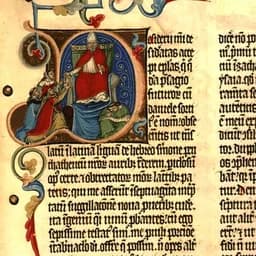
Matthew 21:12–17
nd Jesus went into the temple of God, and cast out all them that sold and bought in the temple, and overthrew the tables of the moneychangers, and the seats of them that sold doves, 13And said unto them, It is written, My house shall be called the house of prayer; but ye have made it a den of thieves. 14And the blind and the lame came to him in the temple; and he healed them. 15And when the chief priests and scribes saw the wonderful things that he did, and the children crying in the temple, and saying, Hosanna to the son of David; they were sore displeased, 16And said unto him, Hearest thou what these say? And Jesus saith unto them, Yea; have ye never read, Out of the mouth of babes and sucklings thou hast perfected praise? 17And he left them, and went out of the city into Bethany; and he lodged there.
King James Version · public domain
Mateu 21:12–17
dhe Jisuj hyri ndë hieroret të Perëndisë, edhe nxori jashtë gjith’ ata që shisnin’ e blininë ndë hieroret, edhe përmbysi truvezat’ e truvezarëvet, edhe fronet’ e atyre që shisninë pëllumbatë; 13Edhe u thot’ atyre, Eshtë shkruarë “Shtëpia ime dotë quhetë shtëpi lutjeje”; po ju e bët’ atë “shpellë vjedhësish”. 14Edhe i erthnë përanë të-verbër’ e të-çalë ndë hieroret; edhe i shëroj ata. 15Po krye-priftërit’ edhe shkronjësitë kur panë çudiratë që bëri, edhe çunatë dyke bërtiturë ndë hieroret e dyke thënë, Hosanna mbë të birin’ e Dhavidhit, uzëmëruanë, edhe i than’ ati, Dëgjon se ç’thonë këta? 16Edhe Jisuj u thot’ atyre, Po; kurrë s’keni kënduarë, “Se nga goj’ e foshnjavet edhe e atyreve që pinë sisë bëre gati lavdim?” 17Edhe si i la ata, dolli jashtë qytetit ndë Vithani, edhe natën’ e shkoj atje.
Kristoforidhi, Dhiata e Re Toskërisht 1879 · zotërim publik
In their own words
For he is indeed a thief, and turns the temple of God into a den of thieves, who makes a gain of his religion.
St. Jerome, Commentary on Matthew (on Matthew 21:12–16) (Catena Aurea)
Patristic sources
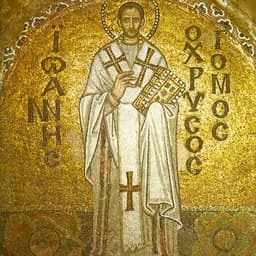
- St. John Chrysostom
- Homilies on Matthew, Hom. 67
- St. Cyril of Alexandria
- Commentary on John, Book 2
- Origen of Alexandria
- Commentary on Matthew
Quoted with care; certain of his opinions were condemned in 553. His Matthew commentary here survives in PD English only through the Catena Aurea.
- Blessed Augustine of Hippo
- Tractates on John, Tractate 10
Venerated in the East as Blessed; his Johannine tractates are cited in later Byzantine catenae.
- St. Jerome
- Commentary on Matthew
PD English of his Gospel exegesis survives only through the Catena Aurea.
- Remigius
- Commentary on Matthew
A later Western compiler; his text survives only through the Catena Aurea.
Read the sources: Chrysostom on Matthew, Homily 67 (CCEL) · Cyril of Alexandria on John, Book 2 (tertullian.org) · Augustine, Tractates on John, Tractate 10 (CCEL) · Catena Aurea on Matthew 21 (CCEL)
The Cleansing of the Temple (Matthew 21:12–17; Mark 11:15–19; Luke 19:45–48; John 2:13–22)
The texts below are quoted verbatim from public-domain English translations; nothing is paraphrased.
St. John Chrysostom (c. 347–407)
Homilies on the Gospel of Matthew, Homily 67 (on Matthew 21:12–17) Source: trans. in the Nicene and Post-Nicene Fathers, First Series, Vol. 10. Public domain. Full text: https://www.ccel.org/ccel/schaff/npnf110/npnf110.iii.LXIV.html
On the temple cleansed a second time, and the hardness of the Jews:
On the authority He shows by healing the blind and the lame in the temple:
On the perfected praise out of the mouth of babes and sucklings:
St. Cyril of Alexandria (c. 376–444)
Commentary on the Gospel of John, Book 2 (on John 2:13–22) Source: trans. P. E. Pusey, Library of Fathers, 1874. Public domain. Full text: https://www.tertullian.org/fathers/cyril_on_john_02_book2.htm
On the scourge of small cords, and the house of prayer made a house of merchandise:
On the authority with which He drives them out, as Lord and as teacher:
On "Destroy this temple," which He spake of the temple of His body:
Origen of Alexandria (c. 185–254)
Commentary on Matthew (on Matthew 21:12–13) As preserved in the Catena Aurea on Matthew. Public domain. Full text: https://www.ccel.org/ccel/aquinas/catena1.ii.xxi.html
On the temple as a figure of the Church, and its house of prayer made a den of thieves:
On the buyers, the money-changers, and the sellers of doves as figures of unworthy ministry:
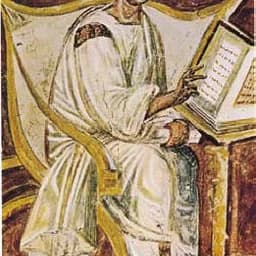
Blessed Augustine of Hippo (354–430)
Tractates on the Gospel of John, Tractate 10 (on John 2:13–22) Source: trans. in the Nicene and Post-Nicene Fathers, First Series, Vol. 7. Public domain. Full text: https://www.ccel.org/ccel/schaff/npnf107/npnf107.iii.xi.html
On the house of prayer that must not be made a house of merchandise:
On the zeal of the Lord's house that ought to eat up every Christian:
On "Destroy this temple, and in three days I will raise it up," the temple of His body:
St. Jerome (c. 347–420)
Commentary on Matthew (on Matthew 21:12–16) As preserved in the Catena Aurea on Matthew. Public domain. Full text: https://www.ccel.org/ccel/aquinas/catena1.ii.xxi.html
On the thief who turns the temple of God into a den of thieves:
On the temple of the breast, to be kept clear of bargaining and covetousness:
On the children crying Hosanna to the Son of David:
Remigius (c. 841–908)
Commentary on Matthew (on Matthew 21:14) As preserved in the Catena Aurea on Matthew. Public domain. Full text: https://www.ccel.org/ccel/aquinas/catena1.ii.xxi.html
On the blind and the lame healed in the temple, a figure of healing in the Church alone: