The Crucifixion
Matt 27:33–44; Mark 15:22–32; Luke 23:32–43; John 19:17–27 · Passion week in Jerusalem
Scripture
Matthew 27:33–44
nd when they were come unto a place called Golgotha, that is to say, a place of a skull, 34They gave him vinegar to drink mingled with gall: and when he had tasted thereof, he would not drink. 35And they crucified him, and parted his garments, casting lots: that it might be fulfilled which was spoken by the prophet, They parted my garments among them, and upon my vesture did they cast lots. 36And sitting down they watched him there; 37And set up over his head his accusation written, THIS IS JESUS THE KING OF THE JEWS. 38Then were there two thieves crucified with him, one on the right hand, and another on the left. 39And they that passed by reviled him, wagging their heads, 40And saying, Thou that destroyest the temple, and buildest it in three days, save thyself. If thou be the Son of God, come down from the cross. 41Likewise also the chief priests mocking him, with the scribes and elders, said, 42He saved others; himself he cannot save. If he be the King of Israel, let him now come down from the cross, and we will believe him. 43He trusted in God; let him deliver him now, if he will have him: for he said, I am the Son of God. 44The thieves also, which were crucified with him, cast the same in his teeth.
King James Version · public domain
Mateu 27:33–44
dhe kur erthnë ndë një vënt që thuhetë Gollgotha, ay është që thuhetë Vëndi i Kresë, 34I dhanë të pijë uthullë të-përzjerë me t’ëmbëlth; po ay si ungjërua, nukë desh të pijë. 35Edhe si e kryqëzuanë, hothnë shortë, e ndanë rrobat’ e ati; që të mbushetë ç’është thënë nga profiti, “Ndanë rrobat’ e mia ndë mest të tyre, edhe mbi të-veshurit t’im hothnë shortë”. 36Edhe dyke ndënjurë e ruanin’ atë atje. 37Edhe vunë sipërë krejs’ s’ati punën’ e ati të-shkruarë, Ky është Jisuj mbreti i Judhenjvet. 38Atëhere kryqëzonenë bashkë me atë dy kursarë, një mb’anë të-djathtë, edhe një mb’anë të-mëngjërë. 39Edhe ata që shkoninë përanë e shaninë atë dyke tundurë krerët’ e tyre, e dyke thënë, 40Ti që prish tempullinë, edhe për tri dit e ndërton, shpëto vetëhenë t’ënde; ndë je i Bir’ i Perëndisë, sbrit nga kryqi. 41Kështu edhe krye-priftëritë bashkë me shkronjësit’ e pleqtë dyke përqeshurë atë thoshinë, 42Të-tjerë shpëtoj, vetëhen’ e ti nukë munt t’a shpëtonjë; nd’është mbret i Israilit, letë sbresë ndashti nga kryqi, edhe dot’i besojmë. 43Shprente mbë Perëndinë; let’ a shpëtonjë tani, ndë e do; sepse tha, Se jam bir Perëndie. 44Gjithashtu edhe kursarëtë që ishinë kryqëzuarë bashkë me atë e shaninë.
Kristoforidhi, Dhiata e Re Toskërisht 1879 · zotërim publik
In their own words
Adam set at nought the commandment, taking the apple from the tree; but all that Adam lost, Christ found upon the cross.
Blessed Augustine of Hippo, Sermons (on Matthew 27:33–44) (Catena Aurea)
Patristic sources
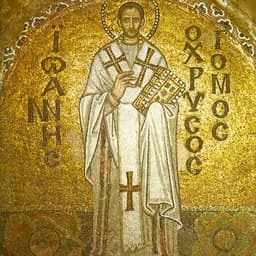
- St. John Chrysostom
- Homilies on the Gospel of Matthew, Hom. 87
- St. Cyril of Alexandria
- Commentary on the Gospel of John, Book 12
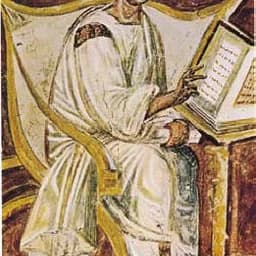
- Blessed Augustine of Hippo
- On Eighty-Three Different Questions, q. 25
- Sermons
Venerated in the East as Blessed; both extracts survive in public-domain English through the Catena Aurea on Matthew.
- St. Jerome
- Commentary on Matthew
His Commentary on Matthew survives in public-domain English only through the Catena Aurea.
- St. Hilary of Poitiers
- Commentary on Matthew
His Commentary on Matthew survives in public-domain English only through the Catena Aurea.
- St. Leo the Great
- Sermon 55, On the Lord's Passion
Quoted here as preserved in the Catena Aurea on Matthew.
Read the sources: Chrysostom, Homilies on Matthew, Homily 87 (CCEL) · Cyril of Alexandria on John, Book 12 (tertullian.org) · Catena Aurea on Matthew 27 (CCEL)
The Crucifixion (Matthew 27:33–44; Mark 15:22–32; Luke 23:32–43; John 19:17–27)
The texts below are quoted verbatim from public-domain English translations; nothing is paraphrased.
St. John Chrysostom (c. 347–407)
Homilies on the Gospel of Matthew, Homily 87 (on Matthew 27:33–44) Source: trans. in the Nicene and Post-Nicene Fathers, First Series, Vol. 10. Public domain. Full text: https://www.ccel.org/ccel/schaff/npnf110/npnf110.iii.LXXXIII.html
On His being crucified in the midst of the thieves, and the gall offered in mockery:
On the vinegar and the gall as the fulfilment of the Psalm:
On the taunt "He saved others; himself he cannot save":
On the two thieves, who at first both reviled Him:
St. Cyril of Alexandria (c. 376–444)
Commentary on the Gospel of John, Book XII (on John 19:17–18) Source: trans. T. Randell, Library of Fathers, 1885. Public domain. Full text: https://www.tertullian.org/fathers/cyril_on_john_12_book12.htm
On His being numbered with the transgressors, crucified between two robbers:
On the cross that was our due, which He bore in our stead:
Blessed Augustine of Hippo (354–430)
On Eighty-Three Different Questions and the Sermons (on Matthew 27:33–44) As preserved in the Catena Aurea on Matthew. Public domain. Full text: https://www.ccel.org/ccel/aquinas/catena1.ii.xxvii.html
On the tree of the cross recovering what was lost at the tree in Eden:
On the cross as the most fearful of deaths, chosen that no death might be feared:
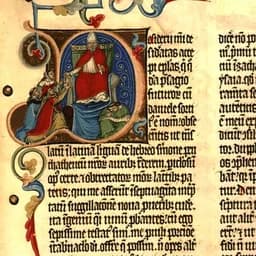
St. Jerome (c. 347–420)
Commentary on Matthew (on Matthew 27:33–44) As preserved in the Catena Aurea on Matthew. Public domain. Full text: https://www.ccel.org/ccel/aquinas/catena1.ii.xxvii.html
On the passers-by who reviled Him and wagged their heads:
On the true sense of "He saved others; himself he cannot save":
St. Hilary of Poitiers (c. 310–367)
Commentary on Matthew (on Matthew 27:33–44) As preserved in the Catena Aurea on Matthew. Public domain. Full text: https://www.ccel.org/ccel/aquinas/catena1.ii.xxvii.html
On the place of the cross, set at the centre of the earth for all the nations:
On why He refused the wine mingled with gall:
St. Leo the Great (c. 400–461)
Sermon 55, On the Lord's Passion (on Matthew 27:33–44) As preserved in the Catena Aurea on Matthew. Public domain. Full text: https://www.ccel.org/ccel/aquinas/catena1.ii.xxvii.html
On the taunts as a blindness already answered by the Prophets and the Psalms: