The Death of Jesus; the Veil Torn
Matt 27:50–54; Mark 15:37–39; Luke 23:45–48; John 19:30 · Passion week in Jerusalem
Scripture
Matthew 27:50–54
esus, when he had cried again with a loud voice, yielded up the ghost. 51And, behold, the veil of the temple was rent in twain from the top to the bottom; and the earth did quake, and the rocks rent; 52And the graves were opened; and many bodies of the saints which slept arose, 53And came out of the graves after his resurrection, and went into the holy city, and appeared unto many. 54Now when the centurion, and they that were with him, watching Jesus, saw the earthquake, and those things that were done, they feared greatly, saying, Truly this was the Son of God.
King James Version · public domain
Mateu 27:50–54
dhe Jisuj përsëri bërtiti me zë të-math, e dha shpirtinë. 51Edhe ja kurtin’ e tempullit tek uça mbë dy prej së-larti gjer poshtë; edhe dheu utunt; edhe gurëtë plasnë; 52edhe varret’ uhapnë, edhe shumë trupa shënjtorësh që kishinë vdekurë ungjallnë; 53Edhe duallnë nga varretë pas të-ngjallurit t’ati, e hynë ndë qytett të-shënjtëruarë, edhe uduknë mbë shumë veta. 54Edhe urdhër-qindësi edhe ata që ishinë ba-shkë me atë dyke ruajturë Jisunë, kur panë tërmetin’ edhe ç’punëra ubënë, ufrikësuanë fort, e thanë, Me të-vërtetë ky paska qënë bir Perëndie.
Kristoforidhi, Dhiata e Re Toskërisht 1879 · zotërim publik
In their own words
This cry rent the veil, and opened the tombs, and made the house desolate.
St. John Chrysostom, Homilies on Matthew, Homily 88 (on Matthew 27:50)
Patristic sources
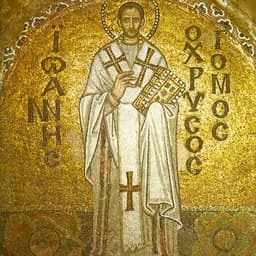
- St. John Chrysostom
- Homilies on Matthew, Hom. 88
The one standalone public-domain homily on the pericope; read directly from the NPNF text on CCEL.
- Origen of Alexandria
- Commentary on Matthew
Preserved only through the Catena Aurea; quoted with the caution due his condemned speculations (553), but these passages on the two veils are unobjectionable.
- Blessed Augustine of Hippo
- Harmony of the Gospels, Book III
Venerated in the East as Blessed; his harmony of the death and the rent veil comes through the Catena.
- St. Jerome
- Commentary on Matthew
Catena-only in public-domain English.
- St. Hilary of Poitiers
- Commentary on Matthew
Catena-only in public-domain English.
- St. Leo the Great
- Sermons on the Passion
Catena-only for this Gospel material in public-domain English.
Read the sources: Chrysostom on Matthew, Homily 88 (CCEL) · Catena Aurea on Matthew 27 (CCEL)
The Death of Jesus and the Veil Torn (Matthew 27:50–53)
The texts below are quoted verbatim from public-domain English translations; nothing is paraphrased.
St. John Chrysostom (c. 347–407)
Homilies on the Gospel of Matthew, Homily LXXXVIII (on Matthew 27:50–53) Source: trans. in the Nicene and Post-Nicene Fathers, First Series, Vol. 10. Public domain. Full text: https://www.ccel.org/ccel/schaff/npnf110/npnf110.iii.LXXXIV.html
On "And Jesus, when He had cried with a loud voice, yielded up the Ghost":
On the rending of the veil, the opening of the tombs, and the desolation of the temple:
On the rocks rent and the saints raised, as a sign of the resurrection to come:
On the opening of what was unapproachable, and Heaven made ready:
Origen of Alexandria (c. 185–254)
Commentary on Matthew (on Matthew 27:50–51) As preserved in the Catena Aurea on Matthew. Public domain. Full text: https://www.ccel.org/ccel/aquinas/catena1.ii.xxvii.html
On the great things done at the loud cry:
On the two veils, and the mysteries published from the top to the bottom:
Blessed Augustine of Hippo (354–430)
Harmony of the Gospels, Book III (on Matthew 27:51) As preserved in the Catena Aurea on Matthew. Public domain. Full text: https://www.ccel.org/ccel/aquinas/catena1.ii.xxvii.html
On the veil rent at the very moment He gave up the ghost:
St. Jerome (c. 347–420)
Commentary on Matthew (on Matthew 27:51–53) As preserved in the Catena Aurea on Matthew. Public domain. Full text: https://www.ccel.org/ccel/aquinas/catena1.ii.xxvii.html
On what the great signs mean according to the letter:
On the saints who rose, that Christ might be the first-born of the resurrection:
St. Hilary of Poitiers (c. 310–367)
Commentary on Matthew (on Matthew 27:51–52) As preserved in the Catena Aurea on Matthew. Public domain. Full text: https://www.ccel.org/ccel/aquinas/catena1.ii.xxvii.html
On the earth, the rocks, and the graves each confessing their Lord:
St. Leo the Great (c. 400–461)
Sermons on the Passion (on Matthew 27:51–52) As preserved in the Catena Aurea on Matthew. Public domain. Full text: https://www.ccel.org/ccel/aquinas/catena1.ii.xxvii.html
On the commotion in the elements as witness to the Passion:
On the rocks of unbelieving minds, and the sepulchres of mortality: