All entriesparable

The dishonest (shrewd) manager

Luke 16:1–13 · Journey to Jerusalem

Luke 16:1–13

nd he said also unto his disciples, There was a certain rich man, which had a steward; and the same was accused unto him that he had wasted his goods. 2And he called him, and said unto him, How is it that I hear this of thee? give an account of thy stewardship; for thou mayest be no longer steward. 3Then the steward said within himself, What shall I do? for my lord taketh away from me the stewardship: I cannot dig; to beg I am ashamed. 4I am resolved what to do, that, when I am put out of the stewardship, they may receive me into their houses. 5So he called every one of his lord’s debtors unto him, and said unto the first, How much owest thou unto my lord? 6And he said, An hundred measures of oil. And he said unto him, Take thy bill, and sit down quickly, and write fifty. 7Then said he to another, And how much owest thou? And he said, An hundred measures of wheat. And he said unto him, Take thy bill, and write fourscore. 8And the lord commended the unjust steward, because he had done wisely: for the children of this world are in their generation wiser than the children of light. 9And I say unto you, Make to yourselves friends of the mammon of unrighteousness; that, when ye fail, they may receive you into everlasting habitations. 10He that is faithful in that which is least is faithful also in much: and he that is unjust in the least is unjust also in much. 11If therefore ye have not been faithful in the unrighteous mammon, who will commit to your trust the true riches? 12And if ye have not been faithful in that which is another man’s, who shall give you that which is your own? 13No servant can serve two masters: for either he will hate the one, and love the other; or else he will hold to the one, and despise the other. Ye cannot serve God and mammon.

King James Version · public domain

Lluka 16:1–13

thoshte edhe nxënësvet të ti, Ishte një njeri i-pasurë që kishte një kujdestar; edhe i kallëzuanë keq për atë, se çpërndau gjën’ e ati. 2Edhe ay e thirri e i tha, Ç’është këjo që dëgjonj për ty? ep llogarin’ e kujdesësë s’ate; sepse nukë mundetë më të jesh kujdestar. 3Atëhere kujdestari tha me vetëhen’ e ti, Ç’dotë bënj, që im zot po më heq nga kujdesa? të rëmonj nukë munt, të lypënj kam turp. 4Ukujtuashë ç’duhetë të bënj, që të më presënë ndëpër shtëpirat të tyre, kur të nxirem nga kujdesa. 5Edhe thirri përanë një nga detorët’ e të zot, e i thoshte të-parit, Sa detyrë i ke t’im zott? Edhe ay i tha, Një qint bucela vaji, 6edhe ay i tha, Merr të-shkruarënë t’ënde, edhe rri e shkruaj çpejt pesë-dhjetë. 7Pastaj i tha një tjetëri, po ti sa detyrë i ke? Edhe ay i tha, Një qint matës gruri. I thot’ edhe ati, Merr të-shkruarënë t’ënde, edhe shkruaj tetë-dhjetë. 8Edhe i zoti e lëvdoj kujdestarin’ e-paudhë, sepse punoj me mënt; sepse të bijt’ e kësaj jete janë më të-mënçim ndë brest të tyre, se të bijt’ e dritësë. 9Edhe unë po u them juve, Bëni miq për vetëhenë t’uaj nga mamonaj i paudhërisë që t’u presënë juve ndë tendat të-përjetëshme, kur të ngrihi së-këtejmi. 10Ay që është besëtar mbë të-pakënë, është besëtar edhe mbë të-shumënë. 11Ndë qoftë pra se s’ubëtë besëtarë mbë të-paudhinë mamona, kush dot’u besonetë juve të-vërtetënë gjë? 12Edhe ndë qoftë, se nukë ubëtë, besëtarë mbë gjën’ e-huaj, kush dot’u apë juve t’uajnë? 13Asndonjë shërbëtuar nukë munt t’u shërbenjë dy zotërinjve; sepse a njërinë dot’e mërzitnjë, edhe tjatrinë dot’ e dojë; a pas njërit dotë ngjitetë, edhe tjatrinë dot’ e hedhë tej. Nukë muntni t’i shërbeni Perëndisë edhe mamonajt.

Kristoforidhi, Dhiata e Re Toskërisht 1879 · zotërim publik

Summary

A difficult parable, which the Fathers handle by first distinguishing what is commended from what is condemned. The lord in the story does not praise his steward's dishonesty but his foresight, his providing for himself before he is put out of his office. The Fathers warn us not to be scandalized: Christ takes a single feature from a worldly man, his prudence in using what is passing to secure what endures, and turns it to a higher use. We who are stewards of God's goods, and not owners of them, are to be at least as shrewd for heaven as the children of this age are for earth.

The heart of the parable is the command to "make friends of the unrighteous mammon," and the tradition reads this almost wholly of almsgiving. St. Cyril of Alexandria presses that wealth is given in trust and that we hold the office of steward only for a time, since death will soon strip it from us; the wise course is to spend a part of it now on the poor, who become our friends, and to lay up an enduring treasure before the accounting comes. St. Ambrose likewise makes the parable a lesson on the right and generous use of riches, which corrupt the soul when hoarded but are transfigured when given away. Theophylact gathers the same teaching: the goods of this world are called "unrighteous" because they so easily become an occasion of injustice, yet rightly dispensed they purchase eternal dwellings.

So the parable closes where the Fathers fix its weight: no servant can serve two masters, and we cannot serve God and money at once. The one who clings to wealth as his own loses it; the one who scatters it in mercy gains a Friend who receives the faithful into the everlasting tabernacles.

In their own words

It is, that while they are yet in this world, if they are unwilling to divide all their wealth among the poor, that at least they should gain friends by a part of it; and numerous witnesses to their charitableness, even those who have received well at their hands: that when their earthly wealth fails them, they may gain a place in their tabernacles.

St. Cyril of Alexandria, Commentary on Luke, Sermon CVIII (108), on Luke 16:1-9; in Cyril, Commentary on Luke (R. Payne Smith, 1859)

The Parable of the Unjust Steward (Luke 16:1–13)

Public-Domain Patristic Commentary

After the three parables of the lost, the Lord turns to His disciples with a harder one. A steward accused of wasting his master's goods, about to be dismissed, calls in his master's debtors and quietly reduces their bills, so that they will receive him when he is put out; "and the lord commended the unjust steward, because he had done wisely." Then comes the saying that has puzzled every reader: "Make to yourselves friends of the mammon of unrighteousness; that, when ye fail, they may receive you into everlasting habitations," followed by the words on being faithful in that which is least, and on serving two masters. The Fathers do not read the parable as praise of dishonesty but as a lesson in foresight: the steward is commended for his prudence about the future, and the disciple is to be as shrewd for heaven as the worldly are for earth, turning perishable wealth into eternal friends by almsgiving. The passage is found only in Luke.

Six Fathers are gathered below, three from the East and three from the West, each quoted verbatim from a public-domain translation. Cyril's comes from his own homilies on the passage; the others are drawn from the Catena Aurea of Thomas Aquinas, in John Henry Newman's 1841 translation.


St. Cyril of Alexandria (c. 376–444)

From his Commentary on Luke (Homilies 108 and 109, on Luke 16:1–13), trans. R. Payne Smith, 1859. Public domain.

On the rich as stewards appointed for the poor, who waste what was given them:

They have been entrusted with worldly wealth by the merciful permission of Almighty God: according nevertheless to His intention they have been appointed stewards for the poor. But they discharge not their stewardship rightly, in that they scatter, so to speak, what has been given them of the Lord: for they waste it solely on their pleasures, and purchase temporal honours, not remembering God.

On death, which ends the stewardship, and the friends to be made before it comes:

What therefore would Christ have them to do? It is, that while they are yet in this world, if they are unwilling to divide all their wealth among the poor, that at least they should gain friends by a part of it; and numerous witnesses to their charitableness, even those who have received well at their hands: that when their earthly wealth fails them, they may gain a place in their tabernacles. For it is impossible for love to the poor ever to remain unrewarded.

On the act that wins the crowns above:

It is an act therefore that becomes the saints, and is worthy of perfect praises, and that wins the crowns above, to set no store by earthly wealth, but distributing it among those that are in need, to gather rather that which is in heaven, and obtain purses that grow not old, and possess a treasure that fails not.

On the unrighteous mammon as "the little" by which we are tested:

The little therefore is the unrighteous mammon: that is, worldly wealth, gathered often by extortion and covetousness. But those who know how to live virtuously, and thirst after the hope that is in store, and withdraw their mind from earthly things, and think rather of those things that are above, utterly disregard earthly wealth; for it offers nothing but pleasures, and voluptuousness, and base carnal lusts, and splendour that profits not, but is transitory and vain.


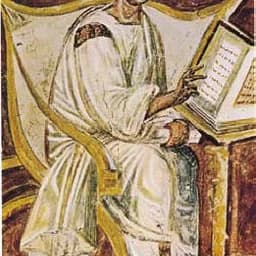
Blessed Augustine of Hippo (354–430)

From his works, as compiled in the Catena Aurea on Luke 16 (trans. J. H. Newman, 1841). Public domain.

On why the steward is commended, and the limit of his example:

The steward whom his Lord cast out of his stewardship is nevertheless commended because he provided himself against the future ... we ought not however to take the whole for our imitation. For we should never act deceitfully against our Lord in order that from the fraud itself we may give alms.

On the lesson the parable teaches by contrast:

If the steward who acted deceitfully, could be praised by his lord, how much more they please God who do their works according to His commandment.

On almsgiving that must come from honest labor, not from plunder:

Now some misunderstanding this, seize upon the things of others, and so give something to the poor, and think that they are doing what is commanded. That interpretation must be corrected into, Give alms of your righteous labors. For you will not corrupt Christ your Judge.

On why these are called the riches of unrighteousness:

The mammon of unrighteousness are all the riches of the world, whenever they come ... they are not true riches, for they are full of poverty, and ever liable to chances.


St. Basil the Great (c. 330–379)

From his homilies, as compiled in the Catena Aurea on Luke 16 (trans. J. H. Newman, 1841). Public domain.

On the wealth we inherit, and the question of where it came from:

If you have succeeded to a patrimony, you receive what has been amassed by the unrighteous; for in a number of predecessors some one must needs be found who has unjustly usurped the property of others. But suppose that your father has not been guilty of exaction, whence have you your money? If indeed you answer, "From myself;" you are ignorant of God, not having the knowledge of your Creator; but if, "From God," tell me the reason for which you receive it. Is not the earth and the fullness thereof the Lord's? If then whatever is ours belongs to our common Lord, so will it also belong to our fellow-servant.


Theophylact of Ohrid (c. 1055–1107)

From his Explanation of the Gospel of Luke, as compiled in the Catena Aurea on Luke 16 (trans. J. H. Newman, 1841). Public domain.

On what makes riches "unrighteous": that we keep for ourselves what was given for others:

Those then are called the riches of unrighteousness which the Lord has given for the necessities of our brethren and fellow-servants, but we spend upon ourselves.

On almsgiving as the most skillful of all the arts:

The most skillful then of all arts is that of almsgiving. For it builds not for us houses of mud, but lays up in store an everlasting life. Now in each of the arts one needs the support of another; but when we ought to show mercy, we need nothing else but the will alone.


St. Ambrose of Milan (c. 339–397)

From his Exposition of the Gospel of Luke, as compiled in the Catena Aurea on Luke 16 (trans. J. H. Newman, 1841). Public domain.

On why the mammon is named unrighteous:

He spoke of the unrighteous Mammon, because by the various enticements of riches covetousness corrupts our hearts, that we may be willing to obey riches.


St. Bede the Venerable (c. 673–735)

From his Commentary on Luke, as compiled in the Catena Aurea on Luke 16 (trans. J. H. Newman, 1841). Public domain.

On the difference between owning riches and being owned by them:

Let then the covetous hear this, that we can not at the same time serve Christ and riches; and yet He said not, "Who has riches," but, who serves riches; for he who is the servant of riches, watches them as a servant; but he who has shaken off the yoke of servitude, dispenses them as a master; but he who serves mammon, verily serves him who is set over those earthly things as the reward of his iniquity, and is called the prince of this world.


Note on sources and other Fathers

The Fathers are of one mind that the steward is praised for prudence, not for fraud. Augustine states the principle most plainly: "if the steward who acted deceitfully, could be praised by his lord, how much more they please God who do their works according to His commandment," and at once guards it from misuse, "we should never act deceitfully against our Lord in order that from the fraud itself we may give alms." From there every voice turns to almsgiving and stewardship. The rich are "stewards for the poor" who must "gain friends" with their wealth before death ends the stewardship (Cyril); the wealth is "unrighteous" because covetousness corrupts the heart (Ambrose), or because we keep for ourselves what was given for our brethren (Theophylact), and almsgiving is "the most skillful of all arts." Basil presses the question of ownership to its root: "Is not the earth and the fullness thereof the Lord's? If then whatever is ours belongs to our common Lord, so will it also belong to our fellow-servant." And on the closing words Bede distinguishes owning riches from serving them: the free man "dispenses them as a master," but the servant of mammon serves "the prince of this world."

The Catena also carries comment on this passage under the name of Chrysostom, but his attributions on Luke are debated, so they are noted here rather than quoted as his.

Patristic sources