The Dispute over Who Is Greatest
Luke 22:24–30 · Passion week in Jerusalem
Scripture
Luke 22:24–30
nd there was also a strife among them, which of them should be accounted the greatest. 25And he said unto them, The kings of the Gentiles exercise lordship over them; and they that exercise authority upon them are called benefactors. 26But ye shall not be so: but he that is greatest among you, let him be as the younger; and he that is chief, as he that doth serve. 27For whether is greater, he that sitteth at meat, or he that serveth? is not he that sitteth at meat? but I am among you as he that serveth. 28Ye are they which have continued with me in my temptations. 29And I appoint unto you a kingdom, as my Father hath appointed unto me; 30That ye may eat and drink at my table in my kingdom, and sit on thrones judging the twelve tribes of Israel.
King James Version · public domain
Lluka 22:24–30
bë edhe një bishëtim ndër mest t’atyre, vallë cili prej atyre duketë, se është më i-math. 25Edhe ay u tha atyre, Mbretërit’ e kombevet zotëronjënë mbi ata, edhe ata që kanë pushtet mbi ata quhenë mirëbërës. 26Po ju nukë dotë jini kështu; po më i-madhi ndër ju letë bënetë posi më i-vogëli, edhe ay që është i-parë posi ay që shërben. 27Sepse cili është më i-math, ay që ka ndënjurë ndë mësallët, apo ay që shërben? a jo ay që ka ndënjurë ndë mësallët? Po unë jam ndër mest t’uaj posi ay që shërben. 28Edhe ju jini ata që keni qëndruarë bashkë me mua ndë ngasjet të mia. 29Përandaj edhe unë bënj gati për ju një mbretëri, sikundrë im Atë për mua, 30Që të hani e të pini mbë truvezët t’ime ndë mbretërit t’ime, edhe të rrini mbi frone, dyke gjykuarë të dy-mbë-dhjetë farat’ e Israilit.
Kristoforidhi, Dhiata e Re Toskërisht 1879 · zotërim publik
In their own words
Think not that your disciple needs you, but that you do not need him. For I who need no one whom all things in heaven and earth need, have condescended to the degree of a servant.
St. John Chrysostom, Homilies on the Gospels (Catena Aurea on Luke, on Luke 22:27)
Patristic sources
- St. John Chrysostom
- Homilies on the Gospels (Catena Aurea on Luke)
- St. Cyril of Alexandria
- Commentary on Luke, Sermon 143
- St. Basil the Great
- On humility (Catena Aurea on Luke)
- Theophylact of Ohrid
- Explanation of Luke (Catena Aurea)
- St. Ambrose of Milan
- Exposition of Luke (Catena Aurea)
- St. Bede the Venerable
- Exposition of Luke (Catena Aurea)
Read the sources: Cyril on Luke, Sermons 135–145 (tertullian.org) · Catena Aurea on Luke (isidore.co)
The Dispute over Who Is Greatest (Luke 22:24–30)
The texts below are quoted verbatim from public-domain English translations; nothing is paraphrased.
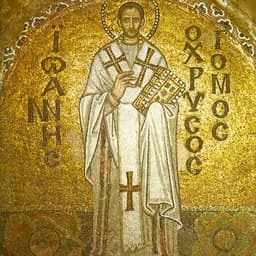
St. John Chrysostom (c. 347–407)
On the strife among the disciples (on Luke 22:25) As preserved in the Catena Aurea on Luke. Public domain. Full text: https://isidore.co/aquinas/english/CALuke.htm
On why the Lord names the Gentiles when He rebukes the striving after precedence:
On the Master who Himself has need of no one, yet takes a servant's place:
On why the promise of the thrones is not made to all without distinction:
St. Cyril of Alexandria (c. 376–444)
Commentary on the Gospel of Luke, Sermon CXLIII (on Luke 22:24–30) Source: trans. R. Payne Smith, Library of the Fathers, 1859. Public domain. Full text: https://www.tertullian.org/fathers/cyril_on_luke_13_sermons_135_145.htm
On the disciples' infirmity and the physician who cuts the passion away:
On the Lord of glory who becomes a minister, leaving us an example:
On the reward of those who continue with Him, and why He speaks as one of us:
St. Basil the Great (c. 330–379)
On humility and the ministering to many (on Luke 22:26) As preserved in the Catena Aurea on Luke. Public domain. Full text: https://isidore.co/aquinas/english/CALuke.htm
On the chief who must not be puffed up, for true humility is to minister:
On offering even bodily service, after the pattern of the Lord who washed the disciples' feet:
Theophylact of Ohrid (c. 1055–1107)
Explanation of the Gospel of Luke (on Luke 22:27) As preserved in the Catena Aurea on Luke. Public domain. Full text: https://isidore.co/aquinas/english/CALuke.htm
On how Christ showed Himself their servant at the supper:
On the kingdom whose table is not bodily food but the life of angels:
St. Ambrose of Milan (c. 339–397)
Exposition of the Gospel of Luke (on Luke 22:24) As preserved in the Catena Aurea on Luke. Public domain. Full text: https://isidore.co/aquinas/english/CALuke.htm
On the disciples' contention set down not as excuse but as warning:
On the reward promised at His table, which is grace and not food:
St. Bede the Venerable (c. 673–735)
Exposition on the Gospel of Luke (on Luke 22:28) As preserved in the Catena Aurea on Luke. Public domain. Full text: https://isidore.co/aquinas/english/CALuke.htm
On why not the first effort but persevering endurance is crowned:
On the judgment that great men still owe against the wickedness of offenders: