The epileptic (demon-possessed) boy
Matt 17:14–21; Mark 9:14–29; Luke 9:37–43 · Later ministry in Galilee
Scripture
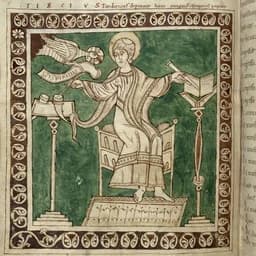
Matthew 17:14–21
nd when they were come to the multitude, there came to him a certain man, kneeling down to him, and saying, 15Lord, have mercy on my son: for he is lunatick, and sore vexed: for ofttimes he falleth into the fire, and oft into the water. 16And I brought him to thy disciples, and they could not cure him. 17Then Jesus answered and said, O faithless and perverse generation, how long shall I be with you? how long shall I suffer you? bring him hither to me. 18And Jesus rebuked the devil; and he departed out of him: and the child was cured from that very hour. 19Then came the disciples to Jesus apart, and said, Why could not we cast him out? 20And Jesus said unto them, Because of your unbelief: for verily I say unto you, If ye have faith as a grain of mustard seed, ye shall say unto this mountain, Remove hence to yonder place; and it shall remove; and nothing shall be impossible unto you. 21Howbeit this kind goeth not out but by prayer and fasting.
King James Version · public domain
Mateu 17:14–21
dhe ata kur erthnë te gjindja, i erdhi përanë një njeri e i ra mbë gjunjë, dyke thënë, 15Zot, përdëlle t’im bir, Sepse e zë lëngat’ e hënësë, edhe heq keq; sepse shumë herë bje ndë zjarr, e shumë herë nd’ujë; 16Edhe e shpura te nxënësit’ e tu, po nukë muntnë t’a shëronjënë. 17Edhe Jisuj upërgjeq e tha, O bres i-pabesë edhe i-shtrëmbërë, gjer kur dotë jem bashkë me ju? gjer kur dot’u duronj juve? Bi-ma-ni mua atë këtu. 18Edhe Jisuj e qërtoj atë, edhe djalli dolli nga ay, edhe djali ushërua që mb’atë herë. 19Atëhere nxënësit’ erthnë përanë Jisujt veçanë, e thanë, Përse neve nukë muntmë t’a nxjerm’ atë? 20Edhe Jisuj u tha atyre, Për pabesërinë t’uaj; sepse me të-vërtetë po u them juve, Ndë paçi besë sa një koqe sinapi, dot’i thoni këti mali, Shko së-këtejmi atje, edhe dotë shkonjë, edhe nukë dotë jetë gjë që të mos muntni ju t’a bëni. 21Edhe ky komp nukë del veç me të-falur’ e me agjërim.
Kristoforidhi, Dhiata e Re Toskërisht 1879 · zotërim publik
In their own words
For no man at once reaches to the highest point, but in holy living a man begins with the least things that he may reach the great; for the beginning of virtue is different from the progress and the perfection of it.
St. Bede the Venerable, Catena Aurea on Mark 9 (Catena Aurea)
Patristic sources
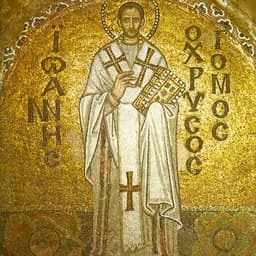
- St. John Chrysostom
- Homilies on Matthew, Hom. 57
- Origen of Alexandria
- Commentary on Matthew, Book XIII
- Theophylact of Ohrid
- Commentary on Matthew, on Matt 17
- Commentary on Mark, on Mark 9
- St. Cyril of Alexandria
- Commentary on Luke, on Luke 9
The Healing of the Epileptic Boy (Matthew 17:14–21; Mark 9:14–29; Luke 9:37–43)
The texts below are quoted verbatim from public-domain English translations; nothing is paraphrased.
St. John Chrysostom (c. 347–407)
Homilies on the Gospel of Matthew, Homily 57 (on Matthew 17:10–21) Source: trans. in the Nicene and Post-Nicene Fathers, First Series, Vol. 10. Public domain. Full text: https://www.newadvent.org/fathers/200157.htm
On the father's weak faith:
On why "O faithless and perverse generation" was aimed wider than the father:
On why He allowed the boy to be convulsed before healing him:
On correcting the father's "If You can":
On the power of prayer with fasting:
Theophylact of Ohrid (c. 1055–1107)
As preserved in the Catena Aurea on Mark 9, trans. J. H. Newman, 1841. Public domain. Full text: https://www.ccel.org/ccel/aquinas/catena2.iii.ix.html
On why He permitted the boy to be convulsed:
On why He rebuked the spirit only as the crowd gathered:
On prayer joined with fasting:
St. Cyril of Alexandria (c. 376–444)
As preserved in the Catena Aurea on Luke. Public domain.
On the perverse who will not abide in their good beginnings:
On the gift of power granted through Christ to the Apostles:
Titus of Bostra (d. c. 378)
As preserved in the Catena Aurea on Luke. Public domain.
On the father's wise and reverent plea:
On why he had first gone to the disciples:
On why Christ made the sufferings public before healing:
St. Bede the Venerable (c. 673–735)
As preserved in the Catena Aurea on Mark 9, trans. J. H. Newman, 1841. Public domain.
On the mercy beneath the rebuke:
On the answer fitted to the request:
On faith that begins small and grows:
St. Gregory the Great (c. 540–604)
As preserved in the Catena Aurea on Mark 9, trans. J. H. Newman, 1841. Public domain.
On the boy who seemed dead, read as the soul freed from the enemy: