The Farewell Discourse
John 14 · Passion week in Jerusalem
Scripture
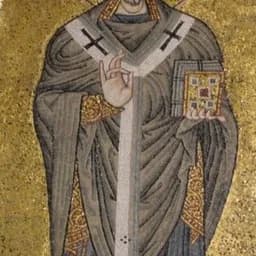
John 14:1–17
et not your heart be troubled: ye believe in God, believe also in me. 2In my Father’s house are many mansions: if it were not so, I would have told you. I go to prepare a place for you. 3And if I go and prepare a place for you, I will come again, and receive you unto myself; that where I am, there ye may be also. 4And whither I go ye know, and the way ye know. 5Thomas saith unto him, Lord, we know not whither thou goest; and how can we know the way? 6Jesus saith unto him, I am the way, the truth, and the life: no man cometh unto the Father, but by me. 7If ye had known me, ye should have known my Father also: and from henceforth ye know him, and have seen him. 8Philip saith unto him, Lord, shew us the Father, and it sufficeth us. 9Jesus saith unto him, Have I been so long time with you, and yet hast thou not known me, Philip? he that hath seen me hath seen the Father; and how sayest thou then, Shew us the Father? 10Believest thou not that I am in the Father, and the Father in me? the words that I speak unto you I speak not of myself: but the Father that dwelleth in me, he doeth the works. 11Believe me that I am in the Father, and the Father in me: or else believe me for the very works’ sake. 12Verily, verily, I say unto you, He that believeth on me, the works that I do shall he do also; and greater works than these shall he do; because I go unto my Father. 13And whatsoever ye shall ask in my name, that will I do, that the Father may be glorified in the Son. 14If ye shall ask any thing in my name, I will do it. 15If ye love me, keep my commandments. 16And I will pray the Father, and he shall give you another Comforter, that he may abide with you for ever; 17Even the Spirit of truth; whom the world cannot receive, because it seeth him not, neither knoweth him: but ye know him; for he dwelleth with you, and shall be in you.
King James Version · public domain
Joani 14:1–17
etë mos trumbullonetë zëmëra juaj; besoni Perëndisë, besoni edhe mua. 2Ndë shtëpi të t’im Eti ka shumë të-ndënjura; ndë mos, dot’u thoshnjam juve, Vete t’u bënj juve gati vënt. 3Edhe si të vete e t’u bënj juve gati vënt, dotë vinj përsëri, edhe dot’u marr juve përanë vetëhesë s’ime, që të jeni edhe ju atje ku jam unë. 4Edhe ku vete unë e dini edhe udhën’ e dini. 5Thomaj i thotë, Zot, nuk’ e dimë se ku vete; edhe si munt t’a dimë udhënë? 6Jisuj i thotë, Unë jam udha edhe e-vërteta edhe jeta; asndonjë s’vjen tek Ati, veç me anë t’ime. 7Ndë qoftë se më njihnitë mua, dotë njihnitë edhe t’im Atë: edhe që ndashti e njihni, edhe e kini parë. 8Filippi i thotë, Zot, dëfte-na Atinë, edhe na është mjaft. 9Jisuj i thotë, Kaqë kohë jam bashkë me ju, edhe s’më ke njohurë, Filipp? ay që më ka parë mua, ka parë Atinë; edhe qysh thua ti, Dëfte-na Atinë? 10Nukë beson se unë jam tek Ati, edhe Ati është tek unë? fjalëtë që u flas unë juve, nuk’ janë prej vetiu; po Ati që rri tek unë, ay bën punëratë. 11Beso-më-ni se unë jam tek Ati, edhe Ati është tek unë; ndë mos, beso-më-ni për vetë punëratë. 12Me të vërtetë, me të vërtetë po u them juve, Ay që më beson mua, dotë bënjë edhe ay punëratë që bënj unë, edhe dotë bënjë edhe më të mëdha se këto; sepse unë vete tek im Atë. 13Edhe ç’të lypni mb’emërit t’im, dot’a bënj, që të lavduronetë Ati te Biri. 14Ndë lypçi gjë mb’emërit t’im, unë dot’a bënj. 15Ndë më doni, ruani porosit’ e mia. 16Edhe unë dot’i lutem Atit, edhe dot’u apë juve një tjatër Ngushullimtar, që të mbetetë bashkë me ju për gjithë jetënë, 17Frymën’ e së-vërtetësë, të-cilënë bota s’munt t’a marrë, sepse nuk’ e sheh, as nuk’ e njeh; po ju e njihni, sepse mbetetë bashkë me ju, edhe dotë jetë ndër ju.
Kristoforidhi, Dhiata e Re Toskërisht 1879 · zotërim publik
In their own words
For He who is the way doth not lead us into devious courses out of the way; nor does He who is the truth deceive us by falsehoods; nor does He who is the life leave us in the darkness of death.
St. Hilary of Poitiers, On the Trinity (on John 14:6) (Catena Aurea)
Patristic sources
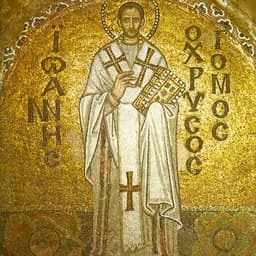
- St. John Chrysostom
- Homilies on the Gospel of St. John, Hom. 73–75
- St. Cyril of Alexandria
- Commentary on the Gospel of John, Book IX
- Theophylact of Ohrid
- Explanation of the Gospel of John
His Gospel exegesis survives in public-domain English only through the Catena Aurea.
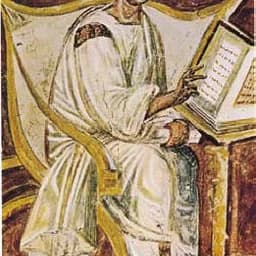
- Blessed Augustine of Hippo
- Tractates on the Gospel of John, Tractates 67–70
Venerated in the East as Blessed; his Johannine tractates are cited in later Byzantine catenae.
- St. Hilary of Poitiers
- On the Trinity
His Johannine material is preserved in public-domain English only through the Catena Aurea; the extracts are drawn from his De Trinitate.
Read the sources: Chrysostom on John, Homily 73 (CCEL) · Cyril of Alexandria on John, Book IX (tertullian.org) · Augustine, Tractates on John, Tractate 67 (CCEL) · Catena Aurea on John (isidore.co)
The Farewell Discourse (John 14:1–17)
The texts below are quoted verbatim from public-domain English translations; nothing is paraphrased.
St. John Chrysostom (c. 347–407)
Homilies on the Gospel of St. John, Homilies 73–75 (on John 14:1–17) Source: trans. in the Nicene and Post-Nicene Fathers, First Series, Vol. 14. Public domain. Full text: https://www.ccel.org/ccel/schaff/npnf114.iv.lxxv.html
On why "Let not your heart be troubled" was needed just then:
On "I am the Way, and the Truth, and the Life; no man cometh unto the Father, but by Me":
On the promise of "another Comforter," and how the one word strikes down opposite heresies:
St. Cyril of Alexandria (c. 376–444)
Commentary on the Gospel of John, Book IX (on John 14:1–11) Source: trans. T. Randell, Library of Fathers, 1885. Public domain. Full text: https://www.tertullian.org/fathers/cyril_on_john_09_book9.htm
On the three names Christ chooses, the Way, and the Truth, and the Life:
On passing from the Image to the Archetype, since "He that hath seen Me hath seen the Father":
Theophylact of Ohrid (c. 1055–1107)
Explanation of the Gospel of John (on John 14:2–6) As preserved in the Catena Aurea on John. Public domain. Full text: https://isidore.co/aquinas/english/CAJohn.htm
On "In my Father's house are many mansions ... I go to prepare a place for you":
On how Christ becomes for us the Way, the Truth, and the Life:
Blessed Augustine of Hippo (354–430)
Tractates on the Gospel of John, Tractates 67–70 (on John 14:1–9) Source: trans. in the Nicene and Post-Nicene Fathers, First Series, Vol. 7. Public domain. Full text: https://www.ccel.org/ccel/schaff/npnf107.iii.lxviii.html
On the comfort of the "many mansions" prepared for the troubled disciples:
On the disciples already knowing the Way, because they knew Him who is the Way:
On "He that seeth me, seeth the Father also":
St. Hilary of Poitiers (c. 310–367)
On the Trinity (on John 14:6–11) As preserved in the Catena Aurea on John. Public domain. Full text: https://isidore.co/aquinas/english/CAJohn.htm
On the Way that does not mislead, the Truth that does not deceive, the Life that does not fail:
On "Believe me that I am in the Father, and the Father in me":