The friend at midnight
Luke 11:5–13 · Journey to Jerusalem
Scripture
Luke 11:5–13
nd he said unto them, Which of you shall have a friend, and shall go unto him at midnight, and say unto him, Friend, lend me three loaves; 6For a friend of mine in his journey is come to me, and I have nothing to set before him? 7And he from within shall answer and say, Trouble me not: the door is now shut, and my children are with me in bed; I cannot rise and give thee. 8I say unto you, Though he will not rise and give him, because he is his friend, yet because of his importunity he will rise and give him as many as he needeth. 9And I say unto you, Ask, and it shall be given you; seek, and ye shall find; knock, and it shall be opened unto you. 10For every one that asketh receiveth; and he that seeketh findeth; and to him that knocketh it shall be opened. 11If a son shall ask bread of any of you that is a father, will he give him a stone? or if he ask a fish, will he for a fish give him a serpent? 12Or if he shall ask an egg, will he offer him a scorpion? 13If ye then, being evil, know how to give good gifts unto your children: how much more shall your heavenly Father give the Holy Spirit to them that ask him?
King James Version · public domain
Lluka 11:5–13
astaj utha atyre, Cili prej jush, ndë pastë një mik, edhe të vejë tek ay ndë mest të natësë, e t’i thotë, Mik, huaj-më tri bukë; 6Sepse erdhi një miku im prej udhësë tek unë, edhe s’kam ç’t’i vë përpara; 7Edhe ay të përgjigjetë që brënda e t’i thotë, Mos më ep mundim; dera tashi është mbyllurë, edhe çunat’ e mi janë ndë shtrat bashkë me mua; S’munt të ngrihem e të t’ap? 8Po u them juve, Edhe ndë mos ungrittë e t’i apë, sepse është miku i ati, për të-mosturpëruarët’ e ati dotë ngrihet’ e dot’i apë sa i duhenë. 9Edhe unë po u them juve, Lypni, edhe dot’u epetë juve; kërkoni, edhe dotë gjeni; trokollini, edhe dot’u hapetë juve. 10Sepse kushdo që lypën merr; edhe ay që kërkon gjen; edhe ati që trokëllin dot’i hapetë. 11Edhe ndë është ndonjë prej jush atë, edhe i biri ndë i kërkoftë bukë, mos dot’i apë gur? a po ndë i lyptë peshk, mos dot’i apë gjarpër ndë vëntt të peshkut? 12Apo ndë i kërkoftë ve, mos dot’i apë përçollak? 13Ndë ju pra që jini të-liq dini t’u epni bijvet t’uaj të-dhëna të-mira, sa më tepërë Ati që është prej qielli dot’u apë Frymë të-Shënjtëruarë atyre që të lypnjënë prej ati?
Kristoforidhi, Dhiata e Re Toskërisht 1879 · zotërim publik
In their own words
Most ready therefore is our heavenly Father to bestow gifts upon us: so that whosoever is denied what he asks, is himself the cause of it: for he asks, as I said, what God will not give.
St. Cyril of Alexandria, Commentary on Luke, Sermon LXXIX (on Luke 11:11-13); Cyril, Commentary on Luke (R. Payne Smith, 1859)
Patristic sources
- St. Cyril of Alexandria
- Commentary on Luke, Sermon 79
- Theophylact of Ohrid
- Commentary on Luke, on Luke 11
- Origen of Alexandria
- On Prayer; Homilies on Luke
- St. Ambrose of Milan
- Exposition of Luke, Book VII
Read the sources: Cyril on Luke, Sermons 66–80 (Tertullian.org)
The Parable of the Friend at Midnight (Luke 11:5–8)
The texts below are quoted verbatim from public-domain English translations; nothing is paraphrased.
St. Cyril of Alexandria (c. 376–444)
Commentary on the Gospel of Luke (on Luke 11:5–13) Source: trans. R. Payne Smith, 1859. Public domain. Full text: https://www.tertullian.org/fathers/cyril_on_luke_07_sermons_66_80.htm
On the danger of weary, half-hearted prayer, and why the parable teaches perseverance:
On why God, like a wise father, sometimes delays:
On praying with knowledge and patience, since what costs nothing is despised:
On the answer to the doubter, given by the Giver Himself:
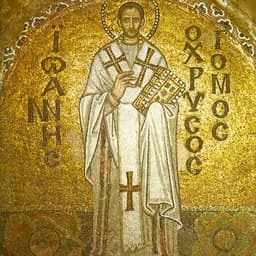
St. John Chrysostom (c. 347–407)
As preserved in the Catena Aurea on Luke. Public domain.
On the distinction between asking, seeking, and knocking, and the diligence the search for God requires:
On why we must wait even when the gate is not opened at once:
St. Basil the Great (c. 330–379)
As preserved in the Catena Aurea on Luke. Public domain.
On why God delays, that our earnestness may be redoubled and the gift may be guarded:
On standing before God watchful and trembling, and persevering until we receive:
On the reasons our prayers go unanswered, and the right order of desire:
St. Gregory of Nyssa (c. 335 – c. 395)
As preserved in the Catena Aurea on Luke. Public domain.
On the children in the bed: those who through ascetic struggle have recovered the freedom from passion laid up in our nature:
Theophylact of Ohrid (c. 1050 – c. 1107)
As preserved in the Catena Aurea on Luke. Public domain.
On the friend as God who loves all men and wills the salvation of all:
On the midnight as the depth of temptations, and the three loaves as the relief of body, soul, and spirit:
Origen (c. 185–254)
As preserved in the Catena Aurea on Luke. Public domain.
On how it can be that those who pray are not heard, and what right asking requires:
On the bread, the fish, and what God will never give in their place:
St. Ambrose of Milan (c. 339–397)
As preserved in the Catena Aurea on Luke. Public domain.
On Christ as the greatest friend, and on praying by night as well as by day:
On how much more we ought to pray, who sin so often:
On hope as the ground of persuasion to frequent prayer:
Blessed Augustine of Hippo (354–430)
As preserved in the Catena Aurea on Luke. Public domain.
On the three loaves as the food of the heavenly mystery, sought when the learned have gone to their rest:
On knocking at the Lord's own door when human teachers cannot answer:
On why God delays, lest the gift given at once should grow common:
On God's greater willingness to give than ours to receive:
St. Bede the Venerable (c. 673–735)
As preserved in the Catena Aurea on Luke. Public domain.
On how those who give good gifts are yet called evil, and on the Holy Spirit as the fullness of God's gifts:
An early Western witness: Tertullian (c. 155 – c. 220)
Against Marcion, Book IV, ch. 26 Source: trans. in the Ante-Nicene Fathers, Vol. III. Public domain.
On perseverance, that the asking, seeking, and knocking lead to entry:
On the friend at whose door we have the right to knock: