All entriesmiracle

The Gadarene demoniac(s)

Matt 8:28–34; Mark 5:1–20; Luke 8:26–39 · Later ministry in Galilee

Matthew 8:28–34

nd when he was come to the other side into the country of the Gergesenes, there met him two possessed with devils, coming out of the tombs, exceeding fierce, so that no man might pass by that way. 29And, behold, they cried out, saying, What have we to do with thee, Jesus, thou Son of God? art thou come hither to torment us before the time? 30And there was a good way off from them an herd of many swine feeding. 31So the devils besought him, saying, If thou cast us out, suffer us to go away into the herd of swine. 32And he said unto them, Go. And when they were come out, they went into the herd of swine: and, behold, the whole herd of swine ran violently down a steep place into the sea, and perished in the waters. 33And they that kept them fled, and went their ways into the city, and told every thing, and what was befallen to the possessed of the devils. 34And, behold, the whole city came out to meet Jesus: and when they saw him, they besought him that he would depart out of their coasts.

King James Version · public domain

Mateu 8:28–34

dhe ay kur erdhi mb’anët të-përtejme, ndë dhet të Gjergjesinëvet, i duallë përpara dy të-djallosurë, që dilninë nga varretë, fort të-egërë, kaqë sa s’munt të shkonte njeri nga ajo udhë. 29Edhe ja tek bërtitnë dyke thënë, Ç’ke me ne edhe ti, o Jisu, i bir’ i Perëndisë? erdhe këtu përpara kohësë që të na mundonjç? 30Edhe lark atyre ishte një tufë e madhe derrash dyke kulloturë. 31Edhe djajtë i luteshin’ ati, e i thoshinë, Ndë na nxjerç që këtej, lë-na të shkojmë ndë tufët të derravet. 32Edhe ay u tha atyre, Shkoni. Edhe ata duallnë e shkuanë ndë tufët të derravet; edhe ja gjithë tuf’ e derravet tek udruth nga gremina ndë dett, edhe ngorthnë ndë ujërat. 33Edhe barinjtë iknë e erthnë ndë qytett, e dhanë zë për të-gjitha edhe për punët’ e të-djallosurvet. 34Edhe ja gjithë qyteti tek dolli përpara Jisujt; edhe kur e pan’ atë, i ulutnë ati të ikënjë nga sinorët e atyreve.

Kristoforidhi, Dhiata e Re Toskërisht 1879 · zotërim publik

Summary

Christ's authority over a whole legion of demons is displayed: they can only beg, and they cannot so much as enter the swine without His permission. The Fathers stress this to show at once the malice and the impotence of the demonic apart from God's allowance. The unclean spirits themselves confess what Israel would not, naming Him Son of God and dreading torment "before the time"; their cry betrays that they know their Judge and the day appointed for their punishment.

That Christ grants their request and the swine are lost is read as a deliberate unveiling. The Fathers see in the drowned herd a sign of what the demons would long since have seed to the men they possessed, had not God restrained them: the cruelty loosed upon the swine measures the cruelty intended for souls. The permission, then, is not weakness but instruction, showing how much we are guarded even when we do not perceive it.

Some of the Fathers also read the scene morally. The man naked among the tombs, beyond the reach of chains, is taken as a figure of those who, dead in sin, can no longer be bound by any human discipline until the Word comes to them; the swine, unclean and given to the belly, stand for lives sunk in earthly things, where the spirits readily find a lodging.

The Gerasenes, weighing their swine against a man restored to his right mind, beg the Lord to depart, and so the Fathers warn against preferring possessions to salvation. The healed man, sent home to proclaim what God had seed for him, becomes the first herald of Christ among the Gentiles of the Decapolis: the one whom Legion had silenced is made an evangelist, a pledge that the Gospel is for the nations also.

The Gadarene Demoniac(s) (Matthew 8:28–34; Mark 5:1–20; Luke 8:26–39)

Public-Domain Patristic Commentary

The moment Christ steps ashore on the far side of the lake, He is met by a man (two men, in Matthew's account) possessed by demons, living among the tombs, so fierce that no one could pass that way. The demons recognize Him at once and cry out, "What have we to do with thee, Jesus, thou Son of God? Art thou come hither to torment us before the time?" Asked his name, the spirit answers "Legion," for they are many. They beg not to be sent into the abyss but into a nearby herd of swine; Christ gives them leave, and the whole herd rushes down the steep place into the sea and drowns. The herdsmen flee, the townspeople come out and, gripped by fear and the loss of the swine, ask Christ to leave their region, while the delivered man, now clothed and in his right mind, is sent home to proclaim what God has done for him. The texts below are quoted verbatim from public-domain translations. Cyril's commentary on Luke is primary; the remaining Fathers are given as preserved in the Catena Aurea on Matthew (St. Thomas Aquinas, trans. J. H. Newman, 1841). Nothing is paraphrased.


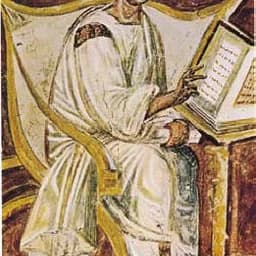
St. Cyril of Alexandria (c. 376–444)

Commentary on the Gospel of Luke (on Luke 8:26–39) Source: trans. R. Payne Smith, 1859. Public domain. Full text: https://www.tertullian.org/fathers/cyril_on_luke_04_sermons_39_46.htm

On the demon's hypocrisy in asking "What is there between me and Thee?" after corrupting the human race:

All men upon earth are His; and these thou wickedly corruptedst, removing them far from the knowledge of Him Who truly is the Lord and Maker of all, and plungedst them into the mire of sin, making them thy worshippers:----and afterwards dost thou say, "What is there between me and Thee?" What earthly king would endure to have those placed under his sceptre harrassed by barbarians? Or what shepherd is so unfeeling and indifferent, as when savage beasts attack his flocks, to take no heed of the calamity, nor endeavour to aid his sheep? Confess, even though against thy will, who thou art, and to Whom thou speakest. Utter words such as befit thee: such namely as, "I pray Thee, torment me not."

On the incomparable majesty of Christ commanding the spirit:

"For He had commanded, it says, the spirit to go out of the man." Observe, I pray again, the incomparable majesty of Him Who transcends all, even of Christ.

On why Christ purposely gave the demons leave to enter the swine, and the comfort this gives us:

The herd then of impure spirits asked for a herd----worthy of and like itself----of swine! And Christ purposely gave them leave, though He well knew what they would do. And I can imagine some one saying, Why did He grant their request? To which we answer, That He gave them the power, in order that this, like all His other conduct, might be a means of benefit to us, and inspire us with the hope of safety... They ask for power over swine: plainly as something which they do not possess. For what possible doubt can there be, that they would not have asked it, if it had been in their power to take it without hindrance? But those who have no power over things thus trifling and valueless, how can they injure any one of those whom Christ has sealed, and who place their hope on Him?

On the cruelty of the demons, shown by their drowning of the swine:

And this too we may learn, from what befel the herd of swine, that wicked demons are cruel, and mischievous, and hurtful, and treacherous to those who are in their power. This the fact clearly proves, that they hurried the swine over a precipice and drowned them in the waters.


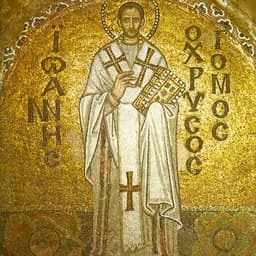
St. John Chrysostom (c. 347–407)

Homilies on the Gospel of Matthew, Homily 28 (on Matthew 8:28–34) As preserved in the Catena Aurea, trans. J. H. Newman, 1841. Public domain. The fuller homily appears in the Nicene and Post-Nicene Fathers, First Series, Vol. 10: https://www.newadvent.org/fathers/200128.htm

On why the demons came to proclaim His divinity:

Because there were who thought Christ to be a man, therefore the dæmons came to proclaim His divinity, that they who had not seen the sea raging and again still, might hear the dæmons crying.

On why Matthew names two while Mark and Luke describe one, without contradiction:

Luke and Mark chose to speak of one who was more grievously afflicted; whence also they add a further description of his calamity; Luke saying that he brake his bonds and was driven into the desert; Mark telling that he ofttimes cut himself with stones. But they neither of them say that there was only one, which would be to contradict Matthew.

On Christ going to the men whom no one dared approach, who were tortured by His mere presence:

Because none dared to bring them to Christ because of their fierceness, therefore Christ goes to them... For they were tortured in an unseen manner, suffering intolerable things from the mere presence of Christ.

On the cry being no flattery but the confession of what they were suffering:

That this should not be thought to be flattery, they cry out what they were experiencing, Art thou come to torment us before the time? ... They could not say they had not sinned, because Christ had found them doing evil, and marring the workmanship of God.

On why Christ gave the demons leave over the swine, and Providence over each man:

Jesus did not say this, as though persuaded by the daemons, but with many designs therein. One, that He might shew the mighty power to hurt of these daemons, who were in possession of the two men; another, that all might see that they had no power against the swine unless by His sufferance... By this it is manifest that there is no man who is not supported by Divine Providence; and if all are not equally supported by it, neither after one manner, this is the highest characteristic of Providence, that it is extended to each man according to his need.

On the clemency of Christ when those He had favoured drove Him away:

Observe the clemency of Christ next in His excellent power; when those who had received favours from Him would drive Him away, He resisted not, but departed, and left those who thus pronounced themselves unworthy of His teaching, giving them as teachers those who had been delivered from the daemons, and the feeders of the swine.


St. Gregory the Great (c. 540–604)

As preserved in the Catena Aurea on Matthew. Public domain.

On the Devil's utter dependence, that he can do nothing of himself:

For the Devil knows that of himself he has no power to do any thing, because it is not of himself that he exists as a spirit.


St. Ambrose of Milan (c. 339–397)

From his Exposition of the Gospel of Luke, as preserved in the Catena Aurea on Matthew. Public domain.

On the two demoniacs as a figure of the Gentile world:

The two daemoniacs are also a type of the Gentile world; for Noah having three sons, Shem, Ham, and Japhet, Shem's posterity alone was taken into the inheritance of God, while from the other two sprang the nations of the Gentiles.


Blessed Augustine (i Hiponit) (354–430)

As preserved in the Catena Aurea on Matthew. Public domain.

On the harmony of the Evangelists, why Matthew names two and the others one:

Whereas Matthew relates that there were two who were afflicted with daemons, but Mark and Luke mention only one, you must understand that one of them was a person of note, for whom all that country was in grief, and about whose recovery there was much care, whence the fame of this miracle was the more noised abroad.

On the measured knowledge the demons had of Christ, not as He is in Himself:

God was so far known to them as it was His pleasure to be known; and He pleased to be known so far as it was needful. He was known to them therefore not as He is Life eternal, and the Light which enlightens the good, but by certain temporal effects of His excellence, and signs of His hidden presence, which are visible to angelic spirits though evil, rather than to the infirmity of human nature.

On why the demons cried out at the appointed time of judgment:

Either because that came upon them unexpectedly, which they looked for indeed, but supposed more distant; or because they thought their perdition consisted in this, that when known they would be despised; or because this was before the day of judgment, when they should be punished with eternal damnation.


St. Jerome (c. 347–420)

Commentary on the Gospel of Matthew, as preserved in the Catena Aurea on Matthew. Public domain.

On the cry of the demons as a confession extorted by necessity:

This is no voluntary confession followed up by a reward to the utterer, but one extorted by the compulsion of necessity. A runaway slave, when after long time he first beholds his master, straight thinks only of deprecating the scourge; so the daemons, seeing the Lord suddenly moving upon the earth, thought He was come to judge them.

On the presence of the Saviour as torment to the demons:

For the presence of the Saviour is the torment of daemons.

On why the Saviour permitted the destruction of the swine:

The Saviour bade them go, not as yielding to their request, but that by the death of the swine, an occasion of man's salvation might be offered.

On the lesson against the Manichaeans, that the souls of men and beasts are not one:

Let Manichaeans blush; if the souls of men and of beasts be of one substance, and one origin, how should two thousand swine have perished for the sake of the salvation of two men?


St. Hilary of Poitiers (c. 310–367)

From his Commentary on Matthew, as preserved in the Catena Aurea on Matthew. Public domain.

On the demons holding the two nations among the tombs, outside the synagogue of the Law:

Thus the daemons held the two men among the tombs without the town, that is, without the synagogue of the Law and the Prophets; that is, they infested the original seats of the two nations, the abodes of the dead, making the way of this present life dangerous to the passers by.

On the demons driven from the Gentiles seeking refuge among the heretics:

The daemons seeing that there is no longer any place left for them among the Gentiles, pray that they may be suffered to dwell among the heretics; these, seized by them, are drowned in the sea, that is, in worldly desires, by the instigations of the daemons, and perish in the unbelief of the rest of the Gentiles.

On the town as a figure of the Jewish nation that forbade Christ to approach:

The town is a type of the Jewish nation, which having heard of Christ's works goes forth to meet its Lord, to forbid Him to approach their country and town; for they have not received the Gospel.


St. Bede the Venerable (c. 673–735)

From his Commentary on Luke, as preserved in the Catena Aurea on Matthew. Public domain.

On the swine as those who delight in filthy manners, over whom the devils receive power:

The swine are they that delight in filthy manners; for unless one live as a swine, the devils do not receive power over him; or at most, only to try him, not to destroy him.

On the drowned swine as those who keep their profane rites in secret:

That the swine were sent headlong into the lake, signifies, that when the people of the Gentiles are delivered from the condemnation of the daemons, yet still they who would not believe in Christ, perform their profane rites in secret, drowned in a blind and deep curiosity.

On the terrified townsfolk who honour the Christian law but will not perform it:

When struck with terror, they entreat Him to depart from them, they signify a great number who, well satisfied with their ancient life, shew themselves willing to honour the Christian law, while they declare themselves unable to perform it.


Note on sources and other Fathers

Cyril, reading Luke verse by verse, is the fuller commentator here: he exposes the demon's hypocrisy with the image of the king who will not see his subjects harried or the shepherd who will not abandon his flock, he marvels at the "incomparable majesty" of the bare command, and above all he draws the consoling lesson from the swine, that since the demons had to beg for power even over unclean animals "which they do not possess," they can do nothing at all to those "whom Christ has sealed." The Catena Aurea on Matthew (St. Thomas Aquinas, trans. J. H. Newman, 1841) gathers the rest. Chrysostom, given here from his Homily 28, explains why the demons cried out at all (to proclaim His divinity to those who thought Him merely a man), how Matthew's two and the others' one are harmonized, that the confession was no flattery but torment wrung from them, and how Christ's leave over the swine displays a Providence "extended to each man according to his need." St. Gregory the Great notes that the Devil "has no power to do any thing" of himself. St. Ambrose and St. Hilary of Poitiers read the scene allegorically: the two demoniacs and the two nations, the tombs as the abodes of the dead outside the synagogue of the Law, the swine drowned in worldly desires, and the town as a figure of the Jewish nation that sent Christ away. Blessed Augustine harmonizes the accounts (the man asked his name answered "Legion," showing the demons were many) and observes that the demons knew Christ only so far as He chose to be known, "not as He is Life eternal," but by certain signs of His hidden presence. St. Jerome puts it in one line, that "the presence of the Saviour is the torment of dæmons," compares the demons to a runaway slave dreading the scourge, and rebukes the Manichaeans for confounding the souls of men and beasts. St. Bede the Venerable completes the allegory with the swine who delight in filthy manners and the townsfolk who will honour the Christian law but not perform it. The same Catena also preserves notes by Rabanus, Remigius, and a Pseudo-Augustine, which are not quoted here. For the verbatim primary text, Cyril's commentary above remains the principal public-domain source.

Patristic sources