The Golden Rule
Matt 7:12; Luke 6:31 · Early ministry in Galilee
Scripture

Matthew 7:12
herefore all things whatsoever ye would that men should do to you, do ye even so to them: for this is the law and the prophets.
King James Version · public domain
Mateu 7:12
jithë sa të doni pra t’u bëjnë juve njerëzitë, kështu bëni edhe ju atyre; sepse ky është nomi edhe profitëritë.
Kristoforidhi, Dhiata e Re Toskërisht 1879 · zotërim publik
In their own words
Whence it is evident, that virtue is according to our nature; that we all, of ourselves, know our duties; and that it is not possible for us ever to find refuge in ignorance.
St. John Chrysostom, Homilies on Matthew, Homily 23 (on Matthew 7:12)
Patristic sources
- St. John Chrysostom
- Homilies on Matthew, Hom. 23
- St. Cyril of Alexandria
- Commentary on Luke (on Luke 6:31)
The Luke 6:31 exposition survives as a Greek fragment (from Mai) supplied under the bare verse-head between the numbered sermons; no sermon number is assigned.
- Blessed Augustine of Hippo
- Our Lord's Sermon on the Mount, Book II, Ch. 22
Venerated in the East as Blessed, not as Saint.
- St. Gregory the Great
- Morals on the Book of Job, Book X
Quoted through the Catena Aurea on Matthew; his Gospel-related exegesis has no standalone public-domain English of this passage.
Read the sources: Chrysostom, Homilies on Matthew, Homily 23 (CCEL) · Cyril of Alexandria on Luke, Sermons 26-38 (tertullian.org) · Augustine, Our Lord's Sermon on the Mount, Book II (CCEL) · Catena Aurea on Matthew 7 (CCEL)
The Golden Rule (Matthew 7:12; Luke 6:31)
The texts below are quoted verbatim from public-domain English translations; nothing is paraphrased.
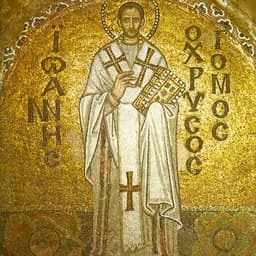
St. John Chrysostom (c. 347–407)
Homilies on the Gospel of Matthew, Homily 23 (on Matthew 7:12) Source: trans. in the Nicene and Post-Nicene Fathers, First Series, Vol. 10. Public domain. Full text: https://www.ccel.org/ccel/schaff/npnf110/npnf110.iii.XXIII.html
On "Therefore all things whatsoever ye would", and the meaning hidden in the word "therefore":
On why the Lord measures the precept by our fellow-servant, and not by God, that none may plead it impossible:
On "for this is the law and the prophets":
St. Cyril of Alexandria (c. 376–444)
Commentary on the Gospel of Luke (on Luke 6:31) Source: trans. R. Payne Smith, Library of Fathers, 1859. Public domain. Full text: https://www.tertullian.org/fathers/cyril_on_luke_03_sermons_26_38.htm
On "As ye wish that men should do unto you, even so do ye unto them", where the natural law of self-love is made the measure:
On the law that grows needless where God has written His will upon the heart:
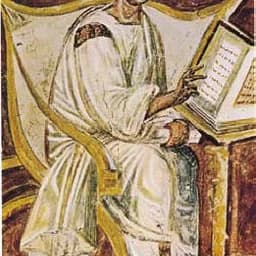
Blessed Augustine of Hippo (354–430)
Our Lord's Sermon on the Mount, Book II, Chapter 22 (on Matthew 7:12) Source: trans. in the Nicene and Post-Nicene Fathers, First Series, Vol. 6. Public domain. Full text: https://www.ccel.org/ccel/schaff/npnf106/npnf106.v.iii.xxii.html
On why "whatsoever ye would" must be taken in its strict sense, since there is properly no will but toward the good:
On how the precept, spoken expressly of men, contains the whole of "Thou shalt love thy neighbour as thyself":
St. Gregory the Great (c. 540–604)
Morals on the Book of Job, Book X (on Matthew 7:12) As preserved in the Catena Aurea on Matthew. Public domain. Full text: https://www.ccel.org/ccel/aquinas/catena1.ii.vii.html
On measuring what we owe another by the good we ourselves look to receive: