The good Samaritan
Luke 10:25–37 · Journey to Jerusalem
Scripture
Luke 10:25–37
nd, behold, a certain lawyer stood up, and tempted him, saying, Master, what shall I do to inherit eternal life? 26He said unto him, What is written in the law? how readest thou? 27And he answering said, Thou shalt love the Lord thy God with all thy heart, and with all thy soul, and with all thy strength, and with all thy mind; and thy neighbour as thyself. 28And he said unto him, Thou hast answered right: this do, and thou shalt live. 29But he, willing to justify himself, said unto Jesus, And who is my neighbour? 30And Jesus answering said, A certain man went down from Jerusalem to Jericho, and fell among thieves, which stripped him of his raiment, and wounded him, and departed, leaving him half dead. 31And by chance there came down a certain priest that way: and when he saw him, he passed by on the other side. 32And likewise a Levite, when he was at the place, came and looked on him, and passed by on the other side. 33But a certain Samaritan, as he journeyed, came where he was: and when he saw him, he had compassion on him, 34And went to him, and bound up his wounds, pouring in oil and wine, and set him on his own beast, and brought him to an inn, and took care of him. 35And on the morrow when he departed, he took out two pence, and gave them to the host, and said unto him, Take care of him; and whatsoever thou spendest more, when I come again, I will repay thee. 36Which now of these three, thinkest thou, was neighbour unto him that fell among the thieves? 37And he said, He that shewed mercy on him. Then said Jesus unto him, Go, and do thou likewise.
King James Version · public domain
Lluka 10:25–37
dhe na tek ungrit një nomtar, dyke ngar’ atë, e dyke thënë, Mësonjës, ç’të bënj, që të trashëgonj jetën e-përjetëshme? 26Edhe ay i tha, Ç’është shkruarë ndë nomt; qysh këndon? 27Edhe ay upërgjeq e tha, “Të duash Zonë Perëndinë t’ënt me gjithë zëmërë t’ënde, edhe me gjithë shpirtinë t’ënt, edhe me gjithë fuqinë t’ënde, edhe me gjithë mëndjenë t’ënde.” 28Edhe ay i tha, upërgjegje drejtë; bëj këtë, edhe dotë ronjç. 29Po ay, dyke dashurë të nxjerrë vetëhen’ e ti të-drejtë, i tha Jisujt, E cili më ësht’ i-afërm? 30Edhe Jisuj upërgjeq e tha, Një njeri sbriste nga Jerusalimi ndë Jeriho edhe ra ndër duar kursarësh; të-cilëtë si e sveshnë, edh’ e bënë me plagë, ikn’ edhe e lanë për gjysmë të-vdekurë. 31Edhe qëlloj të shkonj’ asaj udhe një prift; edhe kur pa atë, shkoj nga ana tjatërë. 32Kështu edhe një Levit, posa arriti nd’atë vent, erdhi e pa, edhe shkoj nga ana tjatërë. 33Po një Samarit, dyke udhëtuarë, erdhi ndë vëntt, tek ishte ay, edhe kur e pa, i udhëmp; 34Edhe erdhi përanë, e i lidhi plagëtë, dyke derdhurë mbi ato vaj e verë; edhe e hipi ndë kafshët të ti, edhe e solli ndë një huajpritje, edhe ukujdes për atë. 35Edhe mbë të-nesërmet kur dotë dilte, nxori dy dinare, edhe j’a dha huajpritësit, edhe i tha, Kujdesu për këtë njeri; edhe ç’të prishç më tepërë, unë, kur të kthenem, t’i kam për të dhënë. 36Cili nga këta të tre të duketë se ubë i-afërm’ i ati që ra ndë duart të kursarëvet? 37Edhe ay i tha, ay që bëri përdëllim mb’atë. Jisuj pra i tha, Ecë, edhe ti bëj kështu.
Kristoforidhi, Dhiata e Re Toskërisht 1879 · zotërim publik
In their own words
when he was lying half dead, and in the last extremity of evil, a priest passed by, and in like manner a Levite, without feeling towards him any sentiment of humanity, or dropping upon him the oil of compassionate love; but rather, their mind was unsympathizing and cruel towards him. But one of another race, a Samaritan, fulfilled the law of love.
St. Cyril of Alexandria, Commentary on Luke (R. Payne Smith, 1859), Sermon LXVIII (68), section on Luke 10:25-37
Patristic sources
- Origen of Alexandria
- Homilies on Luke, Hom. 34
- St. Cyril of Alexandria
- Commentary on Luke, Sermon 68
- St. Ambrose of Milan
- Exposition of Luke, Book VII
- Theophylact of Ohrid
- Commentary on Luke, on Luke 10
- St. John Chrysostom
- Homilies on mercy and the neighbor
Read the sources: Cyril on Luke, Sermons 66–80 (Tertullian.org)
The Parable of the Good Samaritan (Luke 10:25–37)
The texts below are quoted verbatim from public-domain English translations; nothing is paraphrased.
St. Cyril of Alexandria (c. 376–444)
Commentary on the Gospel of Luke, Sermon 68 (on Luke 10:25–37) Source: trans. R. Payne Smith, 1859. Public domain. Full text: https://www.tertullian.org/fathers/cyril_on_luke_07_sermons_66_80.htm
On the pride behind the lawyer's question:
On how the parable is woven:
On God who weighs deeds, not professions:
On the emptiness of titles without love:
On the crown of love, and God who accepts every nation:
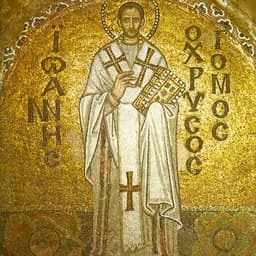
St. John Chrysostom (c. 347–407)
As preserved in the Catena Aurea on Luke. Public domain.
On the surpassing power of love, which would abolish every division among men:
On the danger of the unarmed traveller, and the armed malice that waits for him:
On the oil and the wine as the blood of the Passion and the chrism:
On the inn as the Church, the refuge of the weary:
On showing mercy without dispute, to Jew or Gentile alike:
St. Gregory of Nyssa (c. 335–395)
As preserved in the Catena Aurea on Luke. Public domain.
On the three faculties of the soul, summed up in the great commandment:
St. Basil the Great (c. 330–379)
As preserved in the Catena Aurea on Luke. Public domain.
On the seed of divine love implanted in our nature:
On loving God as akin to us and as our greatest benefactor:
On the second commandment, which fills up the first:
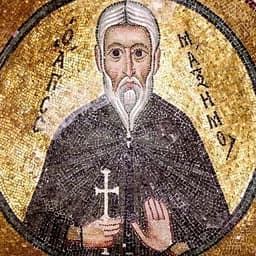
St. Maximus (c. 580–662)
As preserved in the Catena Aurea on Luke. Public domain.
On the threefold love commanded by the Law, against the threefold temptation of the world:
Theophylact of Ohrid (c. 1055–1107)
As preserved in the Catena Aurea on Luke. Public domain.
On the neighbour defined by shared nature, not by rank:
On the oil and wine as the human and divine natures of the Saviour:
On the beast as the Lord's own body, which receives every nation:
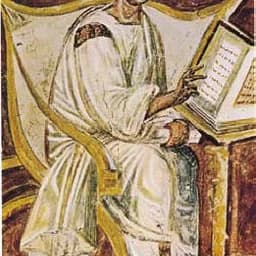
Blessed Augustine of Hippo (354–430)
Questions on the Gospels, II.19; and Exposition on the Psalms Source: St. Augustine, Questions on the Gospels (Quaestiones Evangeliorum), Book II, qu. 19; and Expositions on the Psalms. Public domain.
The allegory of the wounded man (Questions on the Gospels, II.19):
The same reading carried to the inn and the two pence (Exposition on the Psalms):
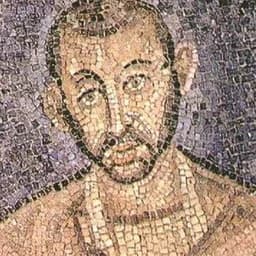
St. Ambrose of Milan (c. 339–397)
As preserved in the Catena Aurea on Luke. Public domain.
On the Samaritan who came down from heaven:
On the neighbour made near by compassion:
On the two pence as the two covenants stamped with the image of the King:
On compassion as the bond of our common nature:
St. Gregory the Great (c. 540–604)
As preserved in the Catena Aurea on Luke. Public domain.
On the wine of correction and the oil of mercy, which must be mingled:
Origen (c. 185–254)
As preserved in the Catena Aurea on Luke. Public domain.
On eternal life preached by the Creator in the Law and the Prophets:
On the two pence as the knowledge of the Father and the Son:
St. Bede the Venerable (c. 673–735)
As preserved in the Catena Aurea on Luke. Public domain.
On the wounds that violate the perfectness of our nature:
On entering the Church through Baptism into Christ's body: